
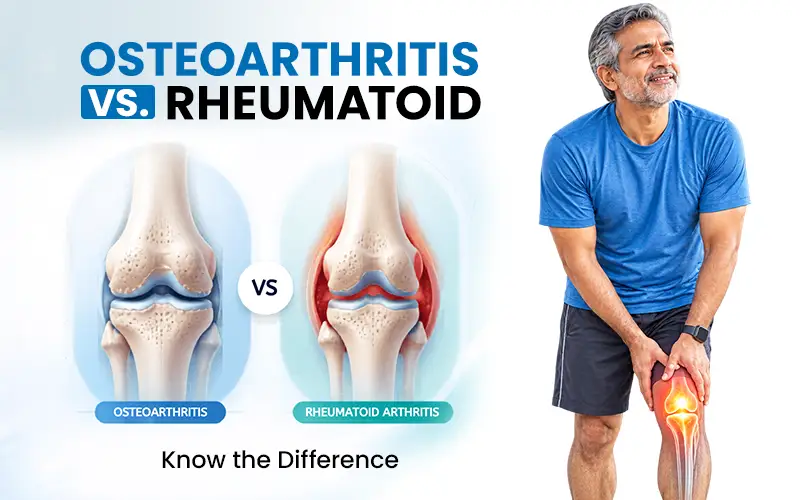
Both are called “arthritis”; both make joints hurt and stiffen, and people often assume they are the same condition at different ages. They are not. One is mainly a mechanical wearing-down of the joint; the other is an immune-system disease. Here is how osteoarthritis vs rheumatoid arthritis compare. Getting the diagnosis right decides what treatment helps and how soon you need it.
“Arthritis” is an umbrella term covering well over a hundred conditions that cause joint pain and inflammation. The two most people have heard of are osteoarthritis (OA) and rheumatoid arthritis (RA). They can feel similar on a bad morning, which is exactly why they are so often confused, and why guessing which one you have can delay the right treatment.
What is actually happening in the joint?
Osteoarthritis is generally described as a degenerative joint condition. The smooth cartilage that cushions the ends of the bones gradually thins and roughens, and the surrounding bone and tissue respond. It is influenced by age, previous joint injury, body weight, and genetics, and it tends to develop slowly in the joints that bear the most load or have been used the most.
Rheumatoid arthritis is an autoimmune disease: the immune system mistakenly attacks the lining of the joints, causing inflammation that can, over time, damage cartilage and bone. Because it is a disease of the immune system, it can affect the whole body, not only the joints.
Osteoarthritis vs. Rheumatoid Arthritis Symptoms: How They Typically Differ
| Osteoarthritis | Rheumatoid arthritis | |
|---|---|---|
| Underlying cause | Wear and breakdown of joint cartilage, with age, injury, weight and genetics all playing a role | Autoimmune: the immune system attacks the joint lining |
| Joints most affected | Often weight-bearing or heavily used joints: knees, hips, spine, and the base and end joints of the fingers | Often the small joints of the hands, wrists and feet, frequently on both sides of the body |
| Morning stiffness | Usually fairly brief and easy with movement | Often lasts longer and can take a good while to ease |
| Pain pattern | Often worse after activity or by the end of the day, and eases with rest | Often with swelling, warmth and tenderness; stiffness can be worst after rest |
| Whole-body effects | Usually limited to the joint | May include fatigue, general unwellness, and sometimes low-grade fever |
| Typical approach | Pain relief, exercise and weight management, physiotherapy, injections, and joint replacement when other options no longer work | Disease-modifying and biologic medicines to control the immune activity, managed by a rheumatologist, with surgery for damage in selected cases |
How the diagnosis is made
- History and examination
Which joints are affected, whether both sides are affected, how long the stiffness lasts in the morning, whether the joints look swollen or feel warm, and whether you have fatigue or other symptoms. A family history of autoimmune disease is also relevant.
- Blood tests
Tests for inflammation and for specific antibodies associated with rheumatoid arthritis help point towards an immune cause. A normal result doesn’t completely rule RA out, and positive results need interpreting alongside your symptoms.
- Imaging
X-rays show cartilage loss and bone changes typical of osteoarthritis and can show damage from RA. Ultrasound or MRI can reveal inflammation earlier in selected cases.
- Putting it together
No single test settles it. The diagnosis comes from combining the pattern of joints involved, the blood and imaging results, and how the condition behaves over time. Orthopedic and rheumatology teams often work together.
Why Getting the Diagnosis Right Matters
Treatment aims differ. In osteoarthritis the goals are to reduce pain, keep the joint moving, strengthen the muscles that support it, and consider surgery such as joint replacement if damage is advanced. In rheumatoid arthritis, medication that calms the immune system is central, and starting it early is generally considered important to protect the joints from lasting damage. Treating RA with only painkillers, or assuming joint swelling is just “wear and tear,” can mean losing time that matters.
A note on this topic
Living with chronic joint pain can be wearing, affecting sleep, work, mood and independence. If pain is getting in the way of daily life, say so; it is a legitimate reason to seek help, and there is almost always something that can be done to improve it.
Living with either condition
- Keep moving: gentle, regular exercise supports joint health in both conditions; a physiotherapist can tailor it to you.
- Protect your joints: pacing activity and using supportive aids can reduce strain.
- Manage weight: extra body weight adds load to knees and hips, which matters particularly in osteoarthritis.
- Take medicines as prescribed: especially disease-modifying medicines in RA, which work over time and need regular monitoring.
- Keep appointments: RA in particular is monitored and treatment adjusted over time.
When to see a doctor
- Joint pain or stiffness has lasted more than a few weeks.
- Joints are visibly swollen, warm or tender to touch.
- Morning stiffness lasts a long time before easing.
- Several small joints, such as the fingers or toes, are affected on both sides.
- Pain is limiting walking, sleep, work or daily tasks, or is combined with fatigue or fever.
Frequently asked questions
Q: Does osteoarthritis turn into rheumatoid arthritis?
No. They are separate conditions with different causes. A person can, however, have both at once, which is part of why an accurate diagnosis matters.
Q: Is arthritis just a part of getting older?
Osteoarthritis becomes more common with age, but it isn’t inevitable, and rheumatoid arthritis can start at any adult age. Joint pain is worth checking, not just accepting.
Q: Will I need surgery?
Many people never do. In osteoarthritis, surgery such as joint replacement is considered when other treatments no longer control pain and function. For a realistic picture of what follows, see our knee replacement recovery timeline. In rheumatoid arthritis, early medical treatment aims to reduce the chance of joint damage that would need surgery.
Q: Can diet or supplements cure arthritis?
No diet or supplement has been shown to cure either condition. A balanced diet and healthy weight help overall joint health, but they are not a substitute for medical treatment. Discuss any supplement with your doctor first.
Q: Can I get an orthopedic or rheumatology opinion before deciding on treatment?
Yes. Our partner specialists can review your reports and scans through a free, no-obligation second-opinion consultation, so you understand your diagnosis and options before you decide anything.
Conclusion
Osteoarthritis and rheumatoid arthritis share a name and some symptoms, but not a cause, and not a treatment plan. If your joints are swollen, stiff for long periods, or hurting more than they should, get them properly assessed: the earlier the right diagnosis is made, the more options you have.