

Lung cancer is always thought to only affect smokers. While tobacco use remains a leading cause, the truth is quite complex and surprising. Lung cancer incidence in non-smokers is a growing concern, with thousand people diagnosed every 25 km despite never having even lit a cigarette. Understanding the causes of lung cancer without smoking and identifying the risk factors for lung cancer beyond tobacco is essential for early detection, prevention and public awareness.
Understanding Lung Cancer in Non-Smokers
A Shift in the Narrative
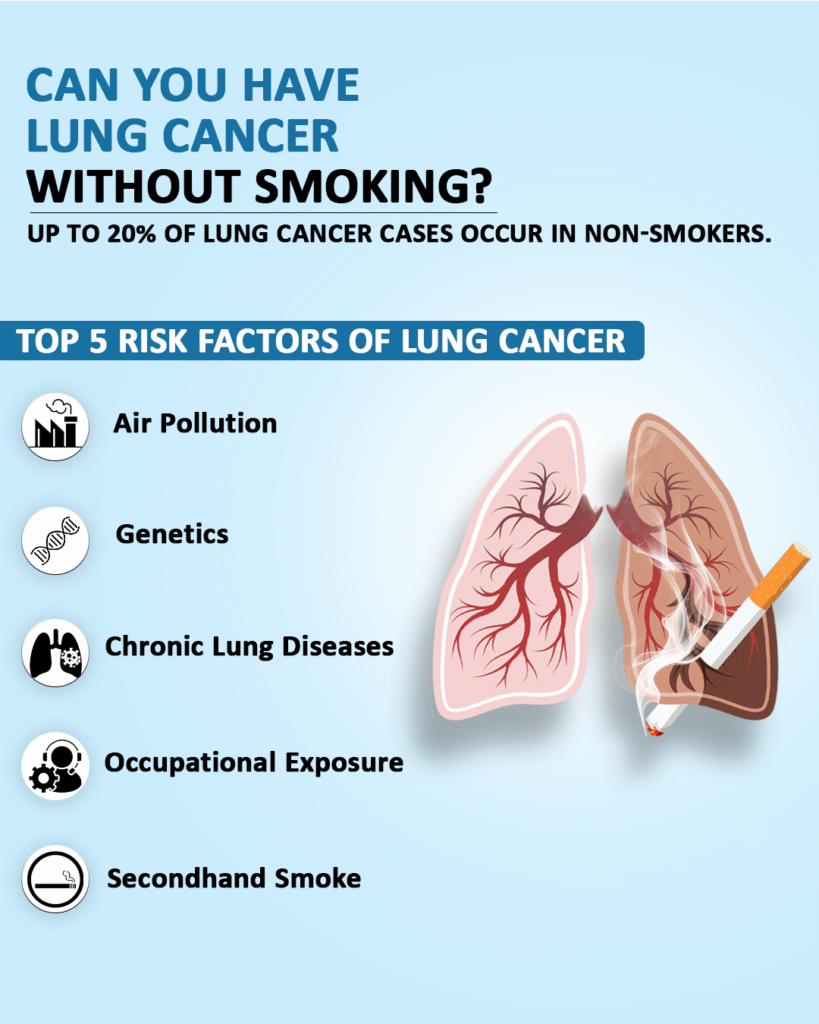
Historically, lung cancer is considered the primary and the most significant cause of lung cancer. However, recent studies have revealed that 20% of lung cancer cases occur in people who have never smoked. This has led to many assumptions and highlights the need for broader education about the environment, genetic and occupational risks.
Who Is at Risk?
Non-smokers diagnosed with lung cancer also fall into different categories:
- Individuals exposed to second-hand smoke
- People living in areas with high air pollution
- Workers exposed to carcinogens like asbestos or radon
- Those with a family history of lung cancer
- Patients with underlying lung conditions such as COPD or pulmonary fibrosis
These cases show the importance of recognising risk factors for lung cancer that extend beyond personal lifestyle choices.
Causes of Lung Cancer Without Smoking
1. Air Pollution
One of the most significant causes of lung cancer without smoking is continued exposure to polluted air. Fine particulate matter (PM2.5), nitrogen dioxide and other airborne toxins can penetrate deep into lung tissue, causing inflammation and cellular damage over time. Urban environments, industrial zones and heavy traffic areas are more risky factors for lung cancer .
2. Radon Gas Exposure
Radon is a naturally occurring radioactive gas that is released from soil and rocks into the building. It is odorless, colorless and tasteless, making it very difficult to detect without specialised equipment. Long-term exposure to Radon, especially in homes or workplaces with poor ventilation, has been linked to lung cancer in non-smokers.
3. Occupational Hazards
People in certain professions are at greater risk, as are those who are exposed to carcinogens. People who work on construction sites, miners and factory workers are all exposed to things like asbestos, diesel exhaust, arsenic or silica dust. All of these substances can damage your lung cells and trigger changes that can lead to cancer.
4. Genetic Predisposition
Genetics play a very important role in who can be the biggest suspect for cancer. People with a family history of lung cancer may inherit variations that affect your cell growth. In some cases, these variations can cause cancer even if there are no environmental triggers.
5. Second-Hand Smoke
Regularly exposing yourself to tobacco smoke, whether at home, in public spaces or at work, can increase your risk of lung cancer. Children and spouses of people who smoke are most likely to develop lung cancer because they are most regularly exposed to smoke.
Symptoms of Lung Cancer in Non-Smokers
Recognising symptoms early can lead to timely diagnosis and better outcomes. Common signs include:
- Persistent cough
- Shortness of breath
- Chest pain
- Fatigue
- Unexplained weight loss
- Hoarseness
- Recurring respiratory infections
These symptoms also mimic those of other serious respiratory conditions, which can lead to a delay in diagnosis. Non-smokers can also reduce their chances of lung cancer by avoiding exposure to tobacco smoke and by knowing about awareness campaigns.
Diagnosing Lung Cancer in Non-Smokers
Imaging and Screening
CT scans, X-rays and PET scans are common and advanced techniques used to detect lung abnormalities. Doctors often recommend low-dose CT screening for high-risk individuals, such as those with occupational exposure or a family history, even if they don’t smoke.
Biopsy and Molecular Testing
Once a suspicious wound is identified, a biopsy confirms the presence of cancer cells. Molecular testing helps determine the subtype of cancer and guides a personalised treatment plan, especially in non-smokers who are at risk for cancer due to genetic mutations.
Treatment Options for Non-Smoking Lung Cancer Patients
Targeted Therapy
Non-smokers with lung cancer frequently show variations in genes like EGFR, ALK or ROS1. Researchers have developed targeted therapies that block specific pathways, offering more effective and less toxic alternatives to traditional chemotherapy.
Immunotherapy
Immunotherapy harnesses the body’s immune system to fight cancer. It has shown very good results in treating lung cancer, particularly in patients who do not have smoking-related variations or mutations.
Surgery and Radiation
Doctors may recommend surgery or radiation therapy based on the tumor’s stage and location. They often combine these with systemic therapies for the best results.
Prevention and Awareness
Reducing Environmental Exposure
- Improve indoor ventilation to reduce radon accumulation
- Use air purifiers in polluted areas
- Advocate for clean energy and reduced industrial release
Workplace Safety
- Enforce protective measures in high-risk occupations
- Regular health screenings for exposed workers
- Educate employees about deadly chemical risks
Genetic Counselling
For individuals with a family history of lung cancer, genetic counselling can assess risk and guide preventive strategies. Early screening and lifestyle adjustments may reduce the probability of disease development.
Public Misconceptions and Disgrace
One of the biggest challenges that non-smoking lung cancer patients face is society’s disgrace. Many people assume lung cancer affects only smokers, causing judgment, family isolation, and a loss of empathy for patients. Public health campaigns must educate people about the way lung cancer affects people, regardless of whether they have a smoking history or not.
Lung Cancer in Women and Young Adults
Interestingly, lung cancer, even among non-smokers, is most likely to occur among women and young adults. This may be due to hormonal factors, genetic variations and harmful chemical exposure in the environment. Research is ongoing to understand these patterns and develop gender-specific interventions.
Global Perspective on Lung Cancer in Non-Smokers
Countries with high levels of pollution, few regulations on occupational safety and the greatest use of biomass fuels for cooking and heating have the highest rates of lung cancer among non-smokers. International collaboration is essential to address this discrimination and ensure equal access to healthcare.
Conclusion
The belief that lung cancer only affects smokers is a long-standing and mistaken belief. Lung cancer among non-smokers is rising, driven by factors like pollution, genetics, and exposure to harmful chemicals or gases at work. By understanding the causes of lung cancer in non-smokers and learning about the risk factors that contribute to lung cancer, we can do early detection, reduce stigma and improve outcomes for all patients.
Whether you’ve never smoked or quit years ago, lung health matters. Stay informed, get screened, and help raise awareness about the realities of lung cancer in every community and stage.
Follow us on:
Address:
E-44/3, First Floor, Okhla Ind. Area Phase 2,
Okhla Industrial Estate, South Delhi,
New Delhi – 110020, India
Phone: +91 9717998697
Email: info@medikayahealthcare.com