
Cervical cancer is one of the most preventable cancers, yet thousands of women worldwide are still diagnosed at later stages simply because the early cervical cancer symptoms feel so normal that they get ignored. Many women assume that irregular bleeding, mild pelvic pain or unusual discharge is simply a hormonal issue but sometimes, these subtle signs point to something more serious. Most cervical cancer cases begin with a persistent HPV infection and this is exactly why timely cervical cancer screening is a lifesaver. Early detection extremely improves the chances of a full recovery.
This detailed guide breaks down everything in a simple, human-friendly way so any woman can understand what’s normal, what’s not and when it’s time to get checked.
What Is Cervical Cancer? A Simple Breakdown
Cervical cancer begins in the cells of the cervix, the narrow passage between the uterus and vagina. Normally, cervical cells grow and divide in a controlled way. But when certain changes occur, especially after a long-term HPV infection, the cells become abnormal and can eventually turn cancerous.
One of the strengths in fighting cervical cancer is that it develops slowly, usually over 5–15 years. That means women have plenty of chances to detect it early, through screening.
HPV Infection- The Root Cause Behind Most Cervical Cancer Cases
Nearly 80% of sexually active people will get HPV at some point. It’s not a sign of poor hygiene or multiple partners, it’s simply a part of normal sexual life. But only high-risk HPV types (like HPV 16 and 18) are linked to cervical cancer.
Why HPV Doesn’t Always Lead to Cancer
- Most HPV infections clear naturally within 1–2 years.
- A strong immune system helps fight off the virus.
- Only persistent infection causes cell changes.
This is why the HPV test is so important, it detects the virus before any cancerous changes begin.
Early Cervical Cancer Symptoms You Should Never Ignore
Cervical cancer is silent in the early stages. Women often mistake the symptoms for stress, hormonal imbalance or an infection. The key is not to panic but to stay informed.
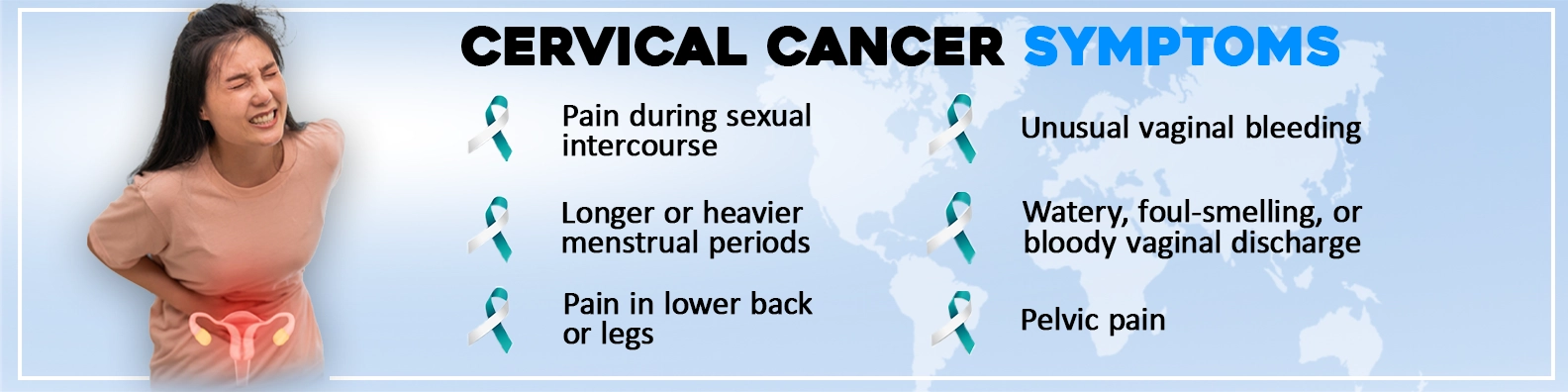
1. Abnormal Vaginal Bleeding
This includes-
- bleeding after intercourse
- bleeding between menstrual cycles
- bleeding after menopause
- excessively long or heavy periods
This is the most common warning sign.
2. Vaginal Discharge That Seems Different
Signs that discharge may be abnormal-
- foul smell
- watery or bloody discharge
- thick, persistent discharge
3. Pelvic Pain That Doesn’t Go Away
Mild discomfort is normal, but persistent pelvic or lower back pain should be checked.
4. Pain During Intercourse
This may happen when cancer irritates surrounding tissues.
5. Increased Fatigue
This happens due to internal bleeding or anemia caused by irregular bleeding.
Women often ignore these signs as “normal changes,” but recognising them early is key.
Advanced Symptoms of Cervical Cancer
If cervical cancer is not detected early, symptoms become more noticeable-
- Leg swelling
- Loss of appetite
- Difficulty urinating
- Blood in urine
- Painful bowel movements
- Extreme fatigue
These advanced symptoms indicate the spread of cancer to nearby organs.
Risk Factors Every Woman Should Know
Even though HPV is the main cause, certain habits and lifestyle factors increase risk.
1. Starting Sexual Activity at a Young Age
Higher exposure to HPV over time.
2. Multiple Sexual Partners
More exposure to high-risk HPV.
3. Long-Term Smoking
Chemicals from cigarettes weaken cervical cell DNA.
4. Weak Immunity
Women with HIV or those on long-term steroid medications, can’t fight HPV well.
5. A Family History of Cervical Cancer
Genetics can increase the likelihood.
6. Long-Term Use of Birth Control Pills
Using oral contraceptives for over five years slightly increases risk.
Awareness of these risk factors can help women make informed decisions.
Types of Cervical Cancer
There are mainly two types-
1. Squamous Cell Carcinoma
Starts in the thin, flat cells lining the cervix.
Most common (about 70–80% cases).
2. Adenocarcinoma
Starts in glandular cells inside the cervix.
Less common but slightly harder to detect early.
Some women have a combination of both.
Why Cervical Cancer Screening Saves Lives
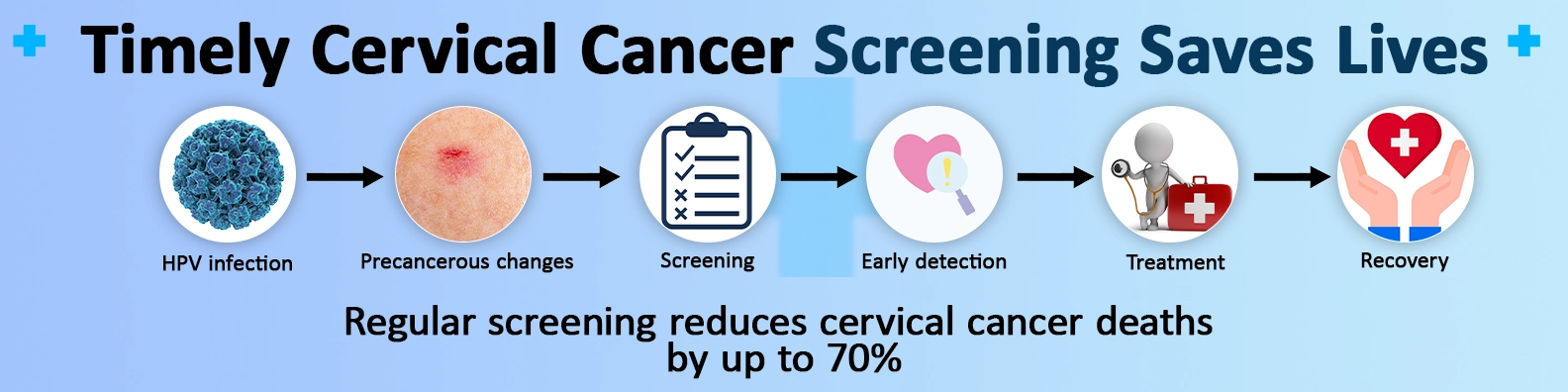
This is the most important part. Cervical cancer hardly ever appears suddenly, it goes through stages. Screening helps detect abnormal cells before they turn cancerous.
Top Benefits of Screening
- Detects precancerous changes
- Identifies HPV infection early
- Reduces cervical cancer deaths by up to 70%
- Helps women get treatment at the right time
Types of Cervical Cancer Screening Tests
1. Pap Smear
A simple test where a small sample of cells is taken from the cervix.
It detects-
- abnormal cells
- precancerous changes
- early cervical cancer
Recommended- every 3 years for women 21–65.
- HPV DNA Test
Done to detect high-risk HPV strains.
Recommended- every 5 years for women 30–65.
3. Co-testing (Pap + HPV)
Most accurate and recommended by many specialists.
Stages of Cervical Cancer
Cervical cancer progresses in predictable stages.
Stage 0
Precancerous cells are present on the surface.
Stage I
Cancer is limited to the cervix.
Stage II
Spread beyond the cervix but not to pelvic walls.
Stage III
Spread to vaginal walls or pelvic area.
Stage IV
Cancer spreads to the bladder, rectum or other organs.
Understanding the stage helps doctors create the right treatment plan.
How Cervical Cancer Is Diagnosed
If screening finds abnormalities, doctors may recommend:
1. Colposcopy
A magnified examination of the cervix.
2. Biopsy
A small tissue sample is tested for cancer cells.
3. Endocervical Curettage
Scraping cells from the cervical canal.
4. Imaging Tests
MRI, CT scan or PET scan to determine the stage.
Treatment Options for Cervical Cancer
Treatment depends on stage, age, overall health and whether the woman wants children in the future.
1. Surgery
Best for early-stage cancer. Includes-
- LEEP
- Cone biopsy
- Simple or radical hysterectomy
2. Radiation Therapy
Used for later stages or after surgery.
3. Chemotherapy
Often given along with radiation.
4. Targeted Therapy
Focuses on destroying cancer cells without harming healthy ones.
5. Immunotherapy
Helps the immune system fight cancer, especially in advanced cases.
Prevention Tips Every Woman Should Follow
1. HPV Vaccination
Protects against major cancer-causing HPV types.
Best when given before sexual activity, but adults up to age 45 can still take it.
2. Regular Screening
Never skip Pap tests and HPV tests.
3. Safe Sexual Practices
Using condoms reduces HPV transmission (not 100% but significant).
4. Stop Smoking
Smoking weakens the immune system and increases risk.
5. Maintain Good Immunity
Healthy eating, sleep and stress control help your body fight HPV.
Lifestyle Tips for Reducing Cervical Cancer Risk
Diet for Cervical Health
Certain foods strengthen immunity and protect cervical cells-
- leafy greens
- citrus fruits
- berries
- turmeric
- yogurt
- broccoli
Exercise and Wellness
30 minutes of walking daily reduces cancer risk and boosts immunity.
Keeping Stress in Check
Chronic stress weakens immunity, making it harder to fight HPV.
Regular Gynecological Checkups
A simple annual check can catch early signs.
Myths and Facts About Cervical Cancer
Myth 1- If I feel fine, I don’t need screening.
Fact: Early stages show no symptoms. Screening is the only way to detect changes.
Myth 2- Only women with many sexual partners get HPV.
Fact- Even one partner is enough to contract HPV.
Myth 3- HPV infection means cancer.
Fact- Most HPV infections disappear naturally.
Myth 4- Cervical cancer cannot be prevented.
Fact- Screening + vaccination makes it highly preventable.
When You Should See a Doctor Immediately
Seek medical help if you notice-
- bleeding after sex
- frequent spotting
- persistent pelvic pain
- foul-smelling discharge
- bleeding after menopause
Delayed diagnosis is the biggest enemy.
Conclusion
Cervical cancer does not appear suddenly, it usually begins with a persistent HPV infection, develops slowly and first shows subtle cervical cancer symptoms that women often overlook. This is why regular cervical cancer screening is not just important, it’s essential. With timely checks, precancerous changes can be treated long before they turn into cancer. Early detection saves lives, improves treatment outcomes and protects your long-term health.
If you’ve been delaying your screening or noticing unusual symptoms, prioritise your health today. Your future self will thank you.
Follow us on:
For formal correspondence or hospital coordination, MediKaya Healthcare’s office is:
Address- E-44/3, First Floor, Okhla Industrial Area Phase 2, Okhla Industrial Estate, South Delhi, New Delhi-110020.
Phone- +91 9717998697.
Email- info@medikayahealthcare.com