

Seasonal flu is much worse than a normal winter flu. Every year, millions of people worldwide experience flu-related complications, often leading to hospitalisation or prolonged illness. With colder months bringing increased transmission, healthcare organisations worldwide observe Flu Vaccination Week (Dec 1–7) to raise awareness about the importance of getting vaccinated.
This week serves as a timely reminder for individuals, families, workplaces, and communities to stay protected and informed. Whether you’re a healthy adult, a parent, a caregiver or someone with a pre-existing medical condition, the flu vaccine is the most reliable defence against seasonal flu. In this guide, we explore the flu vaccine benefits, debunk popular flu shot myths and discuss exactly when to get flu vaccine for optimum protection. These topics remain essential for anyone looking to safeguard themselves and the people around them during the winter season.
What Makes Flu Vaccination Week Important?
Flu Vaccination Week marks a global public health initiative encouraging more people to receive their flu shot before the season peaks. Many individuals tend to postpone vaccination or believe it is unnecessary unless symptoms appear. However, the flu spreads silently and by the time cases rise, protection becomes urgent.
The awareness week highlights key goals such as-
- Encouraging timely vaccination
- Educating the public on safety and effectiveness
- Clarifying long-standing myths
- Emphasising the role of vaccination in preventing severe illness
- Supporting healthcare systems in managing winter surges
For families, workplaces and healthcare providers, Flu Vaccination Week offers a moment to reflect on preparedness, protection and proactive health choices.
Understanding the flu: Why It Is More Serious Than You Think
Many people mistake the flu for an ordinary cold. However, influenza is caused by highly infectious viruses that can spread quickly through droplets from coughing, sneezing, talking or even touching polluted surfaces.
How the Flu Affects the Body
Once the virus enters the respiratory system, it multiplies rapidly, triggering a range of symptoms including-
- Sudden high fever
- Body aches
- Fatigue
- Sore throat
- Runny or blocked nose
- Chest congestion
- Chills and headaches
While most people recover within a week, others particularly children, older adults, pregnant women and individuals with medical conditions face a significantly higher risk of complications such as pneumonia, bronchitis, heart inflammation or worsening of chronic illnesses.
This is precisely why understanding the flu vaccine benefits and taking timely action remain important.
How the Flu Vaccine Works
When discussing vaccination, one of the most common concerns is understanding what exactly happens inside the body after receiving the shot.
The Immunity-Building Process
The flu vaccine triggers your immune system to produce antibodies. These antibodies recognise and destroy the flu virus if you become exposed later in the season. The vaccine contains inactivated or weakened virus components, none of which can cause the actual flu.
Why the Vaccine Changes Every Year
Unlike many diseases, flu viruses develop rapidly. Health scientists monitor global strains every year and update the vaccine to match the expected variants. This ensures your body is prepared to fight the most relevant and active strains each season.
This constant updating reinforces the importance of getting vaccinated annually, not just once in a lifetime.
Flu Vaccine Benefits- Why Getting the Shot Matters
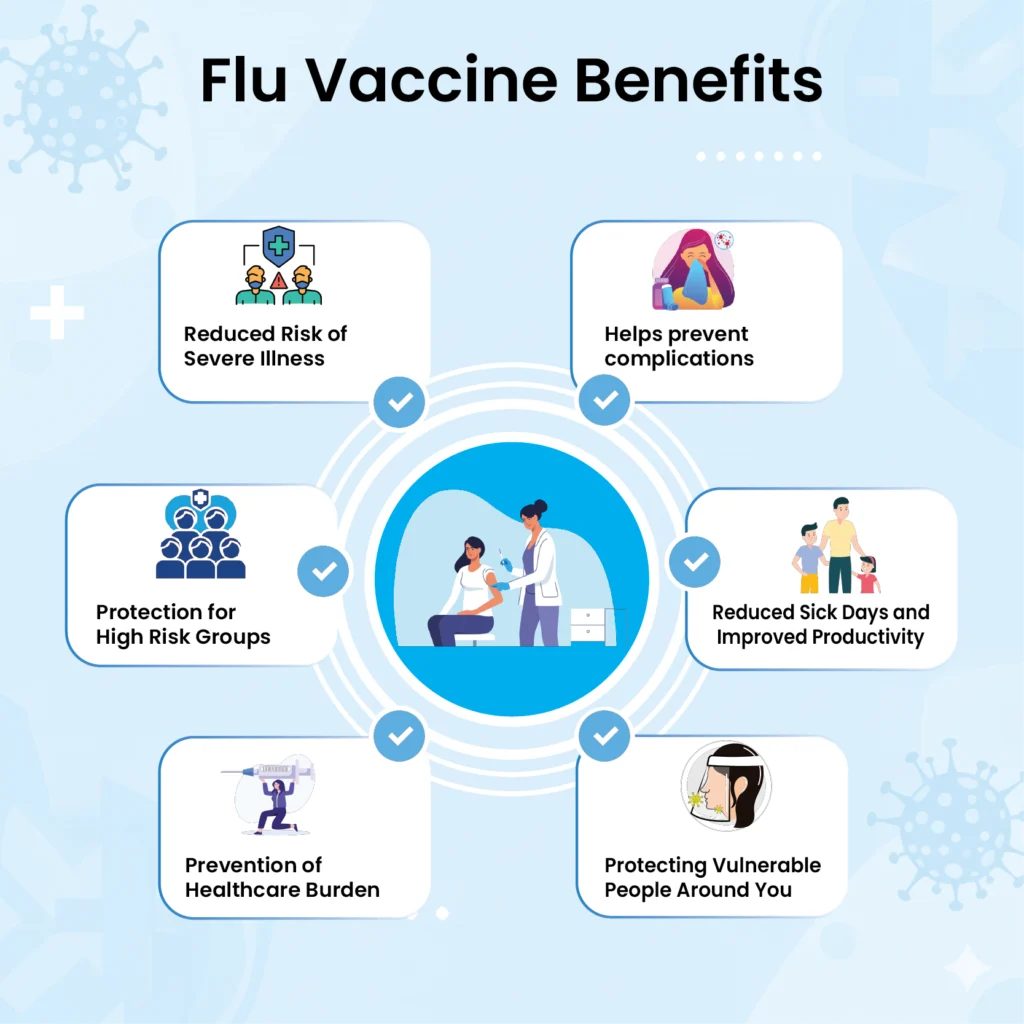
The flu vaccine benefits go far beyond avoiding a few uncomfortable days. While many assume the flu is a mild illness, the flu shot plays a significant role in protecting individual and community health.
Benefit 1 – Reduced Risk of Severe Illness
Vaccinated individuals experience a notably lower risk of severe symptoms, complications and hospitalisation. Even if you catch the flu, your symptoms are likely to be milder and recovery faster.
Benefit 2 – Protection for High-Risk Groups
Every year, thousands of high-risk individuals are hospitalised due to flu-related complications. Vaccination reduces the seriousness of illness particularly among-
- Young children
- Pregnant women
- Adults over 65
- Individuals with chronic diseases such as diabetes, asthma, and heart disease
Benefit 3 – Prevention of Healthcare Burden
Hospitals often experience significant strain during flu season. Widespread vaccination reduces the number of severe cases, ensuring healthcare resources remain available for emergencies, surgeries and critical care.
Benefit 4 – Protecting Vulnerable People Around You
Herd immunity plays a vital role in reducing viral transmission. Even if you are young and healthy, your actions help protect those who cannot receive the vaccine due to allergies or immune conditions.
Benefit 5 – Reduced Sick Days and Improved Productivity
For individuals and organisations, vaccination results in fewer sick days, less disruption and stronger workplace continuity. Schools, businesses and community spaces function more smoothly when flu outbreaks are kept under control.
Debunking Flu Shot Myths- Clearing the Confusion
Misinformation remains a major barrier to vaccination. Despite extensive scientific evidence supporting safety and effectiveness, many people continue to believe outdated or incorrect assumptions. Here we address some of the most persistent flu shot myths.
Myth 1 – “The Flu Shot Can Give You the Flu”
Fact- This is one of the most common misconceptions. The flu vaccine uses inactive or weakened viruses that cannot cause influenza. Mild reactions such as soreness or slight fatigue are signs that your immune system is responding, not signs of illness.
Myth 2 – “Healthy People Do Not Need the Vaccine”
Fact- Even if you rarely fall ill, you can still carry and spread the virus to vulnerable individuals. Healthy adults often act as silent transmitters. Vaccination protects both you and those around you.
Myth 3 – “The Vaccine is Ineffective”
Fact- The flu vaccine is continually updated to target circulating strains. While no vaccine offers 100% protection, it significantly reduces the severity and duration of illness and prevents complications. Statistically, vaccinated individuals fare much better than unvaccinated ones.
Myth 4 – “You Only Need One Flu Shot in a Lifetime”
Fact- Unlike other vaccines, the flu shot must be taken annually because flu strains mutate. Immunity decreases over time, making yearly protection essential.
Myth 5 – “The Flu is Just a Bad Cold”
Fact- Influenza is far more severe than a cold. For many people, it leads to hospitalisation, pneumonia or life-threatening complications. Treating the flu lightly results in underestimated risk and increased spread.
When to Get Flu Vaccine for Best Protection
Knowing when to get the flu vaccine is just as important as choosing to get it. Timing ensures your body has enough opportunity to produce protective antibodies.
Best Time to Get Vaccinated
1. Early Autumn to Early Winter
The ideal period is between late September and early December. Receiving the vaccine during this time ensures your immune system is ready by the time the flu season peaks.
2. Flu Vaccination Week as a Reminder
If you missed the early season window, Flu Vaccination Week (Dec 1–7) is the perfect moment to get protected. Immunity builds within two weeks, so it is never too late during the winter months.
Can You Still Get the Vaccine Later in the Season?
Yes, Even if it is January or February, the benefits remain significant. Flu season can extend until spring and late vaccination is much better than none.
Who Should Avoid the Flu Vaccine?
Most people can safely receive it. Those with severe allergies to specific components should speak to a healthcare provider first.
What Happens After You Receive the Flu Shot?
Understanding post-vaccination expectations makes the process comfortable and stress-free.
Common Mild Reactions
- Slight redness or soreness in the arm
- Mild fever
- Headache
- Fatigue
These symptoms are temporary and typically resolve within 48 hours.
Rare Reactions
Serious allergic responses are extremely rare. Medical professionals are trained to address these immediately.
Why Flu Vaccination Matters for Families
When one person falls ill, the entire household is at risk. Children, in particular, tend to spread infections quickly due to close interaction in schools.
1. Protecting Children
Young children have weaker immune systems and face a higher risk of complications. Vaccinating parents and caregivers reduces the chance of household transmission.
2. Protecting Pregnant People
Pregnancy weakens the immune system. Vaccination is completely safe during pregnancy and protects both mother and baby.
3. Protecting Older Family Members
Older adults experience more severe complications. Vaccination is strongly recommended for individuals aged 65 and older.
Flu Vaccination and Chronic Illness Management
For those living with chronic health conditions, the flu can provoke underlying issues.
1. Benefits for People with Diabetes
Influenza can cause severe blood sugar fluctuations. Vaccination helps prevent additional complications.
2. Benefits for Individuals with Asthma
The flu often triggers asthma attacks or respiratory distress. Vaccination significantly decreases flare-ups.
3. Benefits for Heart Disease Patients
The flu can increase stress on the cardiovascular system. Vaccinated individuals have a lower risk of flu-related cardiac events.
The Global Impact of Flu Vaccination
Widespread vaccination has meaningful implications for community health.
1. Lowered Transmission Rates
High vaccination rates reduce the spread of influenza within communities, workplaces, transport systems and public spaces.
2. Protection for Countries with Limited Healthcare Resources
Preventing flu outbreaks ensures hospitals remain functional and ready for emergencies.
3. Support for Healthcare Workers
Reducing flu cases decreases the risk of staff exhaustion, shortages and burnout.
Conclusion – Take Your Health Seriously This Flu Vaccination Week
Flu Vaccination Week (Dec 1–7) is more than an awareness campaign, it is a reminder to prioritise your health and the well-being of your community. The flu vaccine benefits are undeniable and dismissing flu shot myths encourages more people to make informed choices. Understanding when to get the flu vaccine ensures timely protection before flu season intensifies.
Vaccination protects your health, reduces the spread of illness and safeguards vulnerable individuals who rely on community immunity for safety. As winter approaches, take the necessary step- protect yourself, protect your family and contribute to a healthier society.
Your decision today could prevent tomorrow’s complications.
Follow us on:
Address:
E-44/3, First Floor, Okhla Ind. Area Phase 2,
Okhla Industrial Estate, South Delhi,
New Delhi – 110020, India