
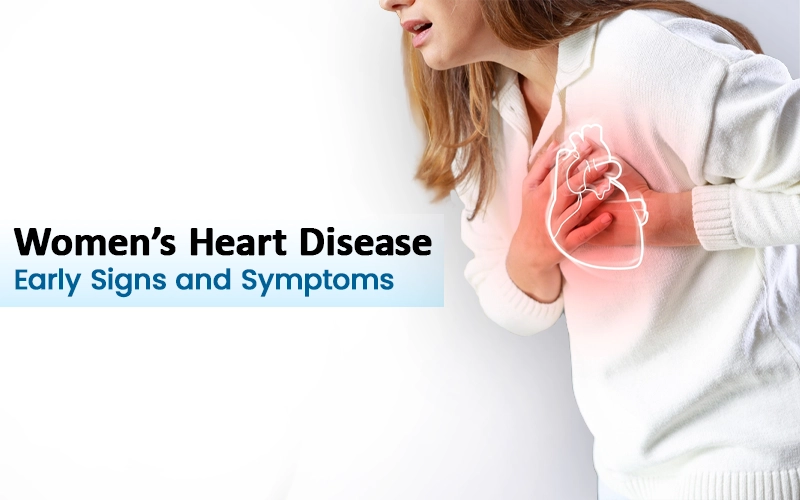
⊡ Introduction to Heart Disease in Women
Heart disease in women is a growing concern within women’s health that often goes unnoticed until it becomes serious. Traditionally considered a condition affecting mostly men, cardiovascular health issues are now recognised as one of the leading causes of death among women worldwide. Understanding heart disease, identifying heart disease risk factors and recognising early warning signs are essential steps in protecting long-term heart health.
Heart disease in women can present differently than in men, making awareness even more critical. While chest pain is a well-known sign, many women experience less obvious heart attack symptoms such as shortness of breath, extreme fatigue, nausea, dizziness, jaw pain, or discomfort in the back and shoulders. These atypical symptoms often lead to delayed diagnosis and treatment, increasing the risk of severe cardiovascular complications.
Several heart disease risk factors affect women uniquely. Hormonal changes during menopause, pregnancy-related conditions like gestational diabetes or preeclampsia and autoimmune disorders play a major role in declining cardiovascular health. Lifestyle factors such as physical inactivity, unhealthy diet, smoking, obesity, chronic stress and high blood pressure further increase the risk. Conditions like diabetes and high cholesterol also tend to have a more severe impact on women’s hearts compared to men.
Early detection and the prevention of heart disease are key components of maintaining cardiovascular health. Regular health check-ups, monitoring blood pressure, cholesterol and blood sugar levels and adopting a heart-healthy lifestyle can significantly reduce risk. A balanced diet rich in fruits, vegetables, whole grains and lean proteins, combined with physical activity and stress management, supports long-term heart wellness.
Raising awareness about heart disease is essential for improving women’s cardiovascular health. By recognizing symptoms early and focusing on prevention, women can take control of their heart health and lead longer, healthier lives.
⊡ Understanding the Importance of Early Detection
✓Consequences of Late Diagnosis
Late diagnosis of heart disease can have serious and lasting consequences, particularly in women, whose heart attack symptoms are often subtle or misunderstood. When cardiovascular conditions are not detected early, the disease may progress silently, causing damage to the heart muscle and blood vessels and weakening overall cardiovascular health.
One of the most serious outcomes of late diagnosis is a higher risk of heart attack, heart failure and sudden cardiac events. Blocked or narrowed arteries reduce blood flow to vital organs, leading to chest discomfort, breathlessness and long-term disability. Advanced cases often require invasive treatments such as angioplasty, stent placement, or bypass surgery procedures that could often be avoided through early detection and prevention.
Late diagnosis also impacts quality of life. Chronic fatigue, limited physical ability, emotional stress and anxiety commonly accompany advanced heart disease. In addition, delayed care increases healthcare costs due to emergency treatment, long hospital stays and lifelong medication.
Early identification allows lifestyle changes, medical management and close monitoring, all of which are crucial for the prevention of heart disease and improved survival outcomes.
✓Increasing Awareness Among Women
Increasing awareness is a vital step in protecting women’s health and reducing the burden of cardiovascular disease. Many women still believe heart disease primarily affects men, leading them to underestimate their personal risk and delay seeking medical care.
Education should focus on heart disease risk factors specific to women, including hormonal changes, pregnancy-related complications, menopause, diabetes and autoimmune conditions. Understanding how lifestyle habits, diet, physical activity, stress, smoking and sleep affect cardiovascular health empowers women to make informed decisions.
Recognising early and atypical heart attack symptoms is equally important. Warning signs such as unexplained fatigue, shortness of breath, sleep disturbances, jaw or back discomfort and nausea should never be ignored. Public awareness campaigns, digital platforms and community health programs play a crucial role in spreading this knowledge.
When women are informed and proactive, they are better equipped to seek early diagnosis, follow preventive strategies and safeguard their long-term cardiovascular health.
⊡ Common Early Signs of Heart Disease in Women
✓Unusual Fatigue
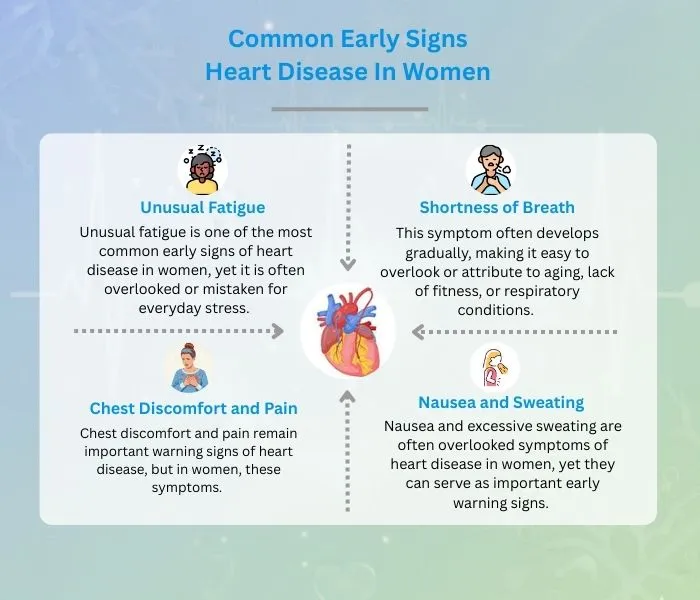
Unusual fatigue is one of the most common early signs of heart disease in women, yet it is often overlooked or mistaken for everyday stress. Unlike normal tiredness that improves with rest, heart-related fatigue is persistent, overwhelming and may appear without any clear physical reason. Many women report feeling exhausted after simple activities such as walking short distances, climbing stairs, or completing routine household tasks.
This fatigue occurs when the heart cannot pump enough oxygen-rich blood throughout the body. As a result, muscles and organs receive less energy, leading to weakness and reduced stamina. Fatigue often appears alongside other heart attack symptoms, including dizziness, shortness of breath and difficulty concentrating.
Unusual fatigue is frequently accompanied by other subtle symptoms, including shortness of breath, sleep disturbances, dizziness, or difficulty concentrating. Because these signs do not always involve chest pain, many women delay seeking medical advice, increasing the risk of late diagnosis. Hormonal changes, anemia, or busy lifestyles are often blamed, allowing heart disease to progress silently.
Recognising unexplained fatigue as a possible warning sign is critical for early diagnosis and the prevention of heart disease.
✓Shortness of Breath and Other Respiratory Symptoms
Shortness of breath is an important early warning sign of heart disease in women and should never be ignored. Many women experience difficulty breathing during routine activities such as walking, climbing stairs, or even while resting. This symptom often develops gradually, making it easy to overlook or attribute to aging, lack of fitness, or respiratory conditions. However, when the heart cannot pump blood efficiently, oxygen delivery to the body is reduced, leading to breathlessness.
In women, heart-related shortness of breath may occur without chest pain, which can delay recognition of a cardiac issue. It is commonly accompanied by other respiratory symptoms such as tightness in the chest, rapid or shallow breathing, nighttime breathlessness, or waking up feeling air-hungry. Some women also notice swelling in the ankles or sudden weight gain, which can be linked to fluid buildup caused by heart dysfunction.
These respiratory symptoms may worsen during physical exertion or while lying flat, indicating that the heart is struggling to manage blood flow effectively. In certain cases, breathlessness can be an early sign of heart failure, coronary artery disease, or valve-related problems.
Recognising shortness of breath as a possible symptom of heart disease in women is crucial for early diagnosis. If breathing difficulties persist, appear suddenly, or interfere with daily activities, prompt medical attention is essential. Early evaluation and treatment can prevent disease progression and support better long-term heart and lung health.
⊡ Other Symptoms to Watch For
✓Chest Discomfort and Pain
Chest discomfort and pain remain important warning signs of heart disease, but in women, these symptoms often present differently than the classic “crushing chest pain” commonly associated with heart attacks. Instead of intense pain, many women experience a sense of pressure, tightness, fullness, or burning in the chest. This discomfort may come and go, last for several minutes, or worsen during physical or emotional stress.
Women may also feel chest discomfort that spreads to other areas of the upper body, including the neck, jaw, shoulders, arms, or upper back. In some cases, the sensation can feel similar to indigestion, heartburn, or muscle strain, which leads many women to dismiss it as a minor issue. Because the pain is often less severe or atypical, it may not immediately raise concerns about heart disease.
Chest discomfort related to heart problems occurs when the heart muscle does not receive enough oxygen-rich blood, often due to narrowed or blocked arteries. This reduced blood flow can signal conditions such as coronary artery disease or an impending heart attack. Ignoring these early signs can increase the risk of serious cardiac events.
These symptoms result from reduced blood flow to the heart and may indicate coronary artery disease or an impending heart attack. Ignoring these heart attack symptoms increases the risk of life-threatening complications.
✓Nausea and Sweating
Nausea and excessive sweating are often overlooked symptoms of heart disease in women, yet they can serve as important early warning signs. Unlike the sudden chest pain commonly associated with heart attacks, women may experience persistent nausea, a sick or uneasy stomach, or cold sweats without an obvious cause. These symptoms are frequently mistaken for food poisoning, flu, anxiety, or digestive issues, which can delay proper diagnosis.
Heart-related nausea and sweating occur when the body reacts to reduced blood flow or stress on the heart. Women may notice clammy skin, unexplained perspiration, or sweating that occurs even in cool environments or during minimal physical activity. In some cases, these symptoms appear suddenly and are accompanied by dizziness, fatigue, or shortness of breath.
Because nausea and sweating are considered non-specific symptoms, many women ignore them or attempt self-treatment. However, when these signs appear together or persist without relief, they may indicate an underlying heart condition such as coronary artery disease or an impending cardiac event.
Recognising nausea and sweating as potential symptoms of heart disease in women is vital for early detection. Seeking prompt medical evaluation can lead to timely treatment, reduce complications and significantly improve heart health and overall survival outcomes.
⊡ Risk Factors for Heart Disease in Women
✓Genetic Predisposition
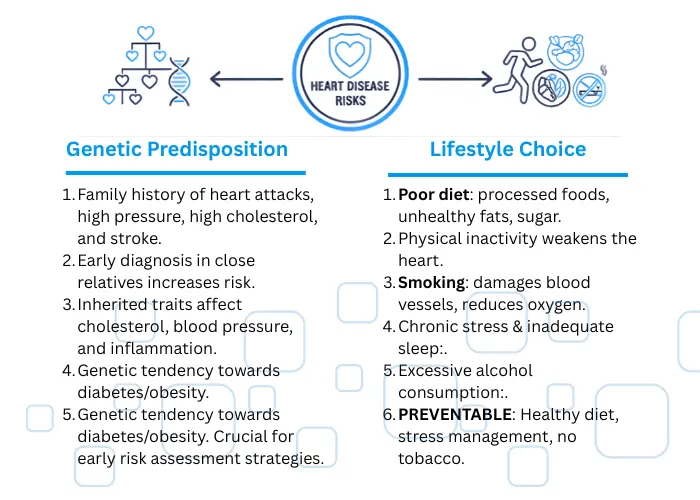
Genetic predisposition plays a significant role in heart disease risk factors in women. A family history of cardiovascular conditions such as heart attacks, high blood pressure, high cholesterol, or stroke can substantially increase a woman’s risk, especially if close relatives were diagnosed at an early age. Certain inherited genetic traits affect how the body processes cholesterol, regulates blood pressure, or responds to inflammation, all of which directly influence heart health. Women with a genetic tendency toward diabetes or obesity may also face a higher likelihood of developing heart disease. While genetic factors cannot be changed, understanding one’s family medical history is crucial for early risk assessment. Awareness allows women to begin screening earlier, monitor key health indicators and adopt preventive strategies sooner. Proactive lifestyle adjustments, regular medical check-ups and timely interventions can significantly reduce the impact of inherited risks and help maintain long-term cardiovascular health.
✓Lifestyle Choices and Their Impact
Lifestyle choices have a powerful influence on heart disease risk in women and often determine whether genetic vulnerabilities turn into actual health problems. Poor dietary habits, such as consuming high amounts of processed foods, saturated fats and excess sugar, contribute to high cholesterol, obesity and high blood pressure. Physical inactivity further increases the risk by weakening the heart muscle and slowing metabolism. Smoking is particularly harmful for women, as it damages blood vessels, reduces oxygen supply, and accelerates plaque buildup in arteries. Chronic stress, inadequate sleep and excessive alcohol consumption also place continuous strain on the cardiovascular system. Over time, these factors significantly raise the likelihood of heart disease. The good news is that lifestyle-related risks are largely preventable. Adopting a balanced diet, engaging in regular physical activity, managing stress effectively and avoiding tobacco can dramatically lower heart disease risk and support overall heart health in women.
⊡ Preventative Measures and Lifestyle Changes
The prevention of heart disease begins with consistent lifestyle improvements. A heart-healthy diet, regular exercise, stress management, smoking cessation and routine medical check-ups significantly reduce cardiovascular risk.
A heart-healthy diet is one of the most effective preventive strategies. Including fresh fruits, vegetables, whole grains, lean proteins and healthy fats helps control cholesterol levels and blood pressure. Reducing salt, sugar and processed food intake further supports heart function.
Regular physical activity is equally important. Stress management is another key factor, as chronic stress can raise blood pressure and trigger unhealthy habits. Practices like meditation, deep breathing and adequate sleep contribute to overall heart wellness.
Avoiding smoking and limiting alcohol consumption greatly reduce cardiovascular risk. Routine health check-ups, including monitoring blood pressure, blood sugar and cholesterol, allow early detection of potential issues. By adopting these preventive measures, women can actively protect their heart health and reduce the likelihood of serious complications.
⊡ When to Seek Medical Advice
Knowing when to seek medical advice is crucial for the early diagnosis and effective management of heart disease in women. Many women delay consulting a doctor because symptoms may appear mild, unusual, or unrelated to the heart. However, early medical attention can prevent complications and improve treatment outcomes.
These signs, especially when recurring or worsening, may indicate an underlying heart condition. Sudden symptoms like chest pressure, pain spreading to the jaw or arm, difficulty breathing, or fainting require immediate emergency care.
Women should seek medical attention for persistent fatigue, shortness of breath, chest discomfort, nausea, dizziness, or excessive sweating. Sudden or severe heart attack symptoms require immediate emergency care.
Regular screenings are essential, especially for women with known heart disease risk factors, hormonal changes, or pregnancy-related complications.
⊡ Conclusion: Prioritise Heart Health
Prioritising heart health is essential for women at every stage of life. Awareness, early detection and proactive care are the strongest tools in reducing its impact.
Understanding risk factors, recognising early symptoms and making informed lifestyle choices can dramatically lower the likelihood of developing heart disease. Regular health screenings and timely medical consultations further strengthen prevention efforts by identifying problems before they become severe.
Women often juggle multiple responsibilities and may neglect their own health. However, prioritising heart health is not a luxury, it is a necessity. Listening to the body, taking symptoms seriously and seeking professional guidance when needed can save lives. Support from family, workplaces and healthcare systems also plays a critical role in encouraging women to focus on their well-being.
A healthy heart supports energy, longevity and independence. Making heart health a priority today lays the foundation for a healthier, stronger and more confident future.
⊡ Contact MediKaya Healthcare for Heart Disease treatment Support in India
If you are seeking verified information, private hospital options, treatment cost guidance or international patient support for Heart Disease treatment in India, our medical coordination team is here to assist you with complete confidentiality and professional care.</p></p></p>
MedikayaHealthcare provides end-to-end patient support including hospital selection, doctor consultations, medical visa assistance, treatment coordination and post-treatment follow-up.
📞 WhatsApp & Call: +91 9717998697
📧 Email: info@medikayahealthcare.com
🌐 Website: www.medikayahealthcare.com