

Cancer remains one of the leading causes of illness and death worldwide, yet medical advancements show that early detection can dramatically improve survival rates. Recognising early cancer symptoms, understanding the signs of cancer and undergoing timely cancer screening tests are among the most powerful tools individuals have to protect their health. This article provides a comprehensive, structured guide to understanding cancer symptoms, the importance of early diagnosis and the proactive steps that can save lives.
⊡ Introduction to Cancer and Its Importance
Cancer is a group of diseases characterised by uncontrolled cell growth that can invade nearby tissues and spread to other parts of the body. While there are many types of cancer, they all begin at the cellular level when genetic mutations disrupt normal cell regulation. These mutations may be caused by environmental exposures, lifestyle choices, infections, inherited genetic traits, or a combination of factors.
The importance of understanding cancer lies in its global impact and its potential for prevention and early intervention. Early-stage cancers are often more responsive to treatment, less aggressive and associated with better quality of life outcomes. Unfortunately, many cancers are diagnosed at later stages because early symptoms are subtle, misunderstood, or ignored.
Public awareness plays a crucial role in reducing cancer-related deaths. When individuals understand the warning signs and act promptly, diagnosis can occur before the disease progresses. Advances in medicine, particularly in diagnostics and cancer screening tests, have made early detection more accessible than ever. However, these tools are most effective when combined with symptom awareness and regular medical check-ups.
Early detection does not only save lives it also reduces the physical, emotional and financial burden of extensive treatment. By prioritising education, prevention and timely care, individuals can significantly improve their chances of successful outcomes.
Read Also – Can Beetroot Support Nutrition And Cancer Prevention?
⊡ Understanding Common Cancer Symptoms
Cancer symptoms vary widely depending on the type, location and stage of the disease. Some symptoms appear in specific areas of the body, while others affect overall health. Non-cancerous conditions can cause these signs, but you should never ignore persistent or unexplained symptoms.
Recognising common warning signs empowers individuals to seek medical evaluation early. Paying attention to bodily changes and trusting one’s instincts are essential steps toward early diagnosis.
Unexplained Weight Loss
Unintended weight loss is one of the most common early warning signs of cancer. Losing weight without changes in diet or physical activity may indicate that the body is expending extra energy due to cancer growth. Certain cancers alter metabolism or suppress appetite, leading to noticeable weight reduction.
Weight loss is often associated with cancers of the digestive system, lungs, pancreas and stomach. Even a modest, unexplained weight loss over a short period warrants medical evaluation. Early identification of the underlying cause allows for timely intervention and improved outcomes.
Persistent Pain
Pain that does not resolve or worsens over time can be a sign of cancer. Unlike temporary discomfort, cancer-related pain tends to persist and may intensify as tumors grow or press against nerves and organs.
Persistent pain may appear in various forms, including headaches, bone pain, abdominal discomfort, or localised tenderness. While pain alone does not confirm cancer, unexplained or chronic pain should be assessed by a healthcare professional to rule out serious conditions.
⊡ Specific Symptoms by Cancer Type
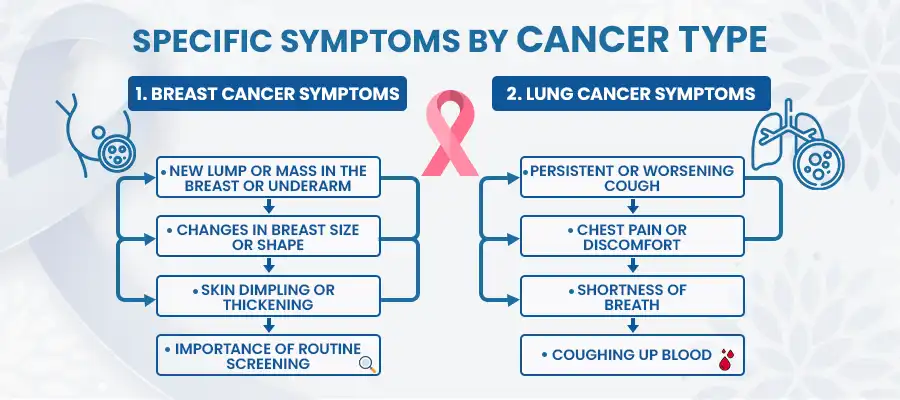
Different types of cancer affect the body in distinct ways, producing symptom patterns that reflect the organs or tissues involved. Recognising these type-specific warning signs is essential for early detection and timely medical intervention. While some symptoms may seem minor or resemble common illnesses, persistence or unexplained changes should always prompt professional evaluation. Understanding how symptoms vary by cancer type empowers individuals to take proactive steps toward diagnosis and treatment.
Breast Cancer Symptoms
✓ New Lump or Mass in the Breast or Underarm
One of the most common early signs of breast cancer is the presence of a new lump or thickened area in the breast or underarm. These lumps are often painless, firm and irregular in shape. Regular self-examinations help detect changes that may otherwise go unnoticed.
✓ Changes in Breast Size or Shape
Breast cancer can cause one breast to appear larger, misshapen, or swollen compared to the other. These changes may develop gradually and are not always accompanied by pain. Any persistent alteration in breast appearance should be evaluated by a healthcare provider.
✓ Skin Dimpling or Thickening
Skin changes such as dimpling, puckering, or a texture resembling an orange peel may indicate underlying tumor growth. These changes occur when cancer affects lymphatic drainage or connective tissue. Skin thickening should never be ignored.
✓ Nipple Changes or Discharge
Nipple inversion, unusual discharge (especially bloody or clear fluid), redness, or scaling can be early warning signs. These symptoms may occur even in the absence of a breast lump and warrant immediate medical attention.
✓ Importance of Routine Screening
Because early breast cancer may not cause pain, routine screening is critical. Cancer screening tests, including mammograms, play a vital role in early detection, significantly improving treatment outcomes and survival rates.
Lung Cancer Symptoms
✓ Persistent or Worsening Cough
A chronic cough that does not improve or becomes more severe over time is a common early symptom of lung cancer. This cough may be dry or produce mucus and should be evaluated if it persists beyond a few weeks.
✓ Chest Pain or Discomfort
Chest pain related to lung cancer may worsen with deep breathing, coughing, or laughing. It occurs when tumors affect surrounding nerves or chest structures. Persistent chest discomfort requires prompt medical assessment.
✓ Shortness of Breath
As lung tumors obstruct airways or reduce lung capacity, breathing may become difficult. Shortness of breath during routine activities is a concerning symptom, particularly for individuals with no prior respiratory conditions.
✓ Coughing Up Blood
Coughing up small amounts of blood or blood-streaked mucus is a serious warning sign. You should investigate even minimal bleeding immediately, as it may signal advanced lung involvement.
✓ Fatigue, Hoarseness and Recurrent Infections
Lung cancer can cause ongoing fatigue, voice changes and repeated respiratory infections such as bronchitis or pneumonia. These symptoms are often mistaken for common illnesses, leading to delayed diagnosis.
✓ Increased Risk in High-Exposure Individuals
People with a history of smoking or long-term exposure to air pollutants are at higher risk. For these individuals, recognising subtle symptoms and seeking early evaluation can be life-saving.
Read Also – Jaw Cancer: Early Signs, Causes, and Life-Saving Treatments
The Role of Regular Check-ups
Routine medical check-ups are a cornerstone of cancer prevention and early detection. Regular visits allow healthcare providers to monitor changes, identify risk factors and recommend appropriate screenings.
Preventive care includes physical exams, blood tests, imaging studies and age- or risk-specific cancer screening tests. These screenings can detect abnormalities before symptoms develop, enabling early treatment.
Consistency is key. Even individuals who feel healthy should maintain regular check-ups, as early-stage cancer may not cause noticeable symptoms. Proactive healthcare engagement significantly reduces the risk of late-stage diagnosis.
Lifestyle Changes for Prevention
Lifestyle choices have a profound impact on cancer risk. Adopting healthy habits can prevent many cancers or delay their development.
Key preventive measures include maintaining a balanced diet rich in fruits and vegetables, engaging in regular physical activity, and maintaining a healthy weight. Avoiding tobacco use and limiting alcohol consumption are among the most effective cancer prevention strategies.
Protecting skin from excessive sun exposure, practicing safe behaviors to reduce infection risk and managing chronic conditions also contribute to overall cancer prevention. Lifestyle changes not only reduce cancer risk but improve overall well-being.
When to Seek Medical Advice
Early medical attention plays a vital role in detecting cancer at a stage when treatment is most effective. Many cancer-related symptoms may seem mild or harmless at first, which can lead people to delay seeking care. However, paying attention to persistent or unusual changes in the body and consulting a healthcare professional promptly can make a significant difference in outcomes. Timely evaluation helps rule out serious conditions, ensures early diagnosis when needed and provides peace of mind.
When you should consult a healthcare provider-
- Persistent symptoms-Symptoms such as pain, cough, fever, or digestive issues that last for weeks without improvement should not be ignored.
- Unusual lumps or swelling-Any new lump, thickening, or swelling in the breast, neck, armpit, or elsewhere in the body should be medically evaluated.
- Unexplained bleeding or discharge-Bleeding without a clear cause such as blood in urine, stool, or coughing up blood requires immediate attention.
- Unintentional weight loss-Losing weight without changes in diet or activity may indicate an underlying health issue.
- Ongoing fatigue or weakness-Persistent tiredness that does not improve with rest can be a warning sign of systemic illness.
- Skin or mole changes- such as new moles, changes in size or color, or sores that do not hear require prompt medical evaluation.
- Difficulty swallowing or persistent hoarseness-These symptoms may signal issues in the throat, esophagus, or lungs.
- Family history or high-risk factors-Individuals with a family history of cancer or known risk factors should follow recommended screening schedules.
Seeking medical advice early allows healthcare professionals to recommend appropriate tests, screenings, or referrals. Acting promptly not only improves the chances of successful treatment but can also be life-saving.
Read Also : Best Hospitals in India for Cancer Treatment at Affordable Cost in India
⊡ Myths and Facts About Cancer Symptoms
Misunderstandings about cancer symptoms often lead people to delay medical care, reducing the chances of early detection and successful treatment. Separating myths from facts helps individuals recognise warning signs early and take timely action without unnecessary fear or false reassurance.
Myth 1- Cancer Always Causes Pain in Its Early Stages
Fact- Many cancers develop silently and do not cause pain in the early stages. Symptoms may be subtle or completely absent until the disease progresses. Relying on pain as the primary indicator can delay diagnosis and treatment.
Myth 2- Only Older Adults Get Cancer
Fact- While cancer risk increases with age, it can affect people of all age groups, including children and young adults. Lifestyle factors, genetic predisposition and environmental exposures contribute to cancer risk regardless of age.
Myth 3- If Symptoms Are Mild, They Are Not Serious
Fact- Early cancer symptoms are often mild and easily overlooked. Persistent fatigue, minor lumps, or slight changes in bodily functions may seem harmless but can indicate early disease when they do not resolve over time.
Myth 4- No Family History Means No Cancer Risk
Fact- Most cancers occur in people with no family history of the disease. While genetics play a role, lifestyle factors and environmental exposures are responsible for many cancer cases.
Myth 5- Feeling Healthy Means You Don’t Have Cancer
Fact- Early-stage cancer may not cause noticeable symptoms, allowing individuals to feel generally well. This is why routine check-ups and screening are essential even in the absence of symptoms.
Myth 6- Cancer Screening Is Only Needed When Symptoms Appear
Fact- Cancer screening tests are designed to detect cancer before symptoms develop. Regular screening can identify abnormalities early, significantly improving survival rates and reducing treatment intensity.
Read Also –Thyroid Cancer Awareness: Early Signs, Causes and Life-Saving Treatments
⊡ Contact MediKaya Healthcare for CANCER TREATMENT Support in India
If you are seeking verified information, private hospital options, treatment cost guidance or international patient support Cancer treatment in India, our medical coordination team is here to assist you with complete confidentiality and professional care.
MediKaya Healthcare provides end-to-end patient support including hospital selection, doctor consultations, medical visa assistance, treatment coordination and post-treatment follow-up.
📞 WhatsApp & Call: +91 9717998697
📧 Email: info@medikayahealthcare.com
🌐 Website:www.medikayahealthcare.com
Follow us on:
LinkedIn |Instagram |Facebook |Twitter
Our team will respond promptly with verified medical guidance and personalised assistance.