
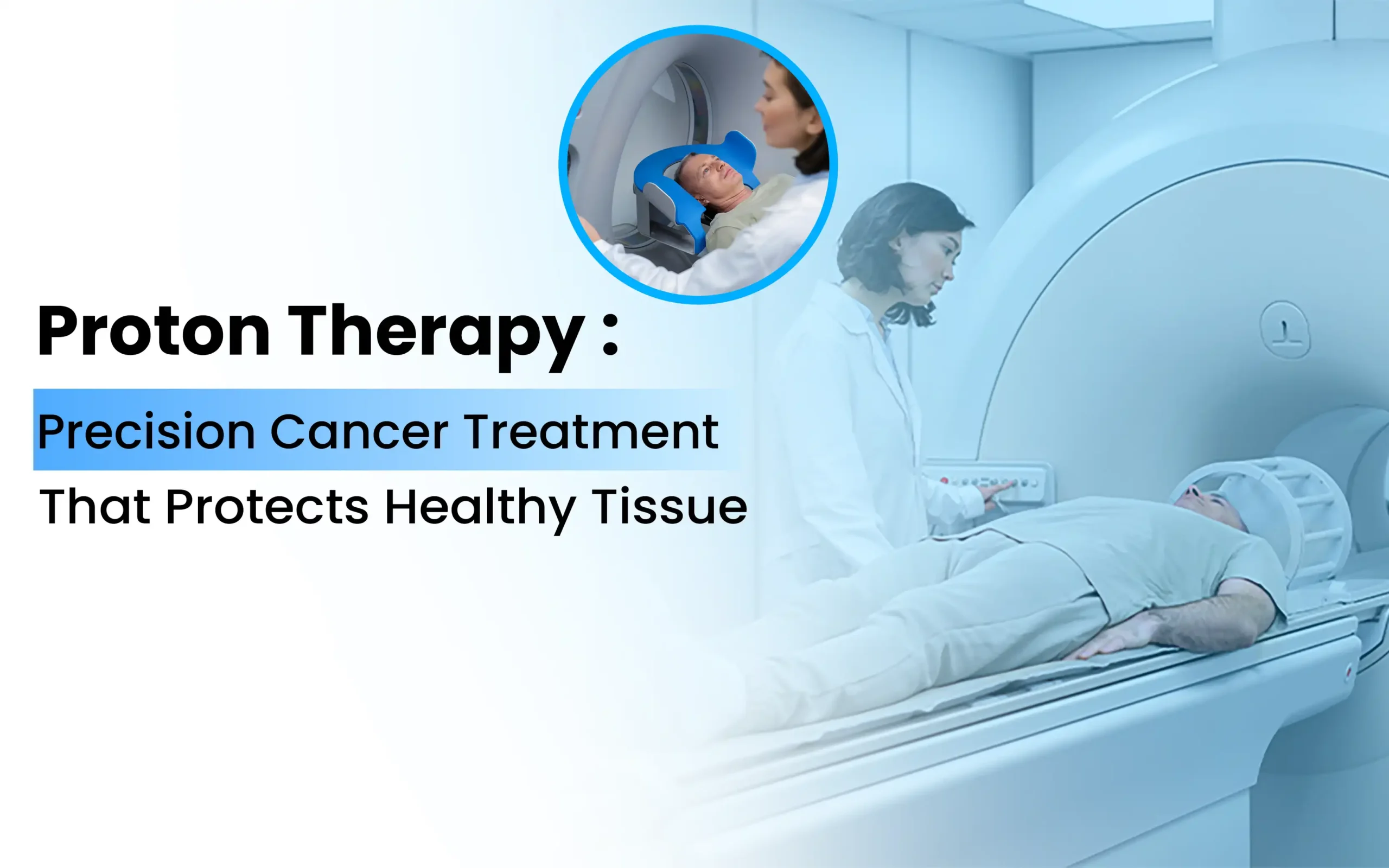
Considering the treatment of highly advanced cancer, proton therapy has demonstrated itself as one of the most accurate and efficient types of radiation oncology currently. Compared to the traditional radiation, proton beam therapy can also offer specific doses to the cancerous cells and greatly reduce the amount of radiation that is sent to the surrounding healthy tissues, which is why it is often chosen in case of complex or sensitive-location cancer.
The choice is much more than location when international patients consider proton therapy in India vs Kazakhstan. It is the assessment of healthcare facilities, price, clinical outcomes, travel arrangements, and the patient experience. The two nations have been making inroads on the medical tourism map of the world – however, they serve very different patient types and provide very different value propositions.
India has a history of providing low-cost, high-quality oncology at prices a fraction of those in the West, and multiple JCI-certified hospitals provide proton therapy at a fraction of the cost in the West. Kazakhstan, however, is an upcoming healthcare center in Central Asia, and the investments of the government via modern cancer treatment systems in the country are introducing modern technology to the area.
This step-by-step guide will not only break down all of the answers you need to know, including the nature of the healthcare systems, levels of treatment, cost, results and the issue of medical tourism, but also allows you to make an informed and confident choice based on where you will seek proton therapy treatment.
Overview of Cancer Treatment in India
Healthcare System and Infrastructure
India’s healthcare ecosystem is one of the most robust in Asia. The country is home to over 450 cancer treatment centers, including several globally recognized tertiary care hospitals. These institutions combine cutting-edge medical technology with highly trained oncologists many of whom have trained or practiced at leading centers in the US, UK, or Europe.
India’s private healthcare sector has witnessed massive investment in oncology infrastructure over the past decade, making it one of the top five medical tourism destinations in the world. Internationally accredited facilities ensure standardized protocols, English-speaking staff, and patient-centric care all of which matter greatly for international patients traveling for cancer treatment.
Availability of Proton Therapy Facilities
There is a lot of momentum towards proton therapy in India. One of the most modern proton therapy facilities in the whole Asia today is Apollo Proton Cancer Centre in Chennai which has pencil beam scanning system, the most accurate delivery system in the entire world. The infrastructure of proton therapy is also being deployed in AIIMS New Delhi, which enhances the interest of the country in ensuring the availability of this type of treatment to all groups of patients.
Today proton therapy is available in India to treat cancers such as brain tumors in children, head and neck cancers, prostate cancer, spinal cord tumors, and ocular melanomas. Waits are usually minimal and international patient services are well-structured and have specific coordinators, visa and interpreter services.
Overview of Cancer Treatment in Kazakhstan
Healthcare System and Infrastructure
As a national modernization project, Kazakhstan has been gradually changing its healthcare environment. The flagship medical center in the country is the National Scientific Center of Oncology and Transplantology in Nur-Sultan (Astana) which has oncology departments of international standards, with the resources of state-of-the-art diagnostics and multi-disciplinary boards of cancer.
The Kazakh state has invested much in attracting foreign-trained specialists and establishing collaborations with foreign healthcare networks. Although the entire hospital ecosystem remains underdeveloped relative to India, the capital and big cities have experienced spectacular improvements over the past few years, which are enabled by healthcare reforms that are meant to curb the medical tourism outflows.
Availability of Proton Therapy Facilities
The capacity of proton therapy is significantly lower in Kazakhstan. Well, the country is yet to have an entirely operational proton therapy center that would be available to all patients groups. The majority of sophisticated radiation treatment scenarios (such as proton beam treatment) are nowadays sent off to foreign facilities in Germany, South Korea, or India. The government has declared the intention to build a domestic proton plant, and the schedules of the complete patient-facing access are not clear.
It is an important fact to keep in mind that patients, whose families are based in Central Asia or in Kazakhstan, may still require traveling abroad to receive proton therapy: in this case, India is one of the most viable and competitive destinations, by default.
Comparative Analysis of Proton Therapy Costs
Cost is often the most decisive factor for patients considering proton therapy abroad. The difference between countries is staggering and India consistently offers some of the most competitive pricing globally.
Proton Therapy Cost Comparison: India vs Kazakhstan
| Cost Factor | 🇮🇳 India Best Value |
🇰🇿 Kazakhstan Limited Access |
|---|---|---|
| Proton Therapy (Full Course) | $15,000 – $30,000 | Not widely available |
| Initial Consultation | $30 – $100 | $50 – $150 |
| Diagnostics (PET/CT/MRI) | $200 – $600 | $300 – $800 |
| Hospital Stay (per day) | $80 – $250 | $100 – $300 |
| Total Estimated Cost | $20,000 – $40,000 | $50,000+ (via abroad referral) |
India’s proton therapy pricing represents a savings of 60–80% compared to the USA or Europe, without any compromise in technology or clinical outcomes. For Kazakhstani patients who currently travel to Germany or South Korea for proton therapy, India offers a geographically closer, significantly more affordable alternative with comparable and in many cases superior clinical infrastructure.
Success Rates of Proton Therapy in India vs Kazakhstan
In assessing the success rates of proton therapy, clinical outcomes should be compared with the technology, experience of the physicians as well as number of cases processed. India has a definite lead in this aspect.
The Apollo Proton Cancer Centre, as an example, has treated thousands of patients with various types of cancer, and has published results similar to those of the best proton centres in the US and Japan. The local control rates of 85 or more 90 or more of pediatric brain tumor patients treated in Indian proton centers are in accord with international standards. Cases of head and neck cancer exhibit good loco-regional control with much less xerostomia and dysfunction in swallowing – important quality-of-life outcomes.
Kazakhstan, in turn, does not have a published database of proton therapy outcomes, in large part due to the relative infancy of the infrastructure related to proton therapy, domestically. Those patients who have been proton treated based on the international referral network of Kazakhstan have been treated in third country centers, thus making it hard to attribute outcomes to the healthcare system of Kazakhstan.
India proton therapy centers are an evident, evidence-based option to patients focusing on established clinical outcome, high patient throughput, and expertise in this field.
Patient Experiences and Testimonials
In addition to clinical outcomes, the patient experience during proton therapy is of paramount importance – particularly in the case of international patients who have to deal with a new health care system in a new country.
The best cancer hospitals in India have special international patient departments, which handle all the arrangements of airport pickup, visa letters and accommodation, treatment, insurance, and follow-up. Middle-Eastern, African, Central Asian, and Southeast Asian patients often refer to the quality care, low price, warm hospitality, and availability of the English language as some of the reasons why they have decided to go to India.
Glowing testimonials of Kazakhstani patients who have undergone proton therapy in India indicate high satisfaction levels – especially in the open communication, customized care planning, and smooth cooperation of multi-disciplinary teams. Most of the patients come with a companion and the low cost of accommodation that is available in India in and around the hospital centres (Chennai, Mumbai, Delhi) is well managed and homely.
Although domestic healthcare advances in Kazakhstan are also promising, patients are now reporting that the waits in consulting a specialist are longer, experience in dealing with complex protons is less developed, and language barriers are present in areas that services international medical tourists despite many years of continuous operation in India.
Medical Tourism: Factors to Consider
Travel and Accommodation
India is particularly well-connected with Kazakhstan where direct and one-stop flights operate between Almaty and Nur-Sultan (Astana) and Chennai, Mumbai, and Delhi with an average total travel time of 6-8 hours. The typical duration of proton therapy is 3-6 weeks and India boasts of a great variety of accommodation types that accommodate the medical tourists including cheap guesthouses and fully serviced serviced apartments and hospital-operated patient lodges.
India has most of the top hospitals with proton therapy, dedicated patient family hostels, telemedicine follow-up and access to WhatsApp care coordinators, which greatly alleviate anxiety in first-time international patients and their families.
Cultural Considerations
The cultural familiarity of India with the communities of Central Asia, such as a similar fondness of vegetarian and halal food makes the transition of Kazakhstani patients easier. Large hospitals in India in medical tourism centres regularly provide multi-lingual services, and Russian-speaking coordinators are common in places such as Chennai and New Delhi a direct recognition of the high number of CIS (Commonwealth of Independent States) patients visiting India.
Kazakhstan being a culturally comfortable country to its own people, is not as diverse in terms of accommodation, language support, and patient services to outbound patients who will have to travel to Europe or East Asia anyway to get the proton-level services.
Ready to Explore Proton Therapy in India?
Our expert medical coordinators are available to help you
evaluate your case, get a second opinion, and plan your treatment journey — at no cost to you.
- Free consultation with a senior oncologist
- Transparent cost estimate within 48 hours
- Visa & travel support included
- Russian-speaking coordinators available
Call us today or fill out our inquiry form to get started.
Frequently Asked Questions (FAQs)
Q1. Is proton therapy available in Kazakhstan?
Currently, there is no domestic proton therapy facility in the country, which is fully operational, and catering to all types of patients in Kazakhstan. The majority of the complicated radiation therapy cases such as proton treatment are sent to the international centers in India, Germany or South Korea. The Kazakh government is already planning future proton facilities, but in the meantime patients requiring such treatment must consider going abroad – and India is the most affordable and reachable.
Q2. How much does proton therapy cost in India vs Kazakhstan?
In India, a full course of proton therapy typically costs between USD $15,000 and $30,000, depending on the cancer type, number of fractions, and hospital. In Kazakhstan, since proton therapy requires international referral, costs often exceed USD $50,000 when factoring in treatment fees in Germany or South Korea, plus travel and accommodation. India offers a 60–70% cost advantage with no compromise in quality.
Q3. Which Indian hospitals offer proton therapy?
Apollo Proton Cancer Centre in Chennai is the most prominent and advanced proton therapy facility in India, offering pencil beam scanning technology. AIIMS New Delhi is also advancing proton therapy capabilities. Both centers are internationally recognized and treat a high volume of domestic and international cancer patients annually.
Q4. How long does a proton therapy treatment course last?
Courses of proton therapy take 3 to 6 weeks, depending on the cancer type, stage, and treatment regimen. Patients have various sessions (fractions) within weekdays during this period. The majority of hospitals in India have flexible time schedules and can fit the entire treatment schedule in one medical visa visit.
Q5. Is proton therapy better than conventional radiation therapy?
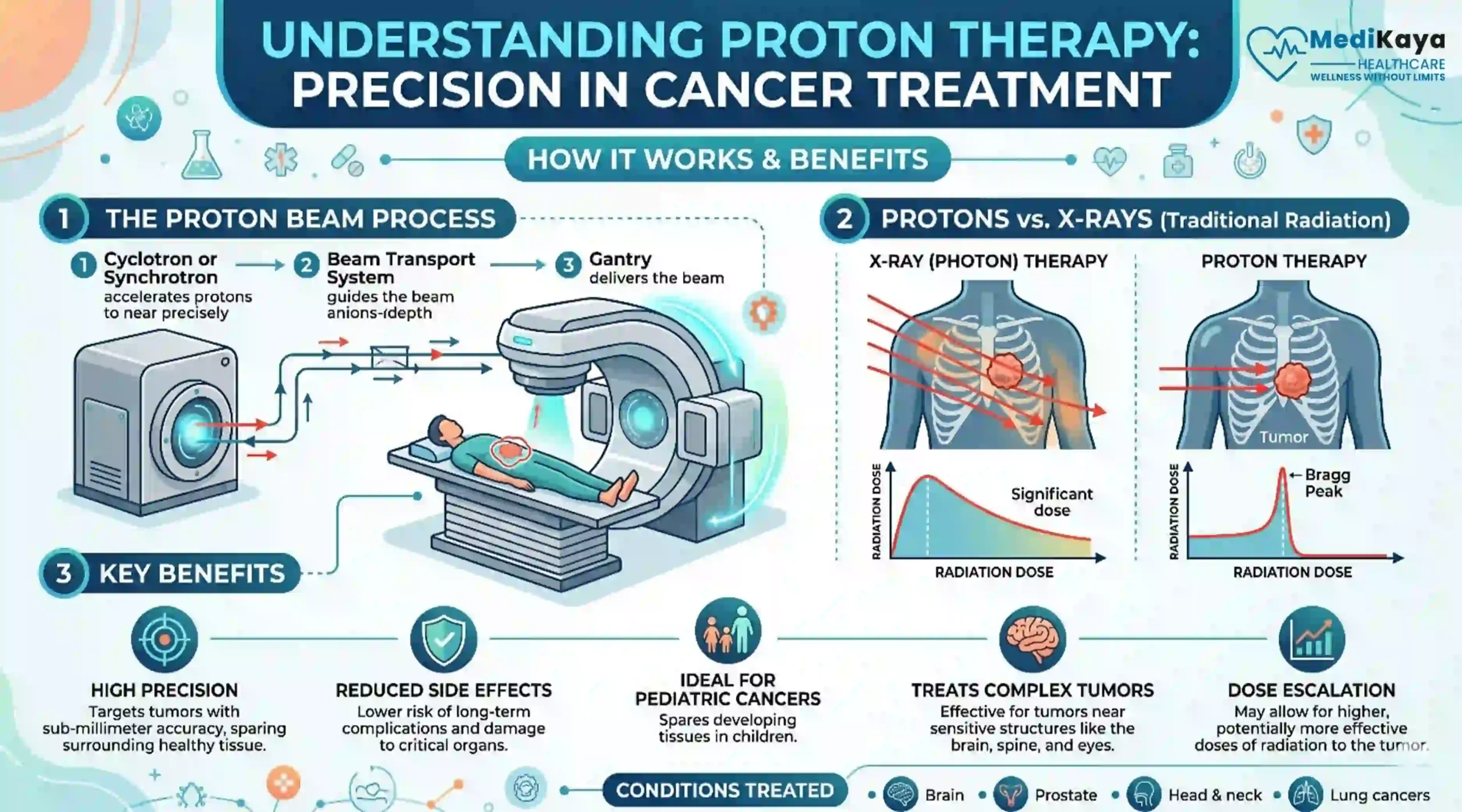
Compared to traditional radiation (X-ray based) therapy, proton therapy has a great benefit of precision. Most of the energy of the proton beams is deposited at the tumor site (proton Bragg peak effect) and exposure to normal tissue and organs is reduced. This renders it particularly useful when treating cancers in children, brain tumors, head and neck cancers as well as tumors near vital organs. Your oncologist is able to recommend proton therapy or not depending on your case.
Q6. Can Kazakhstani patients get a medical visa for India easily?
Yes. Indian hospitals also offer medical visa invitation letters that greatly facilitate the visa processing process among the citizens of Kazakhstan. The e-Medical Visa program also provides an opportunity of a smooth online application and approvals are normally provided in 3-5 business days in India. The majority of the major hospitals have special departments to help international patients with visa procedures.
Conclusion: Choosing Between India and Kazakhstan for Proton Therapy
When comparing proton therapy in India vs Kazakhstan, the evidence points clearly in one direction for most international patients. India offers a mature, proven, and cost-effective ecosystem for proton beam therapy backed by world-class infrastructure, high-volume clinical experience, outstanding success rates, and seamless international patient support.
Kazakhstan is making commendable strides in healthcare development, but as of today, it does not yet have the domestic proton therapy infrastructure to serve patients independently. Patients from Kazakhstan and neighbouring Central Asian countries who require proton therapy are increasingly turning to India as their preferred destination, citing cost savings of up to 70%, shorter travel times compared to Europe, and the confidence that comes with choosing a globally recognized oncology center.
Whether you are a patient, a caregiver, or a healthcare coordinator, this comparison makes one thing clear: for proton therapy today, India is the smarter, safer, and more accessible choice.