

Jaw cancer is a serious but often overlooked condition that affects the bones and soft tissues of the mouth and lower face. Early awareness of jaw cancer symptoms can make a significant difference in outcomes, as timely diagnosis allows patients to access effective care options, including modern oral cancer treatment strategies and specialised jaw tumor treatment plans. This comprehensive guide follows a structured medical layout to help patients, caregivers and health-conscious readers understand jaw cancer from its earliest warning signs to prevention, diagnosis and long-term recovery.
Understanding Jaw Cancer
Jaw cancer refers to malignant tumors that develop in the mandible (lower jaw), maxilla (upper jaw), or surrounding oral structures such as the gums, tongue base and inner cheek. It is often categorised under oral cancers, though tumors originating in the jawbone itself are relatively rare compared to soft-tissue oral malignancies.
Jaw cancer can arise from different cell types, including squamous cells (most common), salivary gland cells, or bone cells. Because the jaw plays a vital role in speaking, chewing, breathing and facial structure, cancer in this region can significantly impact quality of life.
One of the challenges with jaw cancer is that early-stage disease may produce subtle or easily ignored symptoms. Patients often attribute discomfort to dental issues or minor infections, delaying medical evaluation. This makes public education and routine oral screening essential for early detection.
Jaw cancer does not develop overnight. It is usually the result of long-term cellular damage influenced by lifestyle factors, environmental exposure, genetic predisposition and chronic irritation. Understanding how and why it develops helps patients make informed decisions about prevention and care.
Early Signs and Symptoms of Jaw Cancer
Recognising the early signs and symptoms of jaw cancer is critical, as the disease is significantly more treatable when detected in its initial stages. Early symptoms can be subtle and are often mistaken for routine dental problems or minor oral infections. The type and severity of symptoms depend on the tumor’s size, location and rate of growth. Being aware of both physical changes and behavioral warning signs can lead to earlier diagnosis and improved treatment outcomes.
Physical Symptoms to Look Out For
- Persistent Jaw or Mouth Pain
Ongoing pain or tenderness in the jaw or mouth that does not improve with standard dental treatment may indicate underlying cancer. This pain may be dull, sharp, or throbbing and often worsens over time. Unlike temporary dental discomfort, cancer-related pain tends to persist and spread.
- Swelling or Noticeable Lump
A visible or palpable lump in the jaw, face, or neck is a common warning sign. Swelling may feel firm and painless initially but can grow larger as the tumor progresses. Any unexplained swelling that does not subside should be medically evaluated.
- Difficulty Chewing, Swallowing, or Opening the Mouth
Jaw tumors can interfere with normal muscle and joint movement, making chewing or swallowing uncomfortable. Limited mouth opening (trismus) may develop as the cancer affects surrounding tissues. These difficulties often worsen gradually.
- Loose Teeth Without Dental Cause
Teeth may become loose when cancer weakens the jawbone structure. This loosening occurs without gum disease or trauma and may affect one or multiple teeth. Persistent tooth mobility should not be ignored.
- Numbness or Tingling Sensations
Cancer affecting nerves in the jaw can cause numbness or a tingling sensation in the lips, chin, or jaw. This symptom often indicates nerve involvement and should be investigated promptly, especially if it appears suddenly.
- Unexplained Oral Bleeding
Bleeding from the gums or inside the mouth without injury can be an early sign of malignancy. The bleeding may be occasional or persistent and is often accompanied by tissue irritation or sores.
- Non-Healing Mouth Sores or Ulcers
Ulcers or sores that do not heal within two weeks are a red flag. These lesions may appear white, red, or mixed in color and can be painful or painless. Persistent sores require immediate professional evaluation.
- Changes in Bite Alignment or Jaw Movement
Jaw cancer can alter how the teeth fit together or affect jaw movement. Patients may notice discomfort while biting or a shift in jaw alignment. These changes often develop gradually.
Behavioral Changes and Warning Signs
- Avoiding Certain Foods
Pain while chewing may cause individuals to avoid hard, spicy, or hot foods. Over time, this may lead to a limited diet and nutritional deficiencies. Food avoidance due to oral pain should be medically assessed.
- Slurred Speech or Difficulty Speaking
Tumors affecting the jaw or tongue can interfere with speech clarity. Patients may struggle to pronounce words or notice changes in voice tone. Speech difficulties may worsen as the tumor grows.
- Persistent Bad Breath
Chronic bad breath that does not improve with good oral hygiene can signal infection or tissue breakdown caused by cancer. This odor results from bacterial activity in damaged tissues.
- Fatigue and Unexplained Weight Loss
Cancer places increased metabolic demands on the body, leading to fatigue and weight loss. Reduced appetite and difficulty eating further contribute to these symptoms. Unintentional weight loss should always be investigated.
- Increased Sensitivity to Hot or Cold Foods
Heightened sensitivity to temperature changes may indicate nerve involvement or tissue damage. This discomfort often persists even after dental treatments, signaling a deeper underlying issue.

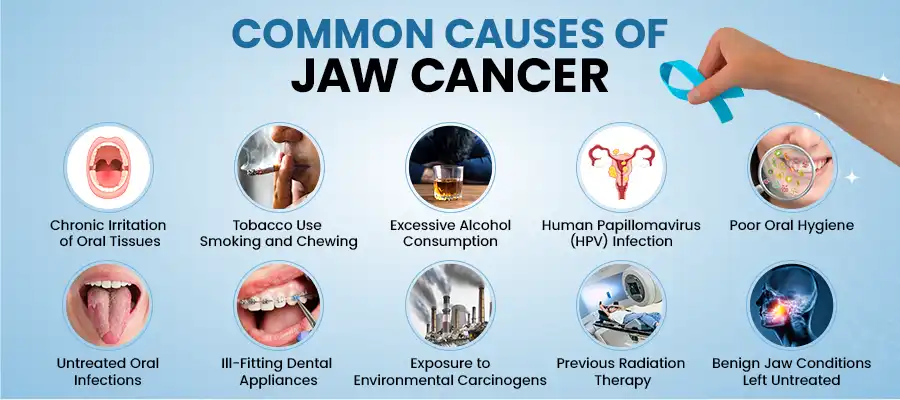
Common Causes of Jaw Cancer
Jaw cancer develops when normal cells in the jawbone or surrounding oral tissues undergo genetic mutations that lead to uncontrolled growth. While the exact cause may not always be identifiable, research has shown that long-term exposure to harmful substances, chronic irritation, infections and poor oral health significantly increase the risk. These factors damage cellular DNA over time, allowing abnormal cells to multiply and potentially form malignant tumors if early changes go unnoticed or untreated.
- Chronic Irritation of Oral Tissues
Long-standing irritation of the mouth and jaw can trigger abnormal cellular changes. Causes include sharp or broken teeth, poorly fitting dentures and rough dental restorations. Continuous friction and inflammation prevent tissues from healing properly, increasing the likelihood of cellular mutation and cancer development over time.
- Tobacco Use (Smoking and Chewing)
Tobacco contains numerous carcinogenic chemicals that directly damage oral cells. Smoking and chewing tobacco expose the jaw and mouth tissues to toxins for prolonged periods, significantly increasing cancer risk. Chewing tobacco is especially harmful because it stays in direct contact with jaw tissues for extended durations.
- Excessive Alcohol Consumption
Alcohol acts as an irritant and increases the permeability of oral tissues, allowing carcinogens to penetrate more easily. Heavy alcohol use also dehydrates tissues, making them more vulnerable to damage. When combined with tobacco, alcohol dramatically multiplies the risk of jaw and oral cancers.
- Human Papillomavirus (HPV) Infection
Certain strains of HPV, particularly HPV-16, are strongly linked to oral and jaw cancers. The virus interferes with normal cell regulation, leading to uncontrolled growth. HPV-related cancers may develop even in individuals with no history of tobacco or alcohol use.
- Poor Oral Hygiene
Neglecting oral hygiene allows bacteria to thrive, leading to chronic infections and inflammation. Persistent gum disease and untreated cavities can create an unhealthy environment that promotes abnormal cell growth. Poor oral hygiene also delays the detection of early cancerous changes.
- Untreated Oral Infections
Chronic infections in the mouth or jaw can cause ongoing inflammation and tissue damage. Inflammatory responses release chemicals that may alter DNA structure over time. If left untreated, these infections can create conditions favorable for cancerous transformation.
- Ill-Fitting Dental Appliances
Dentures or braces that do not fit properly can cause repeated trauma to oral tissues. Continuous pressure and friction lead to ulcers and chronic wounds that fail to heal. Over time, these irritated areas may undergo malignant changes.
- Exposure to Environmental Carcinogens
Occupational exposure to chemicals such as asbestos, heavy metals and industrial fumes increases cancer risk. These substances can enter the body through inhalation or direct contact with oral tissues. Long-term exposure disrupts normal cellular processes and DNA repair mechanisms.
- Previous Radiation Therapy
Individuals who have received radiation therapy to the head or neck area are at higher risk of developing jaw cancer later in life. Radiation damages healthy cells along with cancer cells, increasing the chance of genetic mutations. This risk may persist for decades after treatment.
- Benign Jaw Conditions Left Untreated
Certain non-cancerous jaw conditions, such as cysts or tumors, may become malignant if ignored. Lack of monitoring allows abnormal cells to continue growing unchecked. Early diagnosis and management of benign lesions reduce the risk of malignant transformation.
Risk Factors and Lifestyle Influences
Certain risk factors significantly increase the likelihood of developing jaw cancer-
- Tobacco use (smoking or chewing)
- Excessive alcohol consumption
- Combined tobacco and alcohol use (greatly increases risk)
- Human papillomavirus (HPV) infection
- Poor oral hygiene
- Long-term sun exposure (for lip cancers)
- Previous head and neck radiation therapy
- Family history of cancer
Diet also plays a role. Diets low in fruits and vegetables may deprive the body of antioxidants that protect against cellular damage. Conversely, a balanced diet rich in vitamins A, C and E may help lower cancer risk.
Lifestyle modifications, such as quitting tobacco and reducing alcohol intake, are among the most effective preventive strategies.
Diagnosis and Testing for Jaw Cancer
Early and accurate diagnosis is essential for successful treatment. Diagnosis typically involves a combination of clinical examination, imaging and laboratory tests.
Initial Consultations and Exams
The diagnostic process often begins with a dental or medical evaluation. During this stage, healthcare providers assess visible lesions, palpate the jaw and neck for lumps and review the patient’s medical history.
If suspicious findings are present, the patient is referred to an oral surgeon, otolaryngologist, or oncologist for further evaluation.
Advanced Diagnostic Techniques
Advanced diagnostic tools are used to confirm the presence of cancer and determine its stage-
- Biopsy- Removal of a tissue sample for microscopic examination
- X-rays- To assess bone involvement
- CT scans- For detailed imaging of bone and soft tissues
- MRI scans- To evaluate soft tissue spread
- PET scans- To detect cancer spread to other parts of the body
Staging helps determine the most appropriate oral cancer treatment approach and provides insight into prognosis.
Life-Saving Treatments for Jaw Cancer
Treatment plans are individualized based on cancer type, stage, location and the patient’s overall health. Modern medicine offers multiple effective options.
Surgical Approaches
Surgery is often the primary treatment for jaw cancer, especially when the tumor is localised. Surgical goals include complete tumor removal while preserving function and appearance as much as possible.
Procedures may range from minor excisions to more extensive resections involving portions of the jawbone. In advanced cases, reconstructive surgery using bone grafts or implants may be required to restore facial structure and function.
Advances in surgical techniques, including minimally invasive and robotic-assisted surgery, have improved outcomes and reduced recovery time.
Chemotherapy and Radiation Therapies
Chemotherapy and radiation therapy are commonly used as standalone treatments or in combination with surgery. These methods are central to comprehensive oral cancer treatment plans.
- Radiation therapy targets cancer cells with high-energy beams
- Chemotherapy uses drugs to destroy rapidly dividing cancer cells
These therapies may be administered before surgery to shrink tumors or after surgery to eliminate remaining cancer cells. Side effects are carefully managed with supportive care.
Coping Strategies for Patients
A jaw cancer diagnosis can be emotionally and physically overwhelming. Coping strategies are essential for maintaining mental health and treatment adherence.
Patients are encouraged to seek counseling, join support groups and communicate openly with healthcare providers. Nutrition counseling, speech therapy and pain management services can significantly improve quality of life during treatment.
Caregivers also play a vital role and may benefit from education and emotional support resources.
Support Systems and Resources
Strong support systems improve outcomes and recovery. Resources may include-
- Oncology social workers
- Patient advocacy organisations
- Financial counseling services
- Rehabilitation specialists
- Online and in-person cancer support groups
Access to accurate information empowers patients to actively participate in their care.
Preventive Measures and Awareness
Prevention focuses on reducing risk factors and promoting early detection. Avoiding tobacco, limiting alcohol, maintaining good oral hygiene and adopting a healthy diet are key preventive steps.
Public awareness campaigns and education initiatives encourage individuals to recognise warning signs and seek prompt evaluation.
Importance of Regular Check-Ups
Regular dental and medical check-ups are among the most effective tools for early detection. Dentists are often the first to identify suspicious oral changes.
Routine screenings allow for early intervention, increasing the likelihood of successful jaw tumor treatment and long-term survival.
⊡ Contact MediKaya Healthcare for JAW CANCER TREATMENTS Support in India
If you are seeking verified information, private hospital options, treatment cost guidance or international patient support Jaw Cancer treatments in India, our medical coordination team is here to assist you with complete confidentiality and professional care.
MediKaya Healthcare provides end-to-end patient support including hospital selection, doctor consultations, medical visa assistance, treatment coordination and post-treatment follow-up.
📞 WhatsApp & Call: +91 9717998697
📧 Email: info@medikayahealthcare.com
🌐 Website: www.medikayahealthcare.com
Follow us on:
LinkedIn | Instagram | Facebook |Twitter
Our team will respond promptly with verified medical guidance and personalised assistance.