

⊡ Understanding LASIK Surgery
☑ What is LASIK Surgery?
LASIK surgery (Laser-Assisted In Situ Keratomileusis) is a modern, minimally invasive eye procedure used to correct common vision problems such as myopia (near-sightedness), hyperopia (far-sightedness) and astigmatism. It is one of the most commonly performed and trusted vision correction surgeries worldwide, known for its precision, safety and fast recovery. LASIK works by reshaping the cornea so that light entering the eye is properly focused on the retina, resulting in clearer and sharper vision.
LASIK surgery is performed only after a detailed eye examination by a qualified eye specialist. This evaluation includes corneal thickness measurement, eye pressure testing, refractive stability and overall eye health assessment. Advanced techniques such as bladeless LASIK and wavefront-guided LASIK have further improved accuracy, safety and patient satisfaction.
LASIK is suitable for adults with stable vision and healthy eyes. However, individuals with thin corneas, severe dry eyes, or certain medical conditions may require alternative vision correction options. A personalised consultation with an experienced ophthalmologist is essential to determine eligibility.
- Clear Vision Without Glasses-
LASIK (Laser-Assisted In Situ Keratomileusis) is a popular laser eye surgery designed to permanently reduce or eliminate the need for glasses and contact lenses by correcting refractive errors. - Smart Laser Technology at Work-
Using advanced laser technology, LASIK gently reshapes the cornea so light focuses correctly on the retina delivering sharper, clearer vision. - Quick Procedure, Big Results-
The entire LASIK surgery usually takes just 10–15 minutes for both eyes, making it one of the fastest and most efficient vision correction procedures available today. - Comfortable & Painless Experience-
Performed under numbing eye drops, LASIK is virtually painless, with most patients feeling only mild pressure during the procedure. - Rapid Recovery Time-
Many patients notice improved vision within 24 hours, with no stitches and minimal downtime, allowing a quick return to daily activities. - Next-Generation LASIK Options-
Modern techniques like bladeless LASIK and wavefront-guided LASIK provide customised treatment, greater accuracy and enhanced safety. - Expert-Driven Eye Evaluation (EEAT)-
LASIK is recommended only after a detailed eye examination by an experienced ophthalmologist, including corneal mapping, eye pressure checks and vision stability analysis. - Who Can Opt for LASIK?
Adults with stable vision and healthy eyes are ideal candidates. Those with thin corneas, dry eyes, or specific medical conditions may be guided toward alternative treatments. - Long-Lasting Vision Correction-
LASIK offers durable results, helping patients enjoy clear vision for years without the daily hassle of eyewear. - A Life-Changing Upgrade-
With a strong safety record and proven success, LASIK surgery can significantly improve confidence, comfort and overall quality of life.
☑ How LASIK Surgery Works
LASIK surgery is an advanced laser eye procedure designed to correct common vision problems such as myopia (near-sightedness), hyperopia (far-sightedness) and astigmatism. The success of LASIK lies in its ability to precisely reshape the cornea, allowing light entering the eye to focus correctly on the retina. Understanding how LASIK surgery works can help patients feel more confident and informed before choosing this vision correction option.
The LASIK process begins with a comprehensive eye examination performed by an experienced ophthalmologist. This pre-surgery evaluation is a critical step and includes corneal thickness measurement, corneal mapping, pupil size analysis, eye pressure testing and vision stability assessment. These tests ensure that the patient is a suitable candidate for LASIK and that the procedure can be performed safely.
On the day of surgery, numbing eye drops are applied to keep the patient comfortable. The first step involves creating a thin, precise flap on the surface of the cornea. This is typically done using a femtosecond laser in bladeless LASIK or a microkeratome in traditional LASIK. The corneal flap is gently lifted to expose the underlying corneal tissue.
Next, an excimer laser is used to reshape the cornea with extreme accuracy. The laser removes microscopic amounts of corneal tissue based on the patient’s unique vision prescription. This reshaping corrects how light rays enter the eye, ensuring they focus directly on the retina. The laser operates for only a few seconds and is guided by advanced eye-tracking technology to enhance safety and precision.
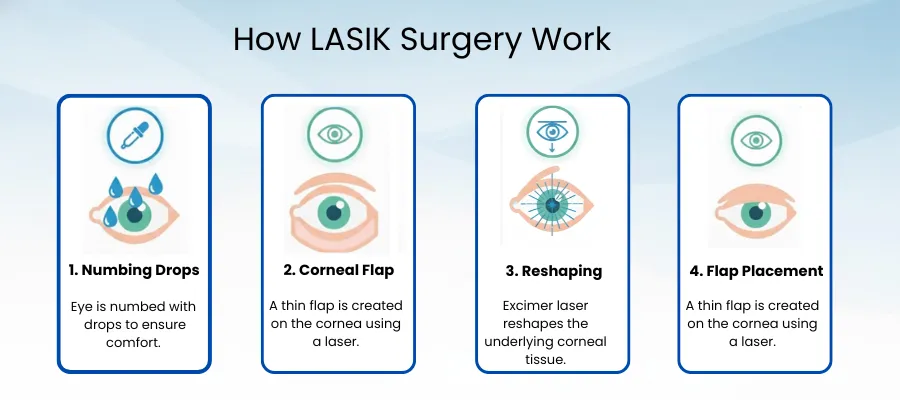
Once the cornea is reshaped, the flap is carefully repositioned. It naturally adheres to the eye without the need for stitches and begins healing immediately. Most patients experience noticeable improvement in vision within 24 hours, with minimal discomfort.
In the days following LASIK surgery, patients are advised to rest their eyes, avoid rubbing them and attend follow-up appointments. Over time, vision continues to stabilise and improve.
⊡ Safety Considerations for LASIK Surgery
☑ Evaluating the Safety of LASIK
LASIK surgery has become one of the most commonly performed vision correction procedures worldwide, but for many patients, safety remains the most important concern. Evaluating the safety of LASIK involves understanding how the procedure works, who it is suitable for, and the safeguards in place to minimise risks. Decades of clinical research, technological advancements, and real-world outcomes support LASIK as a safe and reliable option when performed on appropriate candidates by experienced eye surgeons.
One of the key factors that contributes to LASIK safety is patient selection. Not everyone is an ideal candidate and a thorough pre-operative evaluation is essential. Ophthalmologists assess corneal thickness, corneal shape, eye pressure, pupil size, tear film quality and vision stability. These tests help identify conditions such as thin corneas, severe dry eyes, or corneal disorders that may increase the risk of complications. Careful screening significantly reduces the likelihood of adverse outcomes.
Advancements in laser technology have also greatly improved LASIK safety. Modern procedures use femtosecond lasers to create precise corneal flaps and excimer lasers with advanced eye-tracking systems that adjust in real time to even the smallest eye movements. Customised treatments, such as wavefront-guided LASIK, further enhance accuracy by addressing individual visual imperfections beyond standard prescriptions.
The procedure itself is minimally invasive and typically completed within minutes. LASIK does not require stitches and the corneal flap heals naturally. Most patients experience only mild, temporary side effects such as dryness, light sensitivity, or glare during the initial healing phase. Serious complications are rare, especially when post-operative care instructions are carefully followed.
Post-surgery care plays a vital role in maintaining safety and achieving optimal results. Patients are advised to use prescribed eye drops, avoid rubbing their eyes and attend follow-up visits to monitor healing. These steps help prevent infection and ensure proper recovery.
It is also important to evaluate the experience and expertise of the surgeon and the reputation of the eye center. Board-certified ophthalmologists using FDA-approved technology in accredited facilities significantly enhance patient safety.
☑ Common Risks and Complications
LASIK surgery is one of the most popular and trusted laser eye procedures for vision correction. While it offers high success rates and long-term benefits, it is important for patients to understand the common risks and complications of LASIK before making a decision. Being informed not only builds confidence but also helps set realistic expectations about the procedure and recovery process.
One of the most frequently reported side effects after LASIK is temporary dry eyes. The surgery may reduce tear production for a short period, leading to irritation, redness, or a gritty feeling. This condition is usually mild and improves over time with the use of prescribed lubricating eye drops.
Some patients notice glare, halos, or starbursts around lights, especially at night. These visual disturbances are more common during the early healing phase and often fade as the eyes adjust. Advances such as wavefront-guided and bladeless LASIK have significantly reduced the occurrence of night vision problems.
Another possible complication is under-correction or over-correction, where the desired vision outcome is not fully achieved. In such cases, enhancement procedures can often fine-tune the results once the eyes have completely healed.
Flap-related complications, such as slight flap displacement or delayed healing, are rare but possible. Following post-surgery instructions especially avoiding eye rubbing greatly lowers this risk. Modern femtosecond laser technology has made flap creation safer and more precise than ever before.
Although uncommon, infection and inflammation can occur after LASIK surgery. These risks are minimised by strict hygiene protocols, FDA-approved equipment and the use of antibiotic and anti-inflammatory eye drops.
- Temporary dry eyes
- Glare, halos and night vision problems
- Under-correction or over-correction of vision
- Flap-related complications
- Temporary blurred or fluctuating vision
- Light sensitivity after surgery
- Risk of infection or inflammation
- Worsening of pre-existing dry eye condition
- Delayed healing in some patients
- Not suitable for patients with thin corneas or unstable vision
- Rare risk of long-term visual disturbances
- Extremely rare risk of permanent vision loss
Some patients may also experience temporary light sensitivity or fluctuating vision during recovery. These symptoms typically resolve within weeks as the cornea stabilises.
It’s important to remember that most LASIK risks are preventable with proper patient screening. Individuals with thin corneas, unstable vision, severe dry eyes, or certain medical conditions may be better suited for alternative vision correction procedures.
⊡ What International Patients Should Know
☑ Choosing a Reputable Clinic
For international patients seeking medical treatment abroad, choosing a reputable clinic is one of the most important decisions in the care journey. A trusted clinic not only ensures high-quality medical outcomes but also provides safety, transparency and peace of mind throughout the treatment process. Thorough research and informed evaluation are essential before finalising any healthcare provider.
Start by checking the credentials and experience of the medical team. Reputable clinics work with board-certified specialists who have extensive experience in their respective fields. Reviewing doctor profiles, qualifications, years of practice and specialisation helps establish medical expertise and trust. Internationally recognised accreditations and affiliations further indicate adherence to global healthcare standards.
Another key factor is the clinic’s infrastructure and technology. Well-established clinics invest in modern medical equipment, advanced treatment techniques and updated safety protocols. For procedures like LASIK or other specialised treatments, access to the latest technology significantly improves accuracy, safety and outcomes.
Patient reviews and testimonials also play a crucial role. Reading verified feedback from international patients can provide valuable insights into treatment quality, patient care, communication and overall experience. Look for clinics with transparent pricing, clear treatment plans and dedicated international patient support services.
Additionally, evaluate the clinic’s approach to pre- and post-treatment care. A reputable clinic offers thorough consultations, clear medical explanations and structured follow-up care even after you return home. Support services such as medical visa assistance, language support and travel coordination are added advantages for international patients.
Ultimately, choosing a reputable clinic ensures safe treatment, ethical medical practices and a smooth healthcare experience, making it a critical step for international patients seeking reliable and successful medical care abroad.
☑ Understanding the Costs and Insurance
For international patients planning medical treatment abroad, understanding the costs and insurance coverage is a crucial step in making informed decisions. Medical expenses can vary significantly depending on the type of treatment, hospital reputation, technology used and the expertise of the medical team. Having a clear picture of expected costs helps patients plan their budget and avoid unexpected financial stress.
Treatment costs often include multiple components such as consultation fees, diagnostic tests, procedure charges, hospital stay, medications and post-treatment follow-up care. Some advanced procedures may also involve additional expenses related to specialised equipment or personalised treatment plans. Reputable clinics usually provide transparent, itemised cost estimates in advance, allowing patients to understand exactly what is included in the treatment package.
Insurance coverage for international treatment can differ widely based on the insurance provider and policy terms. Not all insurance plans cover medical procedures performed overseas and some may require pre-authorisation. Patients should carefully review their insurance policy and confirm whether international treatment, elective procedures, or follow-up care are included. In some cases, clinics may assist with documentation or direct communication with insurance providers to streamline the process.
It is also important to consider non-medical expenses such as travel, accommodation, visa fees and local transportation. Planning for these additional costs ensures a smoother experience during the treatment journey.
By understanding treatment costs and insurance coverage in advance, international patients can make confident, well-informed healthcare decisions while focusing on recovery and overall well-being.
⊡ Post-Operative Care and Expectations
☑ Immediate Post-Surgery Care
Immediate post-surgery care plays a crucial role in ensuring a smooth recovery and optimal results after any medical procedure. Following your doctor’s instructions carefully during the first 24 to 48 hours helps minimise complications and supports faster healing. Patients are usually advised to rest and avoid strenuous activities, allowing the body to recover naturally. Adequate rest also helps reduce swelling, discomfort and fatigue after surgery.
Keeping the surgical area clean and protected is essential. Doctors often prescribe medications such as antibiotics or pain relievers to prevent infection and manage discomfort. It is important to take these medicines exactly as directed and avoid self-medication. Patients should also follow specific guidelines regarding bathing, dressing changes and wound care to promote proper healing.
Hydration and a balanced diet can further support recovery by strengthening the immune system and aiding tissue repair. Avoiding smoking, alcohol and heavy physical exertion during the initial recovery phase is strongly recommended. Attending scheduled follow-up appointments allows the healthcare provider to monitor healing and address any early concerns. Proper immediate post-surgery care not only enhances recovery but also helps achieve safe, successful and long-lasting outcomes.
☑ Long-Term Eye Care After LASIK
Long-term eye care after LASIK is essential to maintain clear vision and protect overall eye health. While LASIK provides permanent correction of refractive errors, ongoing care helps preserve results and prevents future complications. Adopting healthy eye habits and attending regular check-ups are key to long-lasting visual comfort.
Routine eye examinations should continue even after successful LASIK surgery. Regular visits allow an ophthalmologist to monitor vision stability, eye pressure and overall eye health, helping detect age-related changes or conditions such as dry eye or glaucoma at an early stage. Annual eye check-ups are generally recommended unless advised otherwise by your eye specialist.
Managing eye dryness is another important aspect of post-LASIK care. Some patients may experience mild dryness even months after surgery. Using lubricating eye drops as needed and staying well-hydrated can help maintain comfort and protect the eye surface.
Protecting your eyes from environmental factors is equally important. Wearing UV-protective sunglasses outdoors helps shield the eyes from harmful ultraviolet rays, reducing the risk of long-term damage. Limiting prolonged screen time, taking regular breaks and maintaining proper lighting can also reduce digital eye strain.
A healthy lifestyle supports long-term vision health. Eating a balanced diet rich in vitamins, avoiding smoking and managing chronic conditions such as diabetes contribute to sustained eye wellness.
By following these long-term eye care practices, patients can enjoy stable vision, comfort and lasting benefits after LASIK surgery.
⊡ Conclusion
LASIK surgery has transformed the way people achieve clear vision, offering a safe, effective and long-lasting solution for those seeking freedom from glasses and contact lenses. From understanding how the procedure works to evaluating its safety, risks, costs and long-term care, being well-informed is the foundation of a successful LASIK journey. When approached with proper knowledge and realistic expectations, LASIK can significantly enhance both visual clarity and overall quality of life.
One of the most important takeaways is that LASIK is not a one-size-fits-all procedure. Careful patient evaluation, advanced technology and the expertise of a qualified ophthalmologist play a critical role in achieving optimal outcomes. Choosing a reputable clinic, especially for international patients, ensures adherence to global medical standards, transparent communication and comprehensive pre- and post-operative care. These factors greatly reduce risks and improve patient confidence.
While LASIK is associated with a high success rate, understanding potential risks and complications helps patients make informed decisions. Most side effects are temporary and manageable, particularly when post-surgery instructions are followed diligently. Immediate post-surgery care and long-term eye care practices further support healing, vision stability and sustained comfort.
Cost considerations and insurance coverage are equally important, especially for patients traveling abroad for treatment. Clear cost breakdowns and awareness of insurance policies allow for better financial planning and a smoother treatment experience.
⊡ Contact MediKaya Healthcare for LASIK SURGERY TREATMENT Support in India
If you are seeking verified information, private hospital options, treatment cost guidance or international patient support Lasik Surgery treatment in India, our medical coordination team is here to assist you with complete confidentiality and professional care.
MediKaya Healthcare provides end-to-end patient support including hospital selection, doctor consultations, medical visa assistance, treatment coordination and post-treatment follow-up.
📞 WhatsApp & Call: +91 9717998697
📧 Email: info@medikayahealthcare.com
🌐 Website: www.medikayahealthcare.com
Follow us on:
LinkedIn | Instagram | Facebook | Twitter
Our team will respond promptly with verified medical guidance and personalised assistance.