
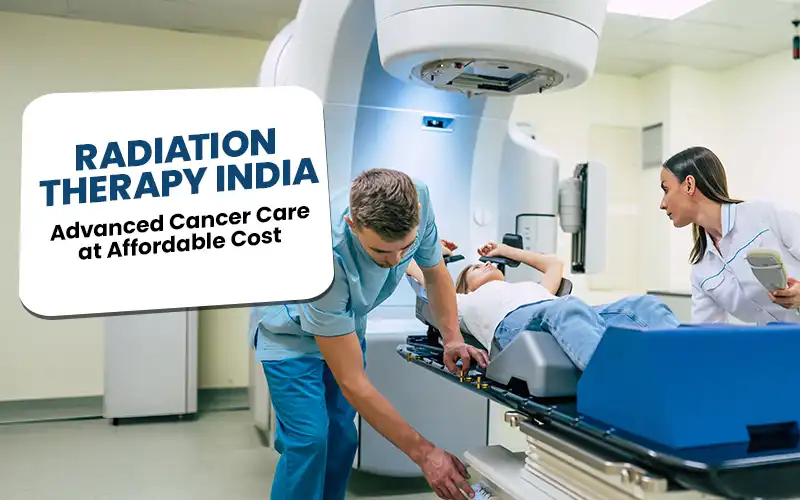
Cancer treatment has evolved significantly over the past few decades, with radiation therapy playing a vital role in managing and curing many types of cancer. Radiation therapy uses high-energy radiation to destroy cancer cells, shrink tumors and prevent cancer from spreading further in the body. It is used either as a standalone treatment or in combination with surgery, chemotherapy, immunotherapy, or targeted therapy.
India has emerged as one of the most trusted global destinations for radiation therapy, offering advanced cancer care at highly affordable costs. Patients from Asia, Africa, the Middle East, Europe and North America increasingly choose Radiation Therapy India due to its world-class infrastructure, experienced oncologists and access to the latest radiation technologies. Indian hospitals deliver treatments that match international standards while keeping costs significantly lower than those in Western countries.
Radiation therapy in India is administered by highly trained radiation oncologists, medical physicists and radiotherapy technologists using cutting-edge equipment. Most leading cancer hospitals in India are accredited by international and national bodies such as JCI and NABH, ensuring patient safety, treatment accuracy and clinical excellence.
Another key advantage is accessibility. In many developed nations, patients face long waiting times for radiation therapy due to limited equipment availability. In contrast, India offers prompt diagnosis and timely initiation of treatment, which is crucial for improving cancer outcomes. Combined with compassionate care, multilingual support and medical tourism assistance, India has become a preferred destination for advanced radiation therapy.
Read Also : Can radiation therapy in India offer safer, smarter options for international patients?
⊡ Benefits of Radiation Therapy
Radiation therapy is a cornerstone of modern cancer treatment and provides significant benefits across a wide range of cancer types. Based on the cancer stage and treatment goals, it can be used as a curative therapy, palliative treatment to relieve symptoms, or preventive therapy to lower the risk of cancer recurrence. With continuous technological advancements, radiation therapy now delivers highly accurate doses while minimising damage to healthy surrounding tissues.
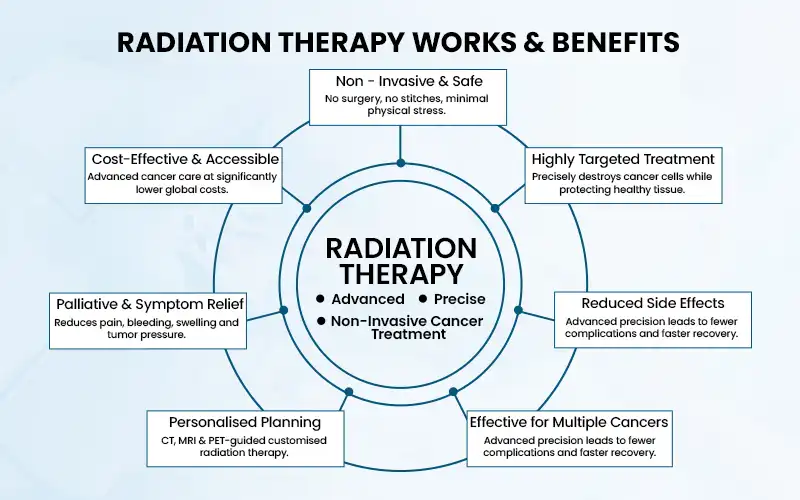
✓ Non-Invasive and Safe Treatment
Radiation therapy is a non-invasive treatment that does not require surgery, incisions, or stitches, reducing physical stress on the patient. It is particularly beneficial for patients who are not fit for surgery or whose tumors are located near vital organs. Most radiation treatments are administered on an outpatient basis. This allows patients to continue daily activities with minimal interruption and no surgical recovery period.
✓ Highly Targeted Cancer Treatment
Modern radiation therapy focuses precisely on cancer cells while protecting nearby healthy tissues. Advanced technologies such as IMRT, IGRT and SRS allow radiation beams to be shaped according to the tumor’s size, shape and exact location. This targeted delivery improves treatment accuracy and effectiveness. It also significantly lowers the risk of damage to surrounding organs and tissues.
✓ Reduced Side Effects and Faster Recovery
Because radiation is delivered with high precision, patients experience fewer treatment-related side effects. Common side effects such as pain, fatigue and skin reactions are often milder compared to traditional approaches. Reduced tissue damage leads to quicker recovery and better tolerance of treatment. Many patients are able to maintain a good quality of life during therapy.
✓ Effective for Multiple Cancer Types
Radiation therapy is widely used to treat cancers of the brain, head and neck, breast, lung, prostate, cervix and gastrointestinal tract. It can be used alone or in combination with surgery and chemotherapy to improve outcomes. Radiation therapy is effective in both early-stage and advanced cancers. This versatility makes it a key component of comprehensive cancer care.
✓ Personalised Treatment Planning
In India, radiation therapy is carefully planned using advanced imaging technologies such as CT, MRI and PET scans. These tools help create customized treatment plans tailored to each patient’s cancer type and anatomy. Multidisciplinary tumor boards review each case to determine the best treatment approach. This ensures precision, safety and optimal clinical results.
✓ Palliative Care and Symptom Relief
Radiation therapy plays an important role in relieving cancer-related symptoms such as pain, bleeding, swelling and pressure from tumors. It is especially effective in advanced or metastatic cancer cases. By shrinking tumors, radiation therapy improves comfort and daily functioning. This significantly enhances the patient’s quality of life.
✓ Cost-Effective and Accessible
Radiation therapy in India offers advanced treatment at a fraction of the cost compared to many Western countries. Despite lower costs, hospitals maintain international standards of care and technology. This affordability makes high-quality cancer treatment accessible to both domestic and international patients. India’s healthcare system ensures effective treatment without compromising safety or outcomes.
⊡ Advanced Radiation Therapy Techniques
India is at the forefront of adopting and implementing advanced radiation therapy technologies. Leading cancer centers are equipped with state-of-the-art machines that deliver high-precision radiation with exceptional accuracy.
✓ Intensity-Modulated Radiation Therapy (IMRT)
IMRT is one of the most commonly used advanced radiation techniques in India. It allows radiation beams to be modulated in intensity, delivering higher doses to cancer cells while sparing surrounding healthy tissues. This is especially useful for tumors located near critical organs such as the brain, spinal cord and salivary glands.
IMRT is widely used in treating prostate cancer, head and neck cancers, gynecological cancers and brain tumors. Indian hospitals utilize advanced treatment planning software and imaging tools to ensure precise dose delivery. This results in fewer side effects, better tumor control and improved quality of life for patients.
✓ Stereotactic Radiosurgery (SRS)
Stereotactic Radiosurgery (SRS) is a highly precise radiation therapy technique used primarily for small tumors in the brain and spine. Despite the name, SRS is a non-surgical procedure that delivers a high dose of radiation in one or a few sessions.
India has several advanced centers equipped with technologies such as Gamma Knife, CyberKnife and advanced linear accelerators capable of SRS. These systems provide sub-millimeter accuracy, making them ideal for treating brain metastases, arteriovenous malformations and functional neurological disorders.
⊡ Cost of Radiation Therapy in India
One of the primary reasons international patients choose Radiation Therapy India is its affordability. The cost of radiation therapy in India is significantly lower than in countries like the USA, UK, or Europe, without compromising treatment quality.
On average, radiation therapy costs in India range between INR 1,50,000 to INR 5,00,000 (approximately USD 1,800 to USD 6,000), depending on the technique, number of sessions and type of cancer. Advanced techniques such as IMRT or SRS may cost more initially but often reduce long-term complications and overall treatment expenses.
These costs typically include consultation, treatment planning, radiation delivery and follow-up visits. Accommodation, medications and additional therapies may be charged separately.
Comparison with Other Countries
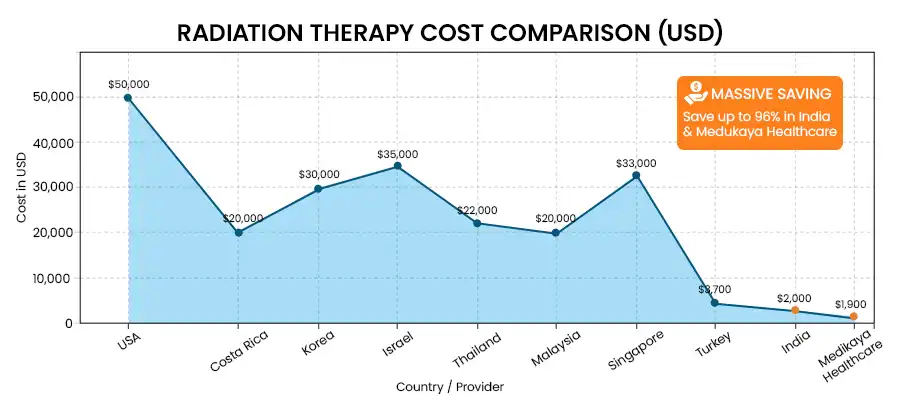
When compared globally, radiation therapy in India offers exceptional value. In the United States, radiation therapy can cost between USD 15,000 to USD 50,000. In the UK and Europe, prices often range from USD 10,000 to USD 30,000.
Countries like Thailand, Turkey and Malaysia also offer competitive pricing, but India stands out due to its extensive network of specialised cancer hospitals, experienced radiation oncologists and availability of advanced technologies. The combination of affordability, expertise and accessibility makes India a leading destination for radiation therapy.
| Country / Provider | Average Cost (USD) |
|---|---|
| USA | $50,000 |
| Israel | $35,000 |
| Singapore | $33,000 |
| South Korea | $30,000 |
| Thailand | $22,000 |
| Costa Rica | $20,000 |
| Malaysia | $20,000 |
| Turkey | $3,750 |
| India | $2,000 |
| Medikaya | $1,900 |
To better illustrate the potential savings, the graph below compares the average costs of treatment by country
Insurance Coverage and Financing Options
Most Indian health insurance policies cover radiation therapy as part of cancer treatment, including hospitalisation and outpatient procedures, subject to policy terms. Specialised cancer and critical illness insurance plans provide additional financial support.
International patients may use global insurance policies, depending on coverage conditions. Many hospitals in India have dedicated insurance and billing teams to assist with documentation, approvals and claims. For uninsured patients, hospitals often offer package pricing and flexible payment options.
⊡ Choosing the Right Cancer Treatment Center
Selecting the right cancer treatment center is a critical step in ensuring the success of radiation therapy. The quality of care, expertise of specialists and available technology all play a major role in treatment outcomes.
Key Factors to Consider
Patients should evaluate hospitals based on accreditation, infrastructure and clinical expertise. Accredited hospitals with international and national certifications follow strict safety and quality standards. The availability of advanced radiation technologies and experienced radiation oncologists is essential for accurate and effective treatment.
✓ Advanced Treatment Planning & Precision
Advanced imaging tools like CT, MRI and PET-CT help doctors map tumors accurately before radiation therapy. Precise planning ensures high radiation delivery to cancer cells while protecting surrounding healthy tissues. This improves treatment effectiveness and reduces side effects.
✓ Availability of Comprehensive Cancer Services
A comprehensive cancer center provides diagnosis, surgery, chemotherapy, radiation therapy and supportive care in one location. This integrated approach ensures seamless coordination among specialists. Patients benefit from faster decision-making and consistent care throughout treatment.
✓ Experience with Complex and Rare Cancers
Centers treating a high number of complex and rare cancers develop deeper clinical expertise. Experienced teams are better equipped to manage complications and customise treatment plans. This often leads to improved outcomes and higher patient confidence.
✓ Infection Control & Patient Safety Standards
Strict infection control protocols are essential for cancer patients with weakened immunity. Advanced safety measures reduce the risk of treatment-related complications. High-quality centers maintain clean environments, emergency support and intensive care facilities.
✓ Rehabilitation & Supportive Therapies
Rehabilitation services such as physiotherapy, nutrition guidance and pain management support recovery during and after radiation therapy. These services help patients maintain strength and quality of life. Emotional and psychological support further improves overall well-being.
✓ Use of Evidence-Based Treatment Protocols
Top hospitals follow internationally recognised, evidence-based treatment guidelines. This ensures patients receive therapies proven to be safe and effective. Such protocols reflect a commitment to global clinical standards and continuous improvement.
✓ Technology Upgrades & Continuous Innovation
Cancer centers that regularly upgrade their equipment offer safer and more advanced treatment options. New radiation technologies improve accuracy and shorten treatment time. Continuous innovation demonstrates a hospital’s dedication to excellence in cancer care.
✓ Patient Education & Counseling Services
Educating patients about treatment procedures and possible side effects helps reduce fear and anxiety. Counseling services support emotional health and encourage treatment compliance. Informed patients are more confident and engaged in their care.
✓ Accessibility & Location Convenience
Easy access to the hospital is important for patients undergoing frequent radiation sessions. Nearby accommodation and transport facilities reduce physical and mental stress. Convenience plays a key role in maintaining treatment continuity.
✓ Ethical Practices & Transparent Billing
Transparent communication about costs, treatment plans and outcomes builds trust between patients and hospitals. Ethical practices ensure patients make informed decisions without financial surprises. Clear billing policies enhance confidence, especially for international patients.
⊡ Contact MediKaya Healthcare for RADIATION THERAPY Support in India
If you are seeking verified information, private hospital options, treatment cost guidance or international patient support Radiation Therapy in India, our medical coordination team is here to assist you with complete confidentiality and professional care.
MediKaya Healthcare provides end-to-end patient support including hospital selection, doctor consultations, medical visa assistance, treatment coordination and post-treatment follow-up.
📞 WhatsApp & Call:+91 9205491370
📧 Email: info@medikayahealthcare.com
🌐 Website: www.medikayahealthcare.com
Follow us on:
LinkedIn | Instagram | Facebook | Twitter
Our team will respond promptly with verified medical guidance and personalised assistance.