
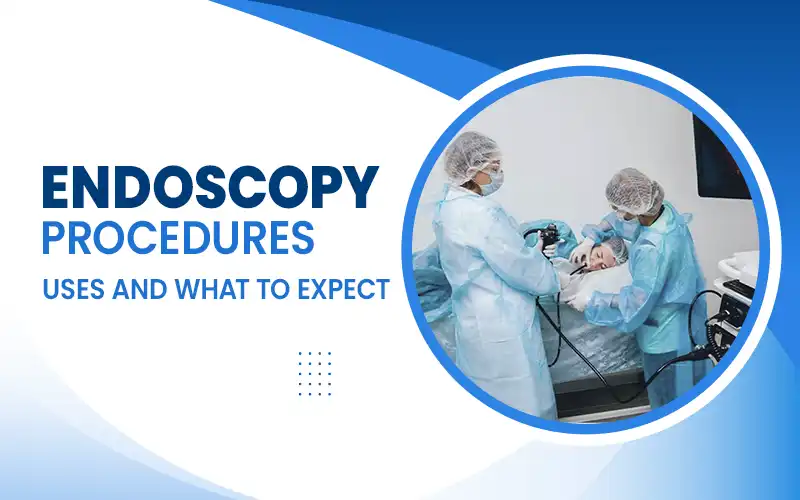
Endoscopy is a widely used medical procedure that allows doctors to examine the inside of the body using a specialised instrument called an endoscope. An endoscope is a thin, flexible tube equipped with a light source and a camera, enabling real-time visualisation of internal organs on a monitor. Over the years, endoscopy has become an essential tool in modern medicine due to its accuracy, minimal invasiveness and ability to diagnose and treat a wide range of conditions.
Understanding the types of endoscopy procedures, uses and what to expect helps patients feel more informed and confident before undergoing the test. Endoscopy is commonly used to investigate symptoms such as persistent pain, bleeding, difficulty swallowing, breathing issues, or urinary problems. In many cases, it can also be used therapeutically, reducing the need for open surgery.
Understanding Endoscopy and Its Importance
Endoscopy refers to a group of procedures used to visually inspect internal organs and tissues without making large surgical incisions. The procedure can be performed through natural body openings such as the mouth, anus, or urethra, or through a small incision when necessary.
Why Is Endoscopy Important?
Endoscopy plays a crucial role in modern healthcare by allowing doctors to examine internal organs with precision and minimal discomfort. It helps in identifying medical conditions at an early stage, understanding symptoms accurately and providing effective treatment without the need for major surgery. This approach improves patient safety, treatment outcomes and overall recovery experience.
- Early Diagnosis of Diseases
Endoscopy enables doctors to detect abnormalities such as ulcers, infections, inflammation and cancers at an early stage. Early diagnosis allows timely treatment, which significantly improves success rates and reduces the risk of complications. - Accurate Evaluation of Symptoms
By providing real-time visualisation of internal organs, endoscopy helps doctors accurately determine the cause of symptoms like pain, bleeding, or difficulty swallowing. This precision reduces uncertainty and helps in creating a targeted and effective treatment plan. - Minimally Invasive Treatment
Endoscopic procedures are performed through natural body openings or small incisions, avoiding large surgical cuts. This reduces pain, lowers the risk of infection and minimises scarring while allowing both diagnosis and treatment in the same procedure. - Faster Recovery Compared to Surgery
Because endoscopy is less invasive than traditional surgery, patients typically experience shorter hospital stays and quicker recovery times. Most patients can return to normal activities much sooner, improving comfort and quality of life.
Many serious conditions, including cancers, ulcers, infections and inflammatory diseases, can be detected early through endoscopy, improving treatment outcomes.
Types of Endoscopic Techniques
There are several endoscopic techniques, each designed to examine specific parts of the body. The type of endoscopy recommended depends on the symptoms, suspected condition and area being examined.
- Flexible Endoscopy
Flexible endoscopes are bendable and commonly used to examine the gastrointestinal tract, respiratory system and urinary tract. These procedures are usually performed with sedation for patient comfort.
- Rigid Endoscopy
Rigid endoscopes are straight instruments used mainly in surgical procedures or examinations of joints, nasal passages, or certain organs. These are often performed under general anesthesia.
- Capsule Endoscopy
This technique involves swallowing a small capsule containing a camera. As it travels through the digestive tract, it captures thousands of images. It is especially useful for examining the small intestine.
Common Types of Endoscopy Procedures
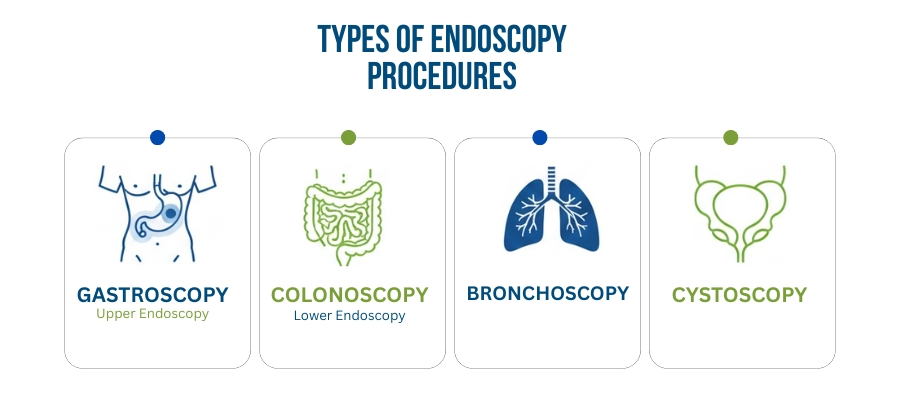
Gastroscopy (Upper Endoscopy)
Doctors perform gastroscopy, also called upper endoscopy, to examine the esophagus, stomach and the first part of the small intestine (duodenum).
Procedure–
Doctors pass a flexible endoscope through the mouth and down the throat. The procedure usually lasts 15–30 minutes and often involves mild sedation.
Uses-
- Diagnosing acid reflux and ulcers
- Detecting infections such as H. pylori
- Investigating unexplained nausea or vomiting
- Identifying tumors or bleeding
What to Expect?
Patients may experience mild throat discomfort afterward, which usually resolves within a few hours.
Colonoscopy (Lower Endoscopy)
Doctors use colonoscopy to examine the colon and rectum and detect abnormalities such as polyps, inflammation, or cancer.
Procedure-
Doctors insert the endoscope through the rectum, allowing them to view the entire colon. They commonly use sedation for patient comfort.
Uses-
- Screening for colorectal cancer
- Investigating chronic diarrhea or constipation
- Detecting polyps and removing them
- Diagnosing inflammatory bowel disease
What to Expect?
Bloating or gas may occur after the procedure but most patients recover quickly.
Bronchoscopy
Bronchoscopy allows doctors to examine the airways and lungs using a bronchoscope inserted through the nose or mouth.
Procedure-
The procedure is usually performed with sedation or local anesthesia. It takes about 30–60 minutes.
Uses-
- Diagnosing lung infections
- Detecting tumors or airway blockages
- Investigating chronic cough or bleeding
- Collecting tissue samples
What to Expect?
Mild sore throat or cough may occur temporarily after the procedure.
Cystoscopy
Doctors use cystoscopy to examine the bladder and urethra.
Procedure-
Doctors insert a thin endoscope through the urethra into the bladder. They use local or general anesthesia as needed.
Uses-
- Investigating urinary tract infections
- Detecting bladder stones or tumors
- Evaluating blood in urine
- Diagnosing urinary obstruction
What to Expect?
Patients may feel a mild burning sensation during urination for a short period afterward.
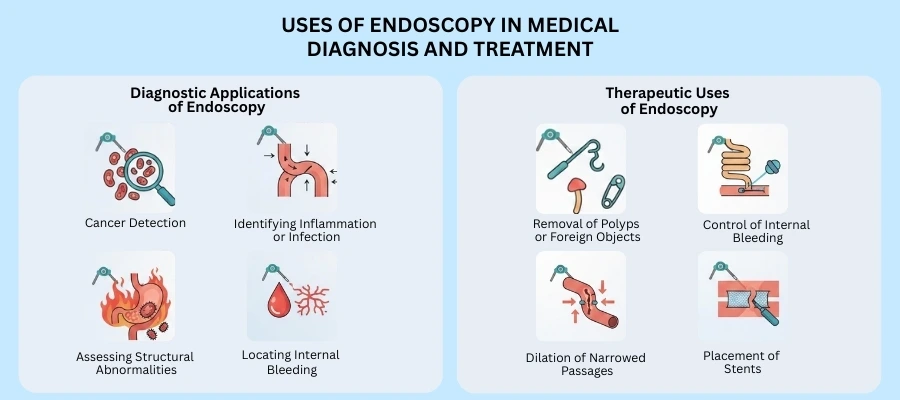
Uses of Endoscopy in Medical Diagnosis and Treatment
Endoscopy plays a vital role in modern healthcare by allowing doctors to diagnose and treat a wide range of medical conditions using a minimally invasive approach. By providing direct, real-time visualisation of internal organs, endoscopy improves diagnostic accuracy and enables immediate therapeutic intervention, often during the same procedure.
Diagnostic Applications of Endoscopy
Endoscopy is highly effective for diagnosing internal diseases because it allows doctors to directly view organs and tissues and collect biopsy samples when needed. This precise visualisation helps in early detection, accurate diagnosis and timely treatment planning, often eliminating the need for exploratory surgery or more invasive diagnostic tests.
Also Read: Bariatric Surgery Planning in India: Why International Patients Prefer Accredited Hospitals
Common Diagnostics Uses
- Cancer Detection
Endoscopy helps identify early-stage cancers by detecting abnormal growths or lesions. Doctors can take biopsies immediately for confirmation, improving early treatment outcomes. - Identifying Inflammation or Infection
It allows doctors to detect signs of inflammation, ulcers, or infection in organs such as the stomach, intestines, or lungs, enabling accurate diagnosis and targeted treatment. - Locating Internal Bleeding
Endoscopy can precisely locate the source of internal bleeding in the digestive or respiratory tract, which is essential for timely medical intervention. - Assessing Structural Abnormalities
Endoscopy allows doctors to clearly visualise structural issues such as strictures, blockages, or abnormal tissue growth, helping them determine severity and choose the most appropriate treatment approach.
Therapeutic Uses of Endoscopy
Beyond diagnosis, doctors also use endoscopy widely for treatment. They can manage many medical conditions during the same procedure, reducing the need for open surgery, lowering risks and shortening hospital stays and recovery time.
Common Therapeutic Uses
- Removal of Polyps or Foreign Objects
Endoscopy allows doctors to safely remove polyps or accidentally swallowed objects, preventing complications and reducing cancer risk. - Control of Internal Bleeding
Doctors can stop bleeding during endoscopy using techniques such as cauterisation or clipping, providing immediate treatment. - Dilation of Narrowed Passages
Doctors can gently widen narrowed areas in the esophagus, bile ducts, or intestines to restore normal function and relieve symptoms. - Placement of Stents
Doctors can place stents endoscopically to keep blocked or narrowed passages open, improving organ function and patient comfort.
Preparing for an Endoscopy Procedure
Proper preparation is essential for a successful and accurate endoscopy.
Pre-Procedure Instructions
Proper preparation is essential for a safe and successful endoscopy. Following the doctor’s instructions helps ensure clear visualisation of internal organs, reduces the risk of complications, and improves the accuracy of results. Doctors may adjust preparation requirements depending on the type of endoscopy being performed.
- Fasting for Several Hours
Patients are usually advised not to eat or drink for several hours before the procedure. Fasting ensures that the stomach or intestines are empty, allowing clear visibility and reducing the risk of nausea or aspiration during sedation. - Avoiding Certain Medications
Doctors may ask patients to pause or adjust certain medications, such as blood thinners or diabetes medicines, before the procedure. This helps reduce the risk of bleeding or other complications and patients should always follow their doctor’s specific guidance. - Bowel Preparation for Colonoscopy
For colonoscopy, patients must cleanse the bowel using prescribed laxatives or a special solution. A clean colon allows the doctor to accurately detect polyps, inflammation, or other abnormalities without obstruction. - Arranging Transportation After Sedation
Sedation can cause drowsiness and slow reaction times for several hours after the procedure. Doctors advise patients to arrange a family member or caregiver to take them home safely and provide assistance if needed.
Following instructions carefully ensures clear visualisation and minimises risks.
- Vital Signs Are Checked
Before the procedure, medical staff check vital signs such as blood pressure, heart rate, oxygen levels and temperature. This ensures the patient is stable and ready to safely undergo the endoscopy. - Sedation or Anesthesia Is Administered
Depending on the type of endoscopy, doctors administer mild sedation or anesthesia to help the patient relax and stay comfortable. This reduces anxiety, minimises discomfort and allows the doctor to perform the procedure smoothly. - The Procedure Is Performed in a Sterile Environment
Doctors perform endoscopy in a clean, controlled and sterile setting to prevent infection. Medical teams follow strict safety and hygiene protocols to ensure patient safety throughout the procedure. - Patients Are Monitored During Recovery
Medical staff observe patients after the procedure until the effects of sedation wear off. Medical staff monitor vital signs and overall comfort to ensure a safe and smooth recovery before discharge.
Doctors complete most endoscopic procedures within an hour.
Post-Procedure Care and Recovery
Recovery after endoscopy is usually quick, especially for diagnostic procedures.
Common Side Effects and Complications
Mild and temporary side effects may include-
- Bloating or Gas
Bloating or gas may occur due to the air introduced into the digestive tract during the endoscopy to improve visibility. This sensation is temporary and usually resolves on its own within a few hours after the procedure. - Mild Discomfort
Some patients may experience mild abdominal or chest discomfort following the procedure, especially after gastrointestinal endoscopy. This usually lasts for a short time and subsides as the body recovers from the procedure. - Sore Throat
A sore throat is common after procedures like gastroscopy, as the endoscope passes through the throat. The irritation is usually mild and improves within a day; soothing fluids or capsulecan help relieve discomfort.
Serious complications are rare but may include bleeding or infection.
Follow-Up Care and Recommendations
After the procedure-
- Doctors review findings with the patient
-
Doctors share biopsy results later if they take samples.
-
Doctors may recommend follow-up tests or treatments.
Doctors advise patients to follow post-procedure instructions closely for optimal recovery.
⊡ Contact MediKaya Healthcare for ENDOSCOPY Support in India
If you are seeking verified information, private hospital options, treatment cost guidance or international patient support Endoscopy in India, our medical coordination team is here to assist you with complete confidentiality and professional care.
MediKaya Healthcare provides end-to-end patient support including hospital selection, doctor consultations, medical visa assistance, treatment coordination and post-treatment follow-up.
 WhatsApp & Call: +91 9205491370
 Email: info@medikayahealthcare.com
 Website: www.medikayahealthcare.com
Follow us on:
LinkedIn | Instagram | Facebook | Twitter
Our team will respond promptly with verified medical guidance and personalised assistance.