

Healthy kidneys quietly perform life-sustaining work filtering waste, balancing fluids, regulating blood pressure and supporting overall metabolism. When creatinine levels rise, it can be a sign that kidney function is under strain. The good news? Many people can support their kidneys with safe, natural strategies alongside medical care. This comprehensive guide explains what creatinine is, why it matters and practical, natural ways to improve kidney function including diet, hydration, lifestyle and evidence-informed remedies, so you can reduce creatinine naturally and protect long-term kidney health.
Understanding Creatinine and Kidney Function
What Is Creatinine?
Creatinine is a waste product formed when muscles use creatine for energy. Every day, your body produces creatinine at a fairly steady rate depending on muscle mass, age, sex and activity level. Healthy kidneys filter creatinine from the blood and excrete it in urine. Because this process is consistent, creatinine becomes a reliable marker to assess how well the kidneys are filtering blood.
Doctors commonly measure creatinine through a blood test and may calculate the estimated glomerular filtration rate (eGFR). When creatinine levels are higher than normal, it suggests that filtration is impaired or that production has temporarily increased (for example, after intense exercise or dehydration). Importantly, a single elevated reading doesn’t always mean chronic kidney disease; trends over time and clinical context matter.
Normal creatinine ranges vary, but persistent elevations deserve attention. Factors such as high protein intake, certain medications (like NSAIDs), dehydration, infections, or underlying kidney conditions can influence results. Understanding creatinine and its effects, helps you take informed steps to support kidney health safely rather than relying on quick fixes.
Why is Kidney Function Important?
Kidneys are vital organs that perform several life-sustaining functions beyond simply removing waste from the body. They work continuously to keep the internal environment stable, support major organ systems and maintain overall health. When kidney function declines, these processes are disrupted, affecting energy levels, heart health, bones and long-term quality of life. Understanding their role highlights why early care and natural support are essential.
- Waste Removal and Blood Purification
The kidneys filter waste products such as urea and creatinine from the bloodstream and remove excess fluids through urine. This process keeps creatinine levels within a healthy range and prevents toxin buildup. When filtration is impaired, waste accumulates, leading to fatigue, nausea and mental fog. - Electrolyte and Fluid Balance
Healthy kidneys regulate electrolytes like sodium, potassium and calcium, which are crucial for muscle movement, nerve signals and heart rhythm. They also balance body fluids. Poor kidney function can cause swelling, muscle cramps, dehydration, or fluid overload. - Blood Pressure Control
Through the renin-angiotensin system, kidneys help regulate blood pressure. Reduced kidney function often leads to high blood pressure, increasing the risk of cardiovascular disease and further kidney damage. - Bone Health and Red Blood Cell Production
Kidneys activate vitamin D for calcium absorption and produce erythropoietin, which supports red blood cell formation. Impaired function may result in weak bones and anemia. - Long-Term Health and Quality of Life
Even mild kidney damage can progress if risk factors are unmanaged. Early lifestyle changes and natural ways to improve kidney function help protect overall health and daily well-being.
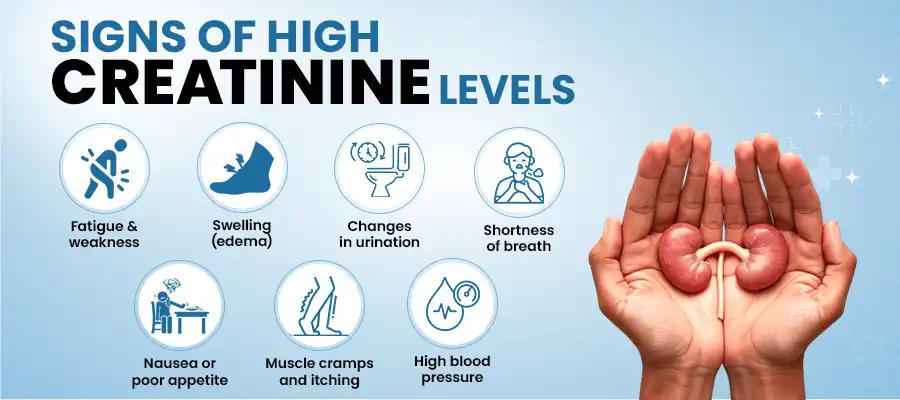
Signs of High Creatinine Levels
Elevated creatinine may be silent at first, especially in early kidney stress. As levels rise or persist, symptoms can appear. Common signs include-
- Fatigue and weakness-Waste buildup can reduce energy and exercise tolerance.
- Swelling (edema)-Fluid retention may show in ankles, feet, hands, or around the eyes.
- Changes in urination-Decreased output, foamy urine (protein), or darker color can signal filtration issues.
- Shortness of breath-Fluid overload or anemia linked to kidney dysfunction may contribute.
- Nausea or poor appetite-Toxin accumulation can affect digestion.
- Muscle cramps and itching-Electrolyte imbalances and waste buildup can irritate nerves and skin.
- High blood pressure-Kidneys help regulate pressure; dysfunction can push numbers up.
Because these symptoms overlap with many conditions, lab testing is essential. If you notice persistent symptoms especially swelling, reduced urination, or breathlessness seek medical evaluation promptly. Early detection allows for timely lifestyle changes and treatment that can slow progression and help reduce creatinine safely.
Natural Ways to Reduce Creatinine Levels
Dietary Changes and Nutritional Tips
Diet is one of the most powerful high creatinine home remedies when tailored correctly. The goal is to reduce kidney workload while meeting nutritional needs.
- Moderate protein intake-Excess protein increases waste production. Choose appropriate portions and prioritise high-quality sources (eggs, yogurt, tofu, legumes) as advised by your clinician.
- Limit red and processed meats-These can raise creatinine and acid load. Opt for plant-forward meals more often.
- Choose kidney-friendly carbs-Whole grains in moderate portions, rice, oats and fruits like apples and berries provide energy without excessive waste.
- Mind sodium-Too much salt raises blood pressure and strains kidneys. Cook at home, read labels and flavor with herbs instead of salt.
- Balance potassium and phosphorus-Depending on kidney status, you may need to moderate foods high in these minerals. Get individualised guidance before making major restrictions.
- Increase antioxidants-Colorful fruits and vegetables (bell peppers, cabbage, cauliflower) help combat oxidative stress.
Avoid crash diets and unproven “detoxes.” Sustainable, balanced eating supports kidney function and helps stabilise creatinine levels over time.
The Role of Hydration
Adequate hydration helps kidneys flush waste efficiently, making it a simple yet effective way to reduce creatinine. Dehydration concentrates creatinine in the blood and can falsely elevate readings.
- Drink consistently-Aim for pale-yellow urine unless your doctor advises fluid restriction.
- Spread intake through the day-Steady hydration is better than large volumes at once.
- Choose water first-Limit sugary drinks and excess caffeine, which can dehydrate.
- Account for activity and climate-Hot weather and exercise increase fluid needs.
If you have advanced kidney disease or heart conditions, fluid needs may differ always follow medical advice. For most people, mindful hydration is a cornerstone of natural ways to improve kidney function.
Exercise and Lifestyle Adjustments
Types of Exercises Beneficial for Kidneys
Regular, moderate exercise improves blood pressure control, insulin sensitivity and circulation. key factors for kidney health-
- Walking and cycling-Low-impact cardio supports cardiovascular health without overtaxing muscles.
- Swimming or water aerobics-Gentle on joints and excellent for endurance.
- Strength training (light to moderate)-Maintains muscle mass, which supports metabolism; avoid extreme lifting that can spike creatinine temporarily.
- Yoga and stretching-Enhance flexibility, circulation and stress reduction.
Aim for 150 minutes of moderate activity weekly. Warm up, cool down and stay hydrated. If you’re new to exercise or have kidney disease, start slow and consult your healthcare provider.
Stress Management Techniques
Chronic stress elevates cortisol and blood pressure, indirectly harming kidneys. Managing stress is an often-overlooked but powerful kidney protector.
- Mindfulness and meditation-Even 10 minutes daily can lower stress hormones.
- Breathing exercises-Slow, deep breathing improves oxygenation and calm.
- Sleep hygiene-Aim for 7–9 hours; poor sleep worsens metabolic and blood pressure control.
- Social connection-Supportive relationships buffer stress and improve adherence to healthy habits.
Lower stress supports hormonal balance and cardiovascular health both essential for maintaining healthy creatinine levels.
Herbs and Natural Remedies
Herbs That Support Kidney Health
Some traditional herbs are used to support kidney wellness. Evidence varies, so use them cautiously and with medical guidance-
- Dandelion leaf-Mild diuretic properties may support fluid balance.
- Nettle leaf-Traditionally used for urinary support and inflammation.
- Astragalus-Studied in some contexts for kidney protection and immune support.
Herbs are not cures and may interact with medications. Always discuss use with your healthcare provider, especially if you have kidney disease.
Natural Supplements to Consider
Certain supplements may support kidney health when appropriate-
- Omega-3 fatty acids-Anti-inflammatory benefits that support cardiovascular and kidney health.
- Vitamin D (as advised)-Kidneys activate vitamin D; supplementation may be needed if levels are low.
- Probiotics-May help reduce uremic toxins by improving gut health.
Avoid high-dose or bodybuilding supplements (e.g., creatine) unless advised, as they can raise creatinine. Quality and dosing matter professional guidance is essential.

Also Read- Which Foods Increase Creatinine Levels?
Monitoring Kidney Health
Tracking progress helps ensure that natural strategies are working and safe.
- Regular labs-Monitor creatinine, eGFR, electrolytes and urine protein as advised.
- Blood pressure and glucose control-Tight control protects kidneys.
- Medication review-Some drugs strain kidneys; periodic review prevents harm.
- Lifestyle consistency-Small daily habits compound into meaningful improvements.
Keep a record of results and symptoms. Improvements may be gradual, but steady trends matter more than single readings.
When to Seek Medical Attention
While natural ways to improve kidney function can play an important supportive role, they should never replace professional medical care. Timely medical attention is crucial to prevent complications and protect long-term kidney health. You should consult a healthcare professional in the following situations-
- Persistently High or Rapidly Rising Creatinine Levels
If creatinine levels increase suddenly or stay elevated despite dietary changes, hydration and lifestyle improvements, it may indicate underlying kidney damage or an acute medical issue that requires evaluation and treatment. - Warning Symptoms Affecting Daily Function
Seek immediate care if you notice symptoms such as swelling in the legs, ankles, or face; shortness of breath; very low urine output; or chest pain. These signs may suggest fluid overload, electrolyte imbalance, or cardiovascular strain linked to reduced kidney function. - Presence of High-Risk Medical Conditions
People with diabetes, high blood pressure, heart disease, or a family history of kidney disorders are at higher risk of kidney damage. Regular monitoring and early medical guidance are essential, even if symptoms are mild or absent. - Use of Supplements, Herbs, or Medications
Before trying high creatinine home remedies, herbal products, or supplements especially if you are on prescription medications consult a doctor. Some natural products can interact with medicines or place additional strain on the kidneys.
Early medical intervention, combined with healthy lifestyle measures, offers the best chance to stabilise kidney function, safely reduce creatinine and prevent long-term complications.
⊡ Contact MediKaya Healthcare for KIDNEY TREATMENT Support in India
If you are seeking verified information, private hospital options, treatment cost guidance or international patient support kidney treatment in India, our medical coordination team is here to assist you with complete confidentiality and professional care.
MediKaya Healthcare provides end-to-end patient support including hospital selection, doctor consultations, medical visa assistance, treatment coordination and post-treatment follow-up.
WhatsApp & Call: +91 9717998697
Email: info@medikayahealthcare.com
Website: www.medikayahealthcare.com
Follow us on:
LinkedIn | Instagram | Facebook |Twitter
Our team will respond promptly with verified medical guidance and personalised assistance.