
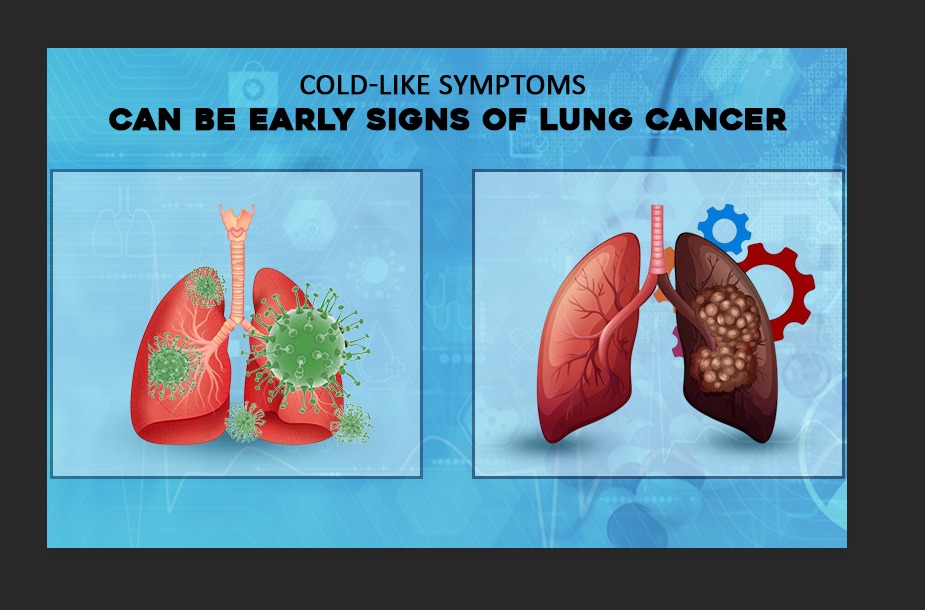
Many people dismiss early symptoms of lung cancer because they mostly resemble a simple cold or seasonal flu. This delay becomes dangerous because lung cancer is most treatable when identified early. Understanding the early symptoms of lung cancer, how they differ from lung cancer vs cold symptoms and when a continuing cough and lung cancer could be connected can help you take timely action.
In this detailed guide, we break down why lung cancer can mimic cold-like symptoms and the 5 signs that should never be ignored.
Why Lung Cancer Symptoms Often Feel Like a Common Cold
Lung cancer develops inside the respiratory system, which is also where cold and flu infections occur. Because both conditions affect the same pathways- airways, lungs and mucus membranes, the symptoms can overlap.
Here’s why they feel similar:
1. Similar Location, Different Causes
A cold is caused by viral infection. Lung cancer develops when abnormal cells grow uncontrollably in lung tissue.
Yet both affect the breathing passages, leading to coughing, breathlessness, mucus production, irritation and congestion.
2. Body’s Natural Response Looks the Same
Your body reacts to irritation, whether it’s cancer cells or a virus, by producing-
- Cough
- Chest tightness
- Fatigue
- Breathing difficulty
This overlap makes distinguishing lung cancer vs cold symptoms difficult without medical evaluation.
3. Slow Progression of Lung Cancer
Early lung cancer does not always cause serious symptoms. Instead, it triggers mild changes that resemble a cold lasting for weeks or months.
This is why early symptoms of lung cancer are often missed or misdiagnosed.
How Long Do Cold-Like Symptoms Last in Lung Cancer?
A common cold usually improves within 7–14 days.
Lung cancer symptoms do not go away, they stay and often worsen gradually.
If you experience cold-like symptoms for more than three weeks, it’s time to consider a deeper cause.
5 Lung Cancer Symptoms That Feel Like a Cold but Should NOT Be Ignored
Below are the key warnings that deserve immediate attention.
1. A Persistent Cough That Lasts Over 3 Weeks
A cough is the indication of both colds and lung cancer.
But there’s one major difference:
A cold-related cough improves. A lung cancer cough does not.
A cough linked to lung cancer may be-
- Dry or productive
- Worse at night
- Triggered by talking
- More frequent over time
This is exactly why the connection between a persistent cough and lung cancer needs to be taken seriously.
When to worry-
- The cough lasts longer than 21 days
- The cough sounds different from your usual cough
- Coughing fits become more frequent
Early detection saves lives, don’t ignore a continuous cough.
2. Chest Pain That Feels Like Congestion but Deepens Over Time
Cold-related chest discomfort is usually mild and temporary.
Lung cancer related chest pain may:
- Be sharp or dull
- Worsen with deep breaths
- Spread to shoulder or back
- Persist regardless of cold remedies
This happens because tumor growth can press on nerves, airways or chest structures.
3. Shortness of Breath or Wheezing Without Improvement
Colds can cause blocked nasal passages, making breathing uncomfortable.
But lung cancer causes breathing trouble due to-
- Airway obstruction
- Fluid build-up around lungs
- Decreased lung capacity
If you feel breathless while walking, climbing stairs or doing activities you normally do comfortably, it’s more than just a cold.
Wheezing or whistling sounds that don’t respond to inhalers also require medical attention.
4. Persistent Fatigue That Doesn’t Match Cold Severity
A cold may make you feel tired for a few days.
Lung cancer causes ongoing, unexplained fatigue because the body tries to fight abnormal cell growth.
You might feel-
- Weak even after resting
- Tired from minimal activity
- Less productive overall
If this fatigue continues for several weeks, it signals something deeper than a viral infection.
5. Cold Symptoms Accompanied by Blood in Cough
Seeing blood in the cough is one of the most alarming symptoms and it’s never normal.
This can signal-
- Bleeding inside airways
- Irritation caused by tumor growth
- Advanced lung involvement
Even a small streak of blood deserves urgent medical evaluation.

Key Differences Between a Cold and Lung Cancer
While they share many overlapping symptoms, certain features clearly distinguish the two.
| Symptom | Common Cold | Possible Lung Cancer |
| Duration | 7–14 days | Weeks to months |
| Cough | Improves with time | Worsens or continuous |
| Fever | Common | Rare |
| Blood in mucus | Rare | Possible |
| Breathlessness | Mild | Can be severe |
| Chest pain | Mild | Persistent, worsening |
If your symptoms align more with the lung cancer column, don’t delay seeking medical help.
Why It’s Easy to Confuse Lung Cancer With a Cold

Understanding this can help you avoid delays in diagnosis.
1. Smokers Mistake Symptoms for “Smoker’s Cough”
Many long-time smokers ignore coughs or breathlessness because they assume it’s normal.
This delays diagnosis until later stages.
2. Non-Smokers Believe They’re Not at Risk
Nearly 20% of lung cancer cases occur in non-smokers, driven by:
- Air pollution
- Secondhand smoke
- Family history
- Genetic changes
- Indoor toxins
So even non-smokers shouldn’t dismiss persistent cold-like symptoms.
3. Overuse of Home Remedies Masks Symptoms
Many people take cold medicines, cough syrups and inhalers repeatedly.
These temporarily ease the symptoms, but the underlying cause remains.
If symptoms return as soon as you stop medication, lung cancer must be ruled out.
When Should You See a Doctor?
You should immediately reach out for medical evaluation if you experience:
- Any cough lasting over 3 weeks
- Coughing up blood
- Breathlessness without improvement
- Chest pain that worsens
- Repeated infections in the lungs
- Fatigue that disrupts daily life
- Sudden weight loss
Do not wait for symptoms to worsen. Early diagnosis significantly improves treatment outcomes.
How Doctors Identify Lung Cancer When Symptoms Look Like a Cold
If your doctor suspects something more than a cold, they may recommend:
Chest X-ray
To detect abnormal shadows or masses.
CT Scan
Provides detailed imaging to identify exact location and size of tumors.
Sputum Cytology
Examines mucus to identify cancer cells.
Biopsy
Confirms lung cancer diagnosis and helps decide treatment.
These tests can quickly differentiate lung cancer vs cold symptoms, ensuring timely medications.
Can Early Detection Save Lives? Absolutely.
Evaluating lung cancer early offers-
- More treatment options
- Higher survival rates
- Less aggressive therapies
- Better quality of life
This is why recognising the early symptoms of lung cancer is crucial, even when they seem harmless.
How to Reduce Your Risk
While not all cases are preventable, you can significantly reduce risk by:
- Avoiding smoking and secondhand smoke
- Testing your home for indoor pollutants
- Managing long-term exposure to chemicals
- Wearing masks in high-pollution areas
- Maintaining a healthy lifestyle
For those with family history, regular screening (like low-dose CT scan) is recommended.
Conclusion
Lung cancer often personifies itself as a cold, which is why early symptoms are frequently overlooked. Knowing the difference between lung cancer vs cold symptoms, recognising a persistent cough and lung cancer connection and acting quickly can save lives.
If you notice cold-like symptoms lasting beyond three weeks, especially cough, breathlessness, fatigue or chest pain, don’t ignore them. Consult a medical expert to rule out lung cancer or begin treatment early.
Your awareness today could protect your health tomorrow.
Follow us on:
For formal correspondence or hospital coordination, MediKaya Healthcare’s office is:
Address- E-44/3, First Floor, Okhla Industrial Area Phase 2, Okhla Industrial Estate, South Delhi, New Delhi-110020.
Phone- +91 9717998697.
Email- info@medikayahealthcare.com