
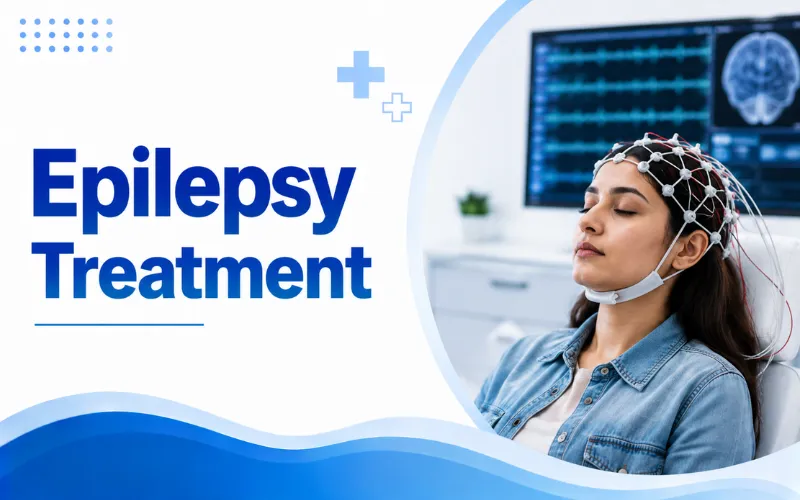
Epilepsy treatment isn’t a single decision — it’s a ladder, starting with medication and only reaching surgical options for a smaller subset of patients whose seizures don’t respond to drugs alone. This guide walks through the full range of epilepsy treatment options from medication to surgery honestly, so patients and families understand where they currently sit on that ladder and what comes next if the current step isn’t working, rather than feeling stuck without a clear sense of the options ahead.
Step One: Medication, and Why It Works for Most
Anti-seizure medications (ASMs) are the first-line treatment for epilepsy and successfully control seizures in roughly two-thirds of patients, often with a single medication once the right drug and dose is identified for that individual’s specific seizure type. Finding the right medication can take some trial and adjustment, since different drugs target different seizure types and side-effect profiles, and what works well for one patient may not suit another with a seemingly similar seizure pattern.
For the majority of patients, this is where the treatment ladder ends — a well-managed medication regimen, once properly established, allows a normal, seizure-free life with periodic monitoring rather than ongoing escalation of treatment intensity.
Understanding Different Seizure Types
Seizures broadly fall into focal seizures, which originate in one specific area of the brain and may or may not affect awareness, and generalized seizures, which involve both sides of the brain from the outset and typically cause loss of awareness. Correctly identifying seizure type through clinical history and EEG findings is essential, since medication choice is significantly guided by this classification — a medication effective for one seizure type can be ineffective, or in some cases even worsen, a different seizure type.
This is exactly why an accurate initial diagnosis by a neurologist experienced in epilepsy, rather than a general practitioner alone, meaningfully improves the odds of finding an effective medication on the first or second attempt rather than a longer trial-and-error process.
When Medication Alone Isn’t Enough
Epilepsy is considered drug-resistant when seizures continue despite trying two appropriately chosen and dosed medications, either alone or in combination, used for an adequate trial period — this is a specific clinical definition, not simply a judgment that seizures are severe or frequent. At this point, further evaluation — including video-EEG monitoring and detailed brain imaging (typically a high-resolution MRI) — helps identify whether seizures originate from a specific, surgically accessible brain region.
This is a meaningfully different situation from simply needing a dose adjustment or trying a third medication, and it’s the point where a specialized epilepsy center’s evaluation becomes genuinely valuable, since this level of diagnostic precision generally isn’t available outside dedicated epilepsy programs.
Understanding Video-EEG Monitoring
Video-EEG monitoring combines continuous EEG brain-wave recording with synchronized video, typically over several days in a specialized hospital unit, allowing the medical team to capture actual seizure events and correlate the clinical presentation with the precise brain-wave pattern at the moment of the seizure. This combination is far more informative than either EEG or clinical observation alone, since it pinpoints not just that a seizure occurred, but specifically where in the brain it originated.
For patients being evaluated for potential surgery, this monitoring period is typically combined with reducing or pausing medication under close medical supervision, specifically to capture enough seizure activity for a confident localization — a carefully managed process that requires the resources and monitoring capability of a specialized epilepsy unit.
What Surgical and Advanced Options Involve
For patients with a clearly identified seizure focus that doesn’t overlap with critical brain functions like speech or movement, resective surgery can remove the specific brain tissue generating seizures, with strong success rates in well-selected candidates — meaning a significant proportion become seizure-free or experience major improvement following surgery. For others, where resective surgery isn’t appropriate due to the seizure focus location or a broader seizure pattern, options include responsive neurostimulation (a device that detects and responds to abnormal brain activity), vagus nerve stimulation, or in certain cases, particularly some pediatric epilepsy syndromes, a structured ketogenic diet protocol.
MediKaya connects international patients with neurology teams for the specialized video-EEG evaluation needed to determine whether surgery is genuinely appropriate — this decision requires that level of diagnostic precision, not a general consultation alone, and a thorough, honest evaluation may conclude that a patient isn’t currently a surgical candidate, which is valuable information in itself.
Living With Epilepsy: Practical Safety Considerations
Beyond medical treatment, practical safety planning matters for many patients with active seizures — this can include specific guidance around driving regulations (which vary significantly by country and depend on seizure control history), water safety, and workplace considerations, developed individually based on seizure type and frequency rather than generic blanket restrictions applied regardless of a patient’s actual control status.
Family and caregiver education on basic seizure first aid — positioning the person safely, timing the seizure, and knowing when a seizure constitutes a genuine emergency requiring immediate medical attention (such as one lasting more than five minutes) — is a practical, often under-discussed part of comprehensive epilepsy care that MediKaya’s neurology partners routinely include in patient and family counseling.
Supporting Long-Term Quality of Life
Beyond seizure control itself, comprehensive epilepsy care considers the broader impact on daily life — driving eligibility, employment considerations, and in some cases, the psychological impact of living with an unpredictable condition, all of which benefit from being addressed openly as part of ongoing care rather than treated as separate from the medical management itself.
MediKaya’s neurology partners approach epilepsy management with this fuller picture in mind, providing not just a medication or surgical plan but guidance on the practical, day-to-day questions that matter to patients and families navigating life with this diagnosis over the years ahead.
Frequently Asked Questions
Q. How long does someone typically need to take epilepsy medication?
This varies significantly — some patients achieve long-term seizure freedom and may eventually reduce or stop medication under close medical supervision, while others require lifelong treatment. This decision is always individualized.
Q. What does ‘drug-resistant epilepsy’ actually mean?
It specifically means seizures continue despite adequate trials of two appropriately chosen anti-seizure medications — not simply that seizures are severe or frequent.
Q. Is epilepsy surgery safe?
In well-selected candidates evaluated through specialized epilepsy centers, resective surgery has good safety and success profiles, though as with any brain surgery, risks exist and are weighed carefully against expected benefit.
Q. What is video-EEG monitoring and why is it needed before surgery?
It combines continuous EEG brain-wave recording with video monitoring, typically over several days in hospital, to precisely capture seizure activity and pinpoint its origin — essential information for determining surgical candidacy.
Q. What’s the difference between focal and generalized seizures?
Focal seizures originate in one specific brain area and may or may not affect awareness; generalized seizures involve both sides of the brain from onset and typically cause loss of awareness — this distinction guides medication choice.
Q. When is a seizure considered a medical emergency?
A seizure lasting more than five minutes, or repeated seizures without full recovery in between, is considered a medical emergency requiring immediate attention, distinct from a typical, brief seizure episode.
КРАТКО НА РУССКОМ
Лечение эпилепсии — это последовательность шагов: сначала медикаментозная терапия, которая эффективна примерно у двух третей пациентов при правильном подборе препарата с учётом типа приступов. Если два подобранных препарата не помогают, речь идёт о лекарственно устойчивой эпилепсии, требующей видео-ЭЭГ мониторинга для точного определения очага приступов. При подходящем очаге возможна хирургическая резекция, а при других формах — стимуляция блуждающего нерва или кетогенная диета. Важна также практическая безопасность — обучение семьи первой помощи при приступах. MediKaya Healthcare организует специализированное неврологическое обследование в Индии для пациентов из СНГ.
Not responding well to current epilepsy medication? Get a free neurology specialist review of your case.