
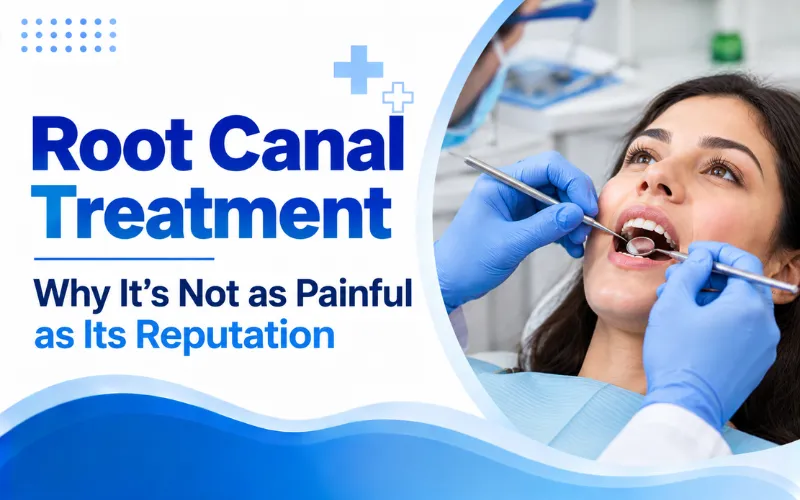
Root canals are one of the most notorious dental procedures for an excellent reason. Fear of root canals was earned many years ago when the procedure used to be particularly stressful for both patients and practitioners. Nowadays, root canals are actually relatively simple for both patients and dentists, and that’s because of the improvement in dental technique and the introduction of better dental anesthesia. Our aim with this pain guide is to address some of the root canal treatment pain fears since the fears of most patients relate to the pain that precedes the root canal treatment and not the procedure itself.
Where the Pain Comes From
The main source of pain from a root canal treatment is the infected or inflamed pulp tissue; in other words, the very reason that treatment is required. By the time a root canal treatment is prescribed, the nerve is likely necrotic (dead) or dying. This is why a root canal treatment does not cause any additional pain but actually serves to alleviate the pain that first maligned the patient and prompted treatment.
Local anesthesia today is much more effective and allows patients to feel only pressure sensations, if any, during the root canal treatment, which is drastically different from how root canal treatment is still perceived in the public’s mind.
Signs Of An Infected Pulp
A constant or intense toothache, pain that remains after hot or cold is applied and exposed the tooth, swelling and tenderness of the gum, tooth darkening, or the appearance of a pus bump, which occurs when the gum is draining an abscess, are all indicators of pulp damage and infection.
You should not assume that you need a root canal if you have a toothache. Your dentist will determine if you need a root canal by performing an examination and taking an X-ray to examine the internal structure of the tooth and the surrounding bone.
What You Should Expect From Treatment
Root canals clear infected or damaged tooth pulp, clean and disinfect the tooth’s interior by removing the damaged pulp and the inner canal system with special rotary tools, and fill the entire system with a biocompatible material. A tooth that has undergone root canal therapy is restored with a crown. A root canal is a long and thin procedure with a typical completion of one to two treatments, with each visit approximately lasting 60 to 90 minutes.
Root canal treatment is vastly superior to tooth extraction, as it preserves the natural tooth. Slight soreness and a little discomfort in the days following the procedure is to be expected while the area heals and the inflammation from the treatment subsides. The treatment does not last for many days like the myth would lead you to believe.
Root Canals vs. Extractions: Why Saving Teeth Is Better
Many people believe extraction will be the quicker and more convenient option. However, a gap in your smile will likely mean you will have to get a bridge or implant in the future to prevent your surrounding teeth from moving and your jawbone from shrinking, which will be more time-consuming and expensive. Root canals are the more long-term cost saver and prevent you from the pain of having to get a temporary replacement.
Depending on the health and the extent of damage to the tooth, root canals are the more cost-effective way to go to save your natural tooth. The bite feels and functions best with your natural teeth and cannot be exactly replicated with artificial teeth.
Long-Term Outlook and Success Rates
Root canals have a very good long-term success rate, with many teeth functioning well for 25-50 years after, especially with good long-term oral hygiene. Like any dental work, the better you take care of it, the longer it lasts. Sometimes a tooth will become infected again and need to be retreated, but more often an apicoectomy (surgically removing a tip of a root) is needed.
These cases are rare and are to be expected with any partial restoration. Long-term tooth care is needed, especially with a partial restoration.
Read Also: Is Root Canal Treatment Painful? Discover Advanced Care in India with MediKaya Healthcare
What To Expect Day By Day During Recovery
The first couple of days can generally be described as an ache biting down on the treated area as the surrounding tissue heals, but pain medication used appropriately will control the symptom. After 24 hours patients report a significant decrease in symptoms controlled mostly with pain medication. By the end of the first week almost all patients report feeling completely normal. With the placement of the permanent crown, the tooth is fully restored and is protected from fracture.
To minimize the risk of an unneeded break to the tooth, avoid chewing on the treated side until the permanent crown is placed.
Root Canal vs. Extraction: The Cost Perspective for International Patients
The total cost of the extraction and the cost of a replacement implant or bridge should be considered when choosing to get a root canal over getting a tooth extracted. Comparing the total cost of each option is something our partner dental clinics help patients understand during their consultations.
During the consultations, clinics tend to explain the cost of root canal treatment and the cost of an implant or a replacement bridge. This comparison usually illustrates the wisdom of choosing root canal treatment to save a tooth rather than getting it extracted.
MediKaya Healthcare Partners Offer Root Canal Treatment
The partner hospitals of MediKaya Healthcare specialize in root canal therapy using modern rotary devices and digital radiology. When treating patients, they provide full procedural information, along with a realistic expectation of the treatment, prior to the treatment starting. This helps alleviate anxiety caused by the patient’s uninformed assumptions.
Often, the reason patients with known dental problems avoid seeking treatment is due to anxiety caused by the fear of the dental procedure. Explaining that the modern dental procedures are less painful compared to the cause of the visit (the tooth itself) can help patients build the courage to seek the treatment.
Frequently Asked Questions
Q. Is a root canal really that bad?
Not really. A root canal is no more painful than a regular filling – both procedures are done under local anesthesia. Most patients report feeling about the same level of discomfort during both. It is actually the underlying tooth infection that causes patients to associate root canals with so much pain.
Q. How long does a root canal take?
In most cases, a single root canal only takes a single visit to the office if there are no complications caused by an advanced infection. However, a temporary crown will most likely have to be made and placed to protect the tooth between the two visits.
Q. Can a tooth get infected again?
While it is rare, a tooth that has received a root canal can become infected again in the future. This can occur if a new cavity develops in the same tooth or if there were issues within the root canal therapy.
Q. Is it better to get an extraction than a root canal?
Yes. A root canal should only be performed if the tooth has the potential to be restored. If the tooth is severely fractured, has insufficient bone support, or can’t be effectively cleaned and sealed, extraction followed by an implant or bridge may be the more practical choice.
Q. How do I know if I need a root canal?
Persistent tooth pain, exposure to hot and cold, gum swelling and tenderness, darkening of the tooth, and recurrent gum bump are all signs of a need for an evaluation.
Q. What if a root canal-treated tooth gets reinfected years later?
In this case, retreatment is the next option, though surgical apicoectomy is rare and usually only a last resort. This would not indicate a failure of the original treatment but the need for continued care.
КРАТКО НА РУССКОМ
Боль, которую боятся пациенты, вызвана инфекцией зуба, а не самим лечением корневого канала. Современная анестезия делает процедуру комфортной — большинство пациентов ощущают лишь давление, а не боль. Лечение корневого канала обычно занимает одно-два посещения, а сохранение собственного зуба чаще выгоднее удаления с последующей установкой имплантата или моста. При хорошем уходе результат лечения может сохраняться десятилетиями. MediKaya Healthcare предлагает лечение корневых каналов с современным оборудованием для пациентов из СНГ.
Dealing with tooth pain and dreading a root canal? Get a free dental consultation and honest treatment plan.