
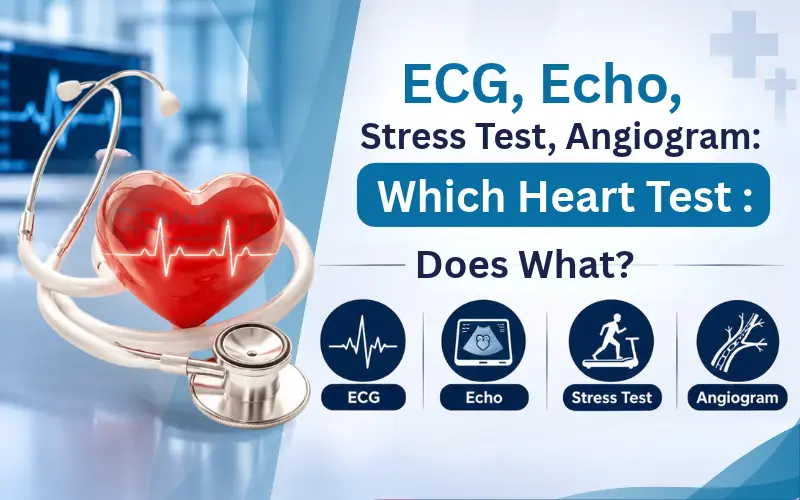
If you have been informed that a heart test is necessary, the names of heart tests may sound similar. The reasons for each may not be obvious. This guide will explain what each typical heart test reveals, how the heart test is carried out, and what questions you should ask before you have the heart test. Doctors use tests to look at different parts of the heart. Some tests check the rhythm of the heart. Others look at the structure of the heart.
How well it pumps blood. Some tests see how the heart acts when it is under stress. There are also tests that examine the arteries that supply the heart with blood. The tests a person needs depend on their symptoms, their risk factors, and any previous test results. Because of this, it is common for two people who each have chest discomfort to be offered tests.
The common tests at a glance
| Test | What it shows | How it is done |
|---|---|---|
| ECG (electrocardiogram) | The heart’s electrical activity, rhythm, and signs of strain or a past heart attack | Sticky pads on the chest, arms, and legs; a few minutes, painless |
| Echocardiogram (echo) | The heart’s structure, valves, and how well it pumps | An ultrasound probe on the chest; no radiation |
| Stress test | How the heart responds to exertion and whether blood flow falls short | ECG while walking on a treadmill, or with medicine if exercise is not possible; sometimes with imaging |
| Holter or event monitor | Rhythm over a day or longer, to catch irregular beats that come and go | A small recorder worn at home |
| CT coronary scan | The arteries and calcium build-up in them | A scan, sometimes with contrast dye |
| Coronary angiogram | Narrowings in the heart arteries directly | A thin tube guided to the heart with dye and X-rays can lead straight to a stent if needed |

Troponin test, cholesterol test, blood tests for heart
Doctors also use blood tests to check cholesterol, blood sugar, kidney function, and markers such as troponin that rise when heart muscle is injured. Doctors will explain which blood tests are relevant to you.
How to prepare for a heart test, contrast dye allergy
- Ask why it is needed
What question is this test answering, and what will you do with the result?
- Prepare as instructed
Some tests need fasting, stopping certain medicines, or specific clothing. Follow the instructions you are given.
- Mention allergies and conditions
Particularly allergy to contrast dye, kidney disease, diabetes, or pregnancy.
- Get the result explained
Ask for a plain-language explanation and a copy of the report.
- Agree on the next step
Whether it is no action, treatment, or a further test.
Questions to ask cardiologist before a test
Bring these to your appointment.
- Which test do you recommend, and what is it looking for?
- Are there alternatives, and what are the risks of this test?
- How should I prepare?
- When will I get results, and who will go through them?
- What will we do if the result is normal, and if it is not?
Frequently asked questions
Q: Is an angiogram always needed, Coronary angiogram risks?
No. The test is used when other tests or symptoms suggest a blockage. Ask why your doctor recommends the test and what the alternatives are.
Q: Is a stress test safe?
It is usually safe when someone is watching. It might not be right for everyone. Your doctor will be the one to decide if it is appropriate, for you.
Q: What if my ECG is normal but I have symptoms?
An ECG captures a moment in time. If symptoms keep happening, tests or longer monitoring might be needed.
Q: Can I refuse a heart test?
Feel free to ask questions and talk about alternatives. Remember to ask questions and discuss alternatives before you decide.
Q: Can someone review my reports?
Yes. I am glad to share that our partner cardiology specialists can review your reports through a no-obligation second opinion.
Conclusion
Heart tests are tools, not verdicts. Knowing what each heart test is for helps you understand your results, question unnecessary repeats and make sure the next step genuinely follows from the last.