
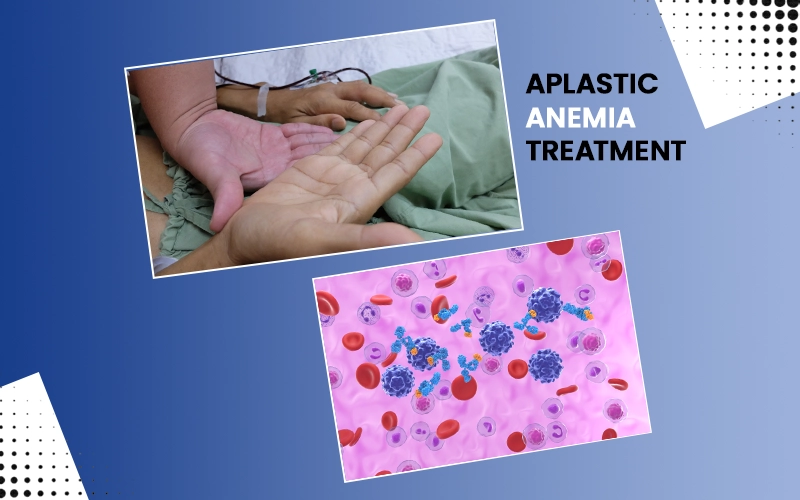
Aplastic anaemia is a rare but serious condition that affects the bone marrow’s ability to produce healthy blood cells. For many patients, access to timely and effective care is critical for survival. With rising medical advancements and global healthcare connectivity, international patients today can seek aplastic anemia treatment abroad, especially in countries known for specialised haematology and transplant services. India, in particular, has become a top destination for treatments such as bone marrow transplant India, immunosuppressive therapy and long-term aplastic anemia care. MediKaya Healthcare plays an important role in supporting global patients through end-to-end coordination, hospital selection, treatment planning and post-treatment follow-up ensuring complete, personalised and safe care.
Medikaya Healthcare guide explains whether aplastic anaemia can be treated abroad, what treatment options exist, why India is a preferred destination and how MediKaya Healthcare supports international patients throughout their medical journey.
Understanding Aplastic Anaemia
Aplastic anaemia is a bone marrow failure disorder in which the marrow fails to produce sufficient red blood cells, white blood cells and platelets. This leads to fatigue, recurrent infections, prolonged bleeding, breathlessness and anaemia.
What Causes Aplastic Anaemia?
Aplastic anaemia can be categorised into acquired and inherited forms.
Acquired Aplastic Anaemia
This form develops later in life and may be triggered by-
- Autoimmune disorders where the body attacks its own marrow
- Certain prescription drugs
- Exposure to toxic chemicals
- Viral infections such as hepatitis
- Radiation exposure
- Unknown causes (idiopathic aplastic anaemia)
Inherited Aplastic Anaemia
This includes conditions such as-
- Fanconi anaemia
- Shwachman-Diamond syndrome
- Dyskeratosis congenita
These conditions usually appear in childhood and often require early intervention.
Symptoms of Aplastic Anaemia
Patients may experience-
- Extreme fatigue and weakness
- Rapid or irregular heartbeat
- Frequent infections
- Small red spots under the skin (petechiae)
- Unexplained bruising
- Prolonged bleeding from cuts
- Shortness of breath
Because symptoms can overlap with other conditions, early and accurate diagnosis is essential.
Why Consider Aplastic Anaemia Treatment Abroad?
Many families seek treatment abroad due to limitations in their home countries. Key challenges include-
1. Limited Specialist Availability
Not all countries have dedicated haematology or bone marrow transplant centres.
2. Long Waiting Times
Delays in starting treatment can worsen outcomes, especially for severe cases.
3. High Treatment Costs
Countries like the United States or the United Kingdom have extremely high healthcare costs, making treatment inaccessible for many.
4. Lack of Donor Registries
Bone marrow transplants require matched donors, access is often limited in smaller countries.
5. Need for Advanced Medical Infrastructure
Certain therapies and transplant units require advanced germ-free environments and specialised medical teams.
As a result, thousands of patients explore aplastic anemia treatment abroad where care is more affordable, reliable and accessible.
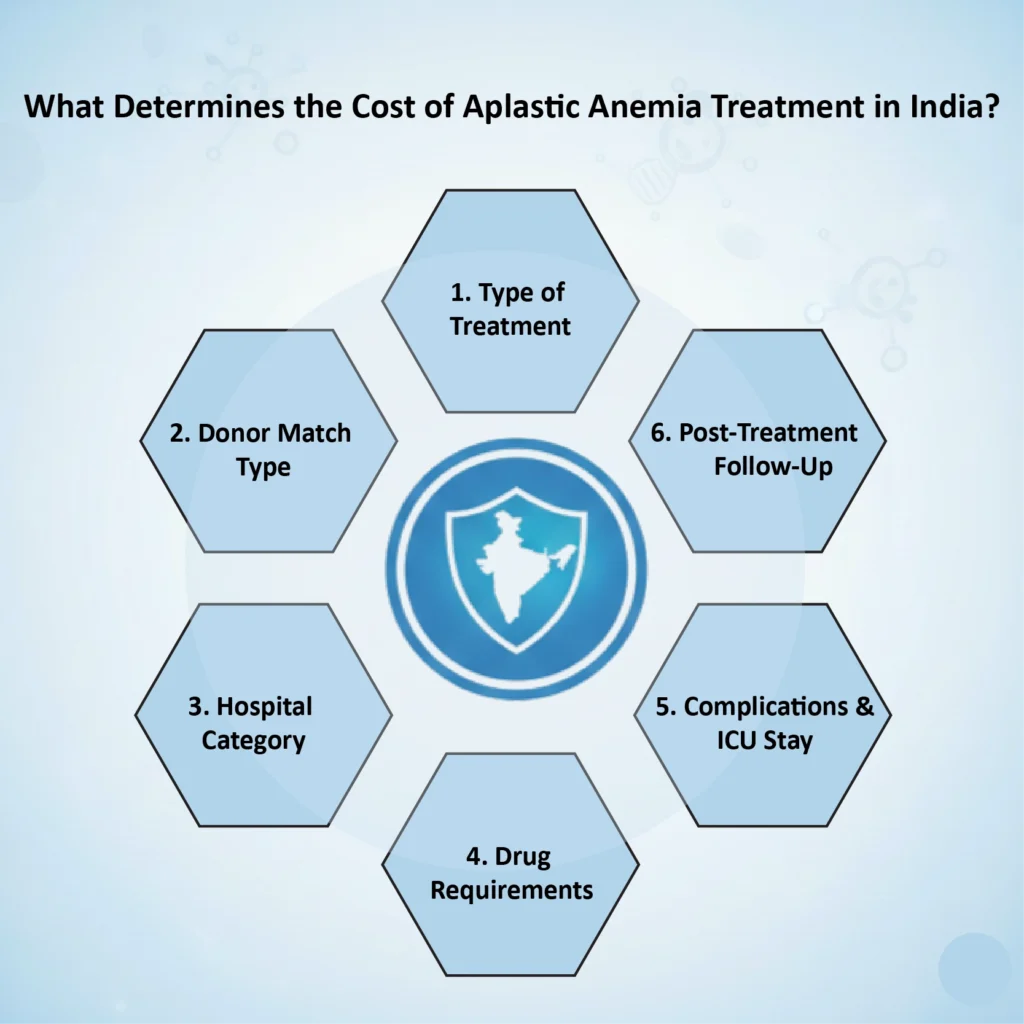
Is Aplastic Anaemia Treatable Abroad?
Yes. Aplastic anaemia is treatable abroad and many countries, especially India, offer comprehensive treatment options.
However, India stands out for its strong scientific foundation, experienced specialists, international-standard hospitals and unmatched affordability. Treatment abroad typically includes-
- Immunosuppressive therapy
- Bone marrow transplant
- Supportive care
- Long-term follow-up
With the right healthcare partner, patients can safely access world-class treatment outside their home country.
Why India Is a Global Leader in Aplastic Anaemia Treatment
India has evolved into a trusted global hub for haematology and transplant care. Reasons include-
1. World-Class Bone Marrow Transplant Facilities
Centres offering bone marrow transplant India operate under internationally recognised safety and quality standards. They provide-
- Allogeneic transplants
- Haploidentical transplants
- Matched unrelated donor (MUD) transplants
- Cord blood transplants
These procedures are performed in HEPA-filtered sterile environments.
2. Highly Experienced Specialists
Indian haematologists and transplant surgeons often have-
- Training from global institutes
- 15–30 years of clinical experience
- Thousands of transplant procedures completed
Their expertise significantly improves treatment success rates.
3. Affordable Treatment Packages
India offers some of the world’s most cost-effective treatment options without compromising quality. For instance-
- Immunosuppressive therapy in India is a fraction of Western costs
- Bone marrow transplant India costs 60–80% less than in the UK, US or Europe
- Long-term aplastic anemia care is highly affordable
4. Internationally Accredited Hospitals
Leading hospitals are accredited by-
- Joint Commission International (JCI)
- National Accreditation Board for Hospitals (NABH)
Accreditation ensures safe, transparent and internationally compliant medical care.
5. Short Waiting Time and Immediate Access
Unlike countries with long waiting times, Indian hospitals offer rapid scheduling for-
- Specialist consultations
- Pre-transplant evaluations
- Donor identification
- Surgery scheduling
This saves critical time for patients with severe disease.
Types of Aplastic Anaemia Treatment Available Abroad
Aplastic anaemia treatment varies based on disease severity. International patients usually access the following treatments-
1. Immunosuppressive Therapy (IST)
This is often the first line of treatment for patients without a matched donor.
Common IST treatments include-
- Antithymocyte Globulin (ATG)
- Cyclosporine (CsA)
- Corticosteroids
- Eltrombopag
These therapies suppress immune system activity, allowing bone marrow to regenerate.
2. Bone Marrow Transplant (Stem Cell Transplant)
This is the only curative treatment for severe aplastic anaemia.
Types of BMT include-
Matched Sibling Donor Transplant
Highest success rate.
Matched Unrelated Donor (MUD) Transplant
India has increasing access to global donor registries.
Haploidentical Transplant
Uses a 50% matched donor – often a parent or sibling.
Cord Blood Transplant
An option when no matched donors are available.
India is renowned for its advanced BMT protocols, experienced teams and highly controlled transplant units.
3. Supportive Care
Supportive therapies help secure patients and include-
- Blood transfusions
- Platelet transfusions
- Antibiotics and antifungals
- Iron chelation therapy
- Growth factor injections
It ensures safety before and after major treatments.
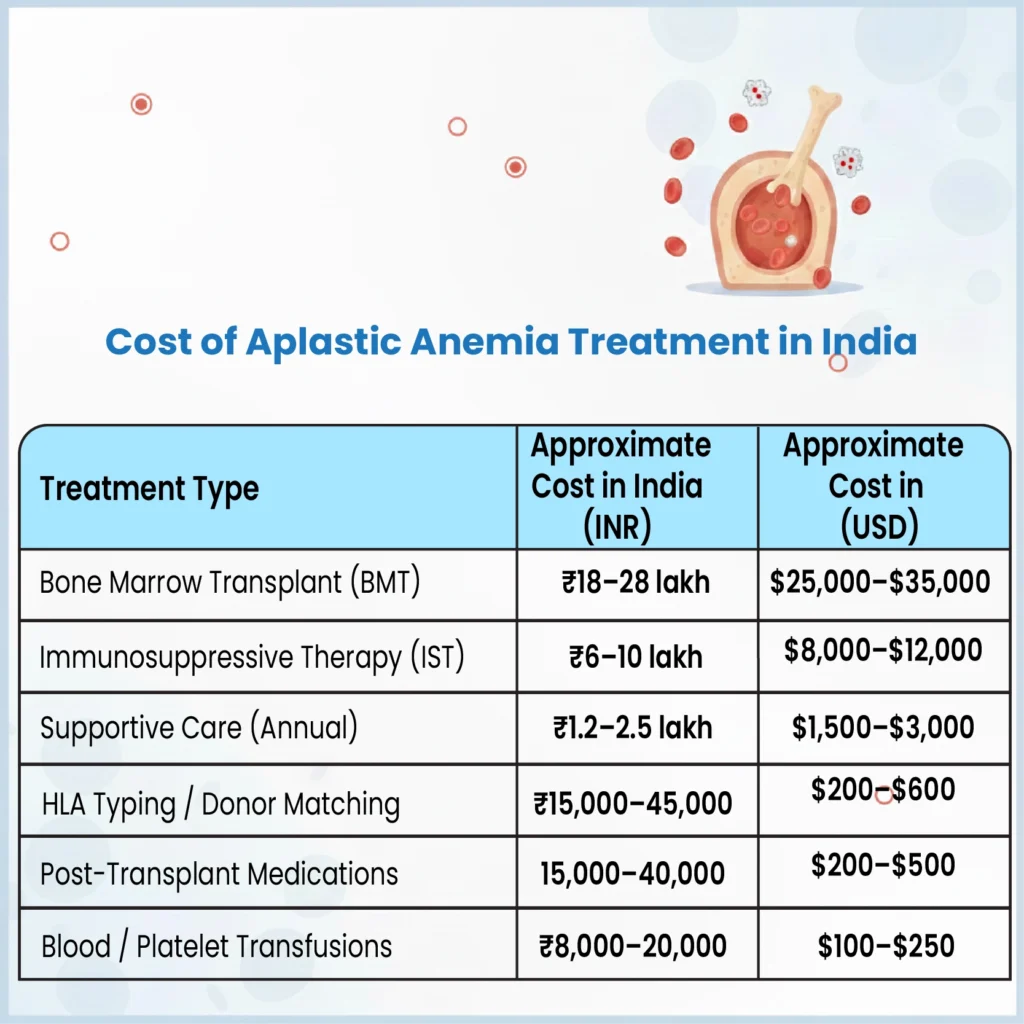
Cost of Aplastic Anemia Treatment in India
How MediKaya Healthcare Supports International Patients
MediKaya Healthcare is a leading medical facilitator that assists international patients seeking complex treatments abroad. Their services simplify and streamline the entire journey.
1. Medical File Evaluation by Specialists
MediKaya Healthcare collects medical reports and shares them with leading haematologists across India. Patients receive-
- Expert-reviewed treatment suggestions
- Prognosis evaluation
- Personalised recommendations
- Second opinions
This enables families to make informed decisions even before travelling.
2. Matching Patients with India’s Top Hospitals
MediKaya Healthcare partners with hospitals recognised for-
- Successful bone marrow transplant India
- Advanced testing and diagnostics
- Expertise in aplastic anemia treatment
- Long-term aplastic anemia care programmes
This ensures the patient is directed to the right specialist from day one.
3. Transparent Treatment Packages
Patients receive-
- Detailed cost breakdowns
- Estimated treatment timelines
- Option for multiple hospital quotes
- Clarification on medical and non-medical expenses
No hidden charges and no financial surprises.
4. Complete Medical Visa Assistance
MediKaya Healthcare assists with-
- Issuing hospital invitation letters
- Helping families prepare required documents
- Coordinating with embassies
- Explaining visa procedures
They also guide patients on visa extensions when long treatment durations are needed.
5. Travel Planning and Airport Support
International patients receive-
- Airport pick-up and drop-off
- Help with accommodation near the hospital
- Local transport assistance
- Interpreter services
These details matter, especially during stressful medical journeys.
6. On-Ground Medical Coordination
MediKaya Healthcare’s care coordinators help with-
- Hospital admissions
- Scheduling consultations
- Daily treatment coordination
- Supporting families with communication
- Report collection
- Medication assistance
This ensures smoother care throughout the patient’s stay.
7. Post-Treatment Follow-Up
Long-term monitoring is essential in aplastic anaemia. MediKaya Healthcare arranges-
- Virtual consultations
- Report reviews
- Medication guidance
- Emergency coordination
Their support continues even after the patient returns home.
The Complete Treatment Journey with MediKaya Healthcare
Here is a detailed step-by-step overview-
Step 1- Contact & Case Submission
Patients share medical records through WhatsApp or email.
Step 2- Specialist Review
Leading haematologists review the case and propose a treatment plan.
Step 3- Treatment Cost Estimate
MediKaya Healthcare provides a clear price estimate and treatment timeline.
Step 4- Visa Support
Invitation letters and visa application guidance are provided.
Step 5- Travel & Arrival
MediKaya Healthcare arranges airport pick-up and hospital transfer.
Step 6- Diagnostics & Confirmation
Indian hospitals repeat essential tests for accurate assessment.
Step 7- Treatment Execution
The patient undergoes-
- Immunotherapy
- Supportive care
- Bone marrow transplant
based on the diagnosis.
Step 8- In-Hospital Support
Coordinators assist with documentation, scheduling, and communication.
Step 9- Recovery & Discharge
Patients are guided through discharge planning and medications.
Step 10- Return Home & Telemedicine Follow-Up
Follow-ups continue virtually with full MediKaya Healthcare support.
Why Patients Choose MediKaya Healthcare
- Access to India’s most reputed hospitals
- 24/7 patient assistance
- Affordable treatment options
- Faster appointment scheduling
- Support for families
- End-to-end coordination
- Transparent pricing
- Compassionate care teams
MediKaya Healthcare is a trusted partner for families facing difficult medical decisions.
Frequently Asked Questions
1. Are aplastic anaemia treatments really effective abroad?
Yes. Countries like India offer world-class facilities and highly experienced specialists.
2. How risky is a bone marrow transplant?
While risky, modern BMT procedures in India follow strict protocols and high survival rates.
3. How long do patients need to stay in India?
Typically-
- IST: 4–6 weeks
- BMT: 3–6 months
4. Does MediKaya Healthcare help find donors?
Yes. They work with donor registries and hospitals for matching.
Conclusion
Aplastic anaemia is complex, but with modern medicine and global healthcare accessibility, it is absolutely treatable abroad. Countries like India offer high-quality aplastic anemia treatment, advanced transplant facilities, experienced specialists and cost-effective care. Through its strong hospital partnerships and full-cycle patient coordination, MediKaya Healthcare ensures safe, accessible and successful aplastic anemia care for international patients seeking life-saving treatments such as bone marrow transplant India. For families looking for hope, quality and affordability, India and MediKaya Healthcare remain trusted global choices.
Follow us on:
Address:
E-44/3, First Floor, Okhla Ind. Area Phase 2,
Okhla Industrial Estate, South Delhi,
New Delhi – 110020, India