
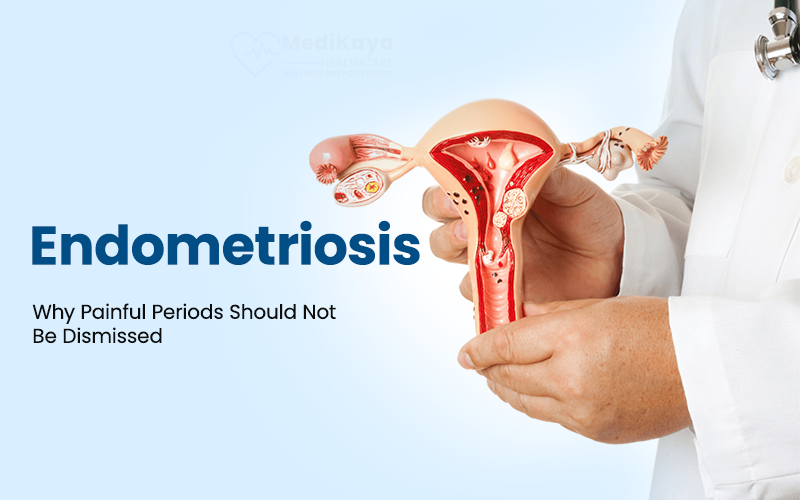
Many women are told that painful periods are simply normal. Sometimes they are. Pain that disrupts daily life may be endometriosis. Endometriosis is a condition that’s often under-recognized. It can take years to diagnose. Here is what to know.
Endometriosis happens when tissue that looks like the lining inside the womb grows in places, such as the ovaries, the fallopian tubes, and the lining of the pelvis. This tissue, like the womb lining, reacts to the hormones that come each month, and those reactions can cause swelling, pain, and scar tissue. Endometriosis is a long‑lasting problem. How bad it feels can be very different from one person to another.
Symptoms
- Painful periods that are severe or get worse over time
- Pelvic pain between periods
- Pain during or after sex
- Pain with bowel movements or urination, especially around periods
- Heavy periods or bleeding between periods
- Difficulty getting pregnant
- Fatigue, bloating, or nausea around periods
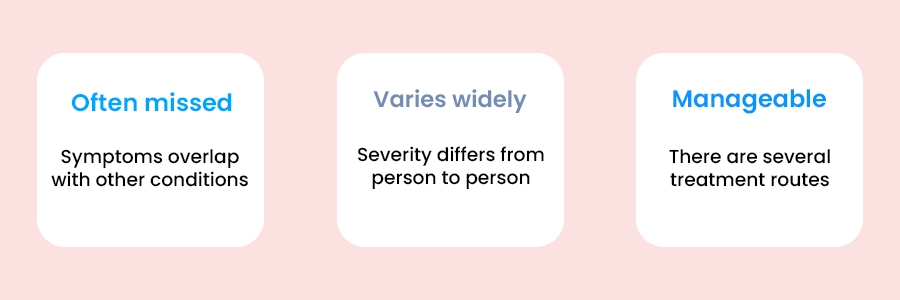
The level of pain someone feels does not always match how endometriosis they have. Some people who have a lot of endometrioses have few symptoms. Some people who have a little endometriosis have a lot of symptoms.
How it is diagnosed
- Conversation and examination
A detailed history of your periods and pain, and a pelvic examination where appropriate.
- Ultrasound or MRI
Can show cysts on the ovaries or deeper disease, though a normal scan does not rule it out.
- Laparoscopy
Keyhole surgery to look inside the pelvis is the way to confirm the diagnosis in many cases, and treatment can sometimes be done at the same time.
Treatment options
| Approach | What it involves |
|---|---|
| Pain relief | Medicines taken as advised by your doctor, and heat or other comfort measures. |
| Hormonal treatment | Medicines that reduce or stop periods, or lower hormone levels, to control symptoms. They do not cure the condition and are not suitable for people trying to conceive. |
| Surgery | Keyhole surgery to remove or treat endometriosis tissue and scarring. Considered for severe symptoms or when fertility is a concern. |
| Fertility treatment | Where pregnancy is the goal, options range from monitored cycles to IVF, depending on the situation. |
| Supportive care | Pelvic physiotherapy, pain-clinic support, and attention to mental well-being. |
A note on this topic
Living with long-term pain, and being told it is “normal”, can be exhausting and isolating. Your pain is real and deserves an answer. Support groups, counselling and a doctor who listens can all help.
Questions for your doctor
Bring these to your appointment.
- Could my symptoms be endometriosis, and which tests do you recommend?
- What are my options for pain relief, and what are their side effects?
- Is surgery advisable for me?
- How might this affect my chances of becoming pregnant?
- What support is available for living with a long-term condition?
Frequently asked questions
Q: Is endometriosis the same as painful periods?
No. Many people experience periods even if they do not have endometriosis, but when painful periods become severe or when severe pain gets worse, it deserves investigation.
Q: Can endometriosis be cured?
It is a condition that lasts for a time. The signs and feelings can be. Operations can help some individuals, but it might come back again.
Q: Does endometriosis stop you getting pregnant?
Not always. Fertility can be reduced in some people. Many people conceive naturally or with help.
Q: Does pregnancy cure it?
Pregnancy may ease symptoms for some people. However, pregnancy is not a treatment, and symptoms can come back.
Q: Can I get a second opinion?
Yes. Our partner specialists can look over your reports, with a no-obligation second opinion.
Conclusion
If your periods or pelvic pain are hurting your life, you do not have to accept it. Ask for a check; write down periods and pelvic pain symptoms and get a second opinion if you feel periods or pelvic pain are not being heard.