

The journey toward a kidney transplant is rarely limited to medical treatment alone; for most patients, it is an intense emotional, physical and logistical challenge. When a diagnosis of End-Stage Renal Disease (ESRD) is confirmed, patients and their families often begin searching beyond their home country for a solution that offers both quality and affordability. Over the last decade, India has emerged as a leading global destination for kidney transplant surgery, combining advanced medical technology, internationally trained surgeons and significantly lower treatment costs compared to Western nations.
For international patients traveling thousands of miles for care, the biggest challenge is not only choosing the right hospital or surgeon, but also navigating the complexities of cross-border healthcare. This is where Medikaya Healthcare plays a vital role bridging the gap between diagnosis and recovery by transforming a complex medical procedure into a safe, transparent and well-coordinated treatment journey.
India’s reputation as a global health hub for renal care is built on a strong foundation of clinical excellence and ethical medical practices. Leading transplant centers in India report kidney transplant success rates of 90% to 95% for living donor transplants, matching and in many cases exceeding outcomes achieved in the United States and Europe. From robotic-assisted kidney transplant surgery to the successful management of ABO-incompatible and high-risk transplants, Indian nephrologists and transplant surgeons continue to redefine the standards of modern kidney transplantation.
Kidney Transplant Surgery-
Kidney transplant surgery involves surgeons placing a healthy donor kidney into a patient whose own kidneys can no longer function properly. Doctors consider this procedure the gold standard treatment for end-stage kidney disease (ESRD), as it allows patients to regain near-normal kidney function and significantly improve their quality of life compared to long-term dialysis.
The surgery can involve a living donor kidney usually from a close family member or compatible individual or a deceased donor kidney from someone who has recently passed away. The donor kidney is carefully evaluated for compatibility, including blood type, tissue matching and overall health, to minimise the risk of organ rejection. Advanced medical techniques, including immunosuppressive therapy and modern surgical protocols, help ensure the success of the transplant
What Is the Medical Necessity for a Kidney Transplant?
A kidney transplant is medically necessary when the kidneys permanently lose their ability to perform essential life-sustaining functions. This typically occurs in patients with advanced or end-stage kidney disease, where kidney damage is irreversible and progressive. In such cases, transplantation offers the best long-term survival and quality-of-life benefits.
✓
End-Stage Renal Disease (ESRD) as the Primary Indication
The most common medical reason for a kidney transplant is End-Stage Renal Disease (ESRD). ESRD is diagnosed when kidney function falls below a critical level, usually measured by a glomerular filtration rate (GFR) of less than 15 ml/min/1.73 m². At this stage, the kidneys can no longer effectively filter waste products, regulate fluid and electrolyte balance or maintain blood pressure and red blood cell production. Without renal replacement therapy, ESRD is life-threatening.
✓
Failure or Limitations of Dialysis
A kidney transplant becomes medically necessary when dialysis is no longer sufficient to maintain a patient’s health or quality of life. While dialysis can temporarily replace some kidney functions, long-term dependence often leads to complications such as severe fatigue, cardiovascular strain, recurrent infections, malnutrition and reduced physical independence. When these complications persist despite optimal dialysis care, transplantation is considered the most effective treatment.
✓
Advanced Chronic Kidney Disease and Pre-Emptive Transplant
In some patients, medical necessity for kidney transplant is established even before dialysis begins. Individuals with advanced chronic kidney disease who show continuous deterioration of kidney function may be candidates for a pre-emptive kidney transplant. This approach helps prevent dialysis-related complications and is associated with better long-term outcomes and improved graft survival.
✓
Irreversible Causes of Kidney Failure
Kidney transplantation becomes medically necessary when kidney failure results from irreversible conditions such as diabetes-related kidney disease, long-standing uncontrolled hypertension, polycystic kidney disease, chronic glomerulonephritis, autoimmune kidney disorders or congenital abnormalities. In these conditions, kidney function cannot be restored through medication or lifestyle changes alone
✓
Life-Threatening Complications of Kidney Failure
As kidney disease progresses, patients may develop serious complications that further establish the need for transplantation. These include persistent fluid overload, dangerous electrolyte imbalances, uremic symptoms such as nausea and confusion, severe anemia and bone disease related to kidney failure. When these complications become recurrent or severe, kidney transplantation is medically essential to prevent further deterioration and reduce mortality risk.
✓
Survival and Quality-of-Life Benefits
Medical necessity is also determined by the clear survival advantage of kidney transplantation. Studies consistently show that kidney transplant recipients live longer, experience fewer cardiovascular complications and enjoy a significantly better quality of life compared to patients on long-term dialysis. Transplantation allows patients to regain independence and return to daily activities.
Types of Kidney Transplant
Kidney disorders range from mild functional impairment to advanced kidney failure, where the kidneys can no longer support essential bodily functions. Depending on the stage and severity of kidney disease, different treatment approaches are used. While dialysis therapies help manage kidney failure temporarily, kidney transplantation remains the most definitive and long-term solution for eligible patients. Below are the major types of kidney transplants and renal replacement therapies used in modern nephrology.
1. Deceased-Donor Kidney Transplant
Deceased-donor kidney transplantation offers a significant survival advantage over long-term dialysis and improves overall quality of life. However, waiting times may vary depending on donor availability, blood group compatibility and transplant regulations. This option is particularly beneficial for patients who do not have a suitable living donor.
2. Living-Donor Kidney Transplant
Living-donor kidney transplants generally offer better long-term success rates, shorter waiting times and faster recovery compared to deceased-donor transplants. Because one healthy kidney can effectively replace two failed kidneys, this procedure is considered highly effective. In cases where a perfect match is not available, advanced immunological techniques such as desensitisation allow transplantation even in complex compatibility scenarios.
3. Preemptive Kidney Transplant
Patients who undergo preemptive kidney transplantation tend to have higher graft survival rates, lower rejection risks and better quality of life outcomes. However, preemptive transplants are less common due to factors such as donor availability and late diagnosis. This type of transplant can be performed using either a living donor or a deceased donor kidney.
4. Hemodialysis as a Supportive Therapy
Hemodialysis is a renal replacement therapy that uses a machine and synthetic filters to remove waste products, excess fluids and toxins from the blood. The process mimics some of the natural functions of the kidneys and is commonly used in patients with advanced kidney failure.
Hemodialysis is not a cure for kidney disease but serves as a life-sustaining treatment while patients await a kidney transplant or receive treatment for reversible kidney conditions. It may also be used as a long-term option for patients who are not eligible for transplantation.
5. Continuous Renal Replacement Therapy (CRRT)
Continuous Renal Replacement Therapy is primarily used in critically ill patients suffering from acute kidney injury (AKI), particularly those with unstable blood pressure or heart conditions. This therapy continuously filters the blood over a 24-hour period using specialised equipment, allowing waste removal at a slower and more controlled pace.
6. Peritoneal Dialysis
Peritoneal dialysis is a form of dialysis that uses the lining of the abdominal cavity, known as the peritoneum, as a natural filter to remove waste and excess fluids from the blood. A cleansing fluid is introduced into the abdomen and later drained after absorbing toxins.
This method is particularly suitable for patients with cardiovascular conditions, as it is gentler than hemodialysis. However, the procedure carries a risk of abdominal infections if patients do not maintain strict hygiene. Patients can perform peritoneal dialysis several times during the day, known as Continuous Ambulatory Peritoneal Dialysis (CAPD), or overnight using a machine, known as Automated Peritoneal Dialysis (APD).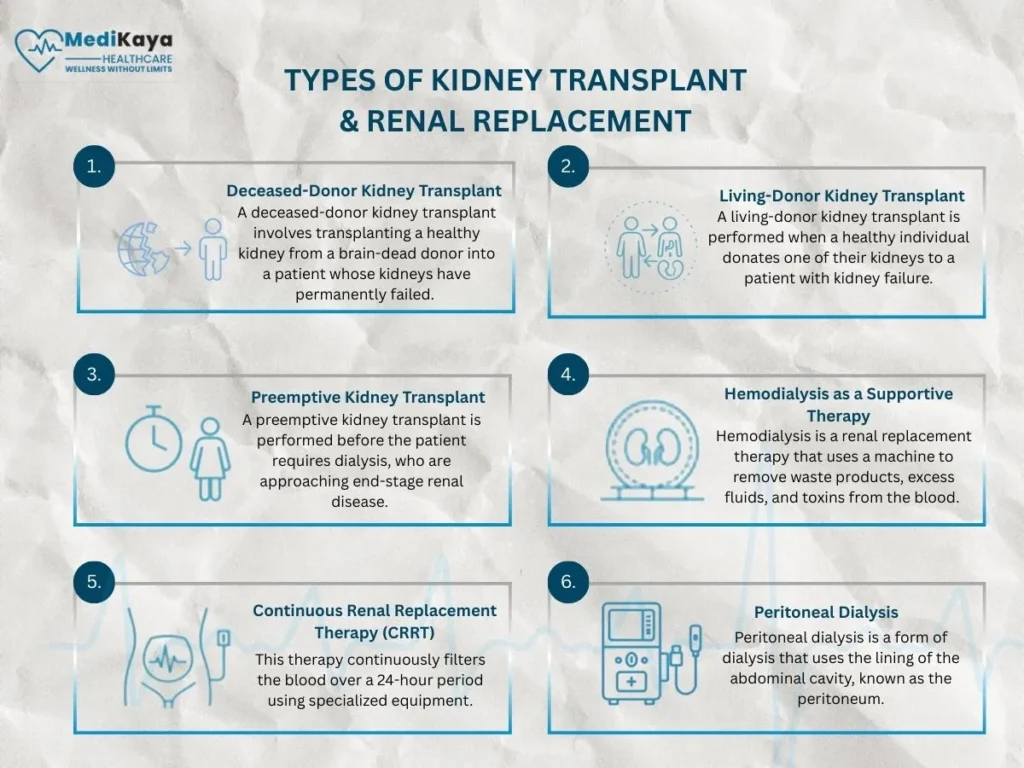
Risks of Kidney Transplant Surgery
Undergoing a kidney transplant can be life-changing, but like any major surgery, it carries certain risks. Potential complications may include-
- Adverse reactions to general anaesthesia
- Blood clot formation
- Internal bleeding
- Blockage or leakage in the ureter
- Post-surgical infections
- Cardiovascular events such as stroke or heart attack
- Rejection of the donated kidney by the immune system
- Failure of the transplanted kidney over time
Despite these challenges, a kidney transplant often remains the most effective treatment for individuals with chronic kidney disease or end-stage renal failure, offering improved quality of life compared to long-term dialysis.
After transplantation, patients must take immunosuppressive (anti-rejection) medications for the rest of their lives. While these drugs are essential to prevent rejection, they also bring their own set of risks and side effects, such as-
- Bone thinning (osteoporosis)
- Elevated cholesterol levels
- High blood pressure (hypertension)
- Hair loss or excessive hair growth
- Weight gain
- Skin conditions like acne
- Increased susceptibility to infections
- Higher risk of certain cancers, including lymphoma and skin cancer
Kidney Transplant Procedure: An Overview
A kidney transplant is performed when a compatible donor organ is available, either from a living donor or a deceased (cadaveric) donor. The surgery is carried out under general anaesthesia, ensuring the patient is unconscious and pain-free throughout the procedure. During the operation, a skilled team of surgeons, anaesthetists and nurses closely monitor vital signs such as blood oxygen levels, blood pressure and heart rate
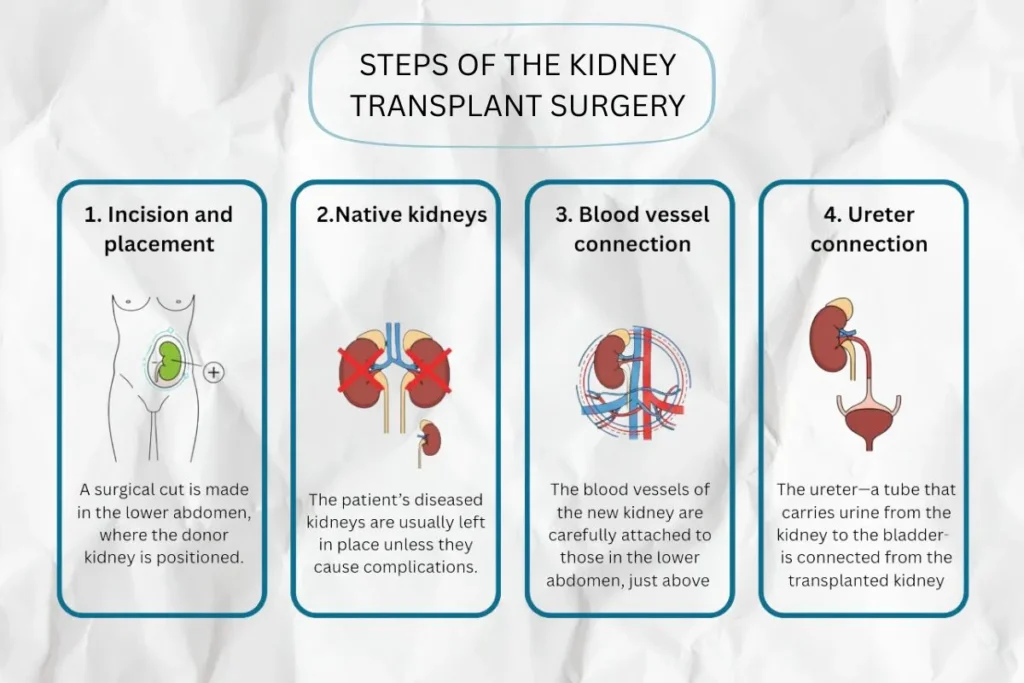
Steps of the Transplant Surgery
✓ Incision and placement – Surgeons make a surgical cut in the lower abdomen and position the donor kidney there.
✓ Native kidneys – Doctors usually leave the patient’s diseased kidneys in place unless they cause complications such as persistent pain, recurrent infections, kidney stones, or uncontrolled hypertension.
✓ Blood vessel connection – Surgeons carefully attach the new kidney’s blood vessels to those in the lower abdomen, just above the leg, to establish proper blood flow.
✓ Ureter connection – Surgeons connect the ureter (the tube that carries urine from the kidney to the bladder) from the transplanted kidney to the bladder, allowing normal urine flow and storage.
Eligibility for Kidney Transplant
Individuals diagnosed with End-Stage Renal Disease (ESRD) may be considered for a kidney transplant. However, not everyone automatically qualifies specific medical and lifestyle criteria must be met to ensure the best chance of success.
Key Requirements for Transplant Candidates
- Lifestyle considerations- Candidates must avoid smoking, alcohol and recreational drug use, as these habits compromise recovery and long-term kidney function.
- Physical fitness for surgery- The patient must be healthy enough to undergo a major operation and commit to lifelong medication.
- Adherence to medical guidance- Strict compliance with doctors’ instructions and consistent use of prescribed medicines is essential.
- Absence of serious medical conditions- A history of cardiovascular disease, advanced liver disease, cancer, or chronic infections (such as hepatitis, tuberculosis or bone infections) can significantly reduce the likelihood of transplant success.
Evaluation Process
Doctors conduct a thorough assessment to determine whether a patient is a suitable candidate. Factors such as age, mental health and lifestyle play a critical role. Individuals of advanced age, or those struggling with untreated mental illness, alcoholism, or substance abuse, are generally not considered ideal candidates for transplantation.
Why Choose Medikaya Healthcare for Kidney Transplant in India ?
Medikaya Healthcare connects international patients with India’s leading kidney transplant hospitals and experienced transplant surgeons, delivering world-class care at affordable costs. We partner with Centers of Excellence for Organ Transplantation equipped with advanced operation theatres, modern diagnostic labs, dedicated post-transplant ICUs and sterile HEPA-filtered environments to ensure maximum patient safety.
Our associated transplant specialists have successfully performed thousands of kidney transplant surgeries, including complex and high-risk cases, with success rates comparable to top hospitals worldwide.
From free medical evaluation and hospital selection to visa assistance, travel support, accommodation and post-transplant follow-up, Medikaya Healthcare offers end-to-end, patient-centric care making your kidney transplant journey in India smooth, safe and stress-free.
👉 Contact Medikaya Healthcare today to start your kidney transplant treatment in India with confidence.
Facilities & Services
Medikaya Healthcare provides comprehensive, end-to-end support for international patients traveling to India for kidney transplant surgery. We understand that crossing borders for a life-saving procedure can be overwhelming, which is why our services are designed to ensure medical safety, logistical ease and complete peace of mind.
- Free medical case review and kidney transplant eligibility assessment
- Assistance in selecting the most suitable kidney transplant hospital and transplant surgeon in India
- Detailed and transparent kidney transplant treatment plan with cost estimates
- Medical visa invitation letter and documentation support for patients and donors
- Airport pickup, drop and coordinated local transportation
- Hotel or serviced apartment arrangements close to transplant hospitals
- Dedicated international patient coordinator throughout the treatment journey
- Scheduling of pre-transplant evaluations, donor tests and surgical appointments
- Coordination during hospital admission, surgery and post-transplant ICU care
- Language interpretation and cultural support for non-English-speaking patients
- Assistance with post-transplant medications and discharge planning
- Follow-up care coordination and teleconsultation support after returning home
- Support for accompanying family members or caregivers
Through Medikaya Healthcare, international kidney transplant patients receive personalised care, ethical guidance and seamless coordination, allowing them to focus entirely on recovery while we manage every aspect of their medical journey in India.
Contact Medikaya Healthcare for KIDNEY TRANSPLANT SURGERY TREATMENT Support in India
If you are seeking verified information, private hospital options, treatment cost guidance or international patient support Kidney Transplant Surgery treatment in India, our medical coordination team is here to assist you with complete confidentiality and professional care.
MedikayaHealthcare provides end-to-end patient support including hospital selection, doctor consultations, medical visa assistance, treatment coordination and post-treatment follow-up.
WhatsApp & Call: +91 9717998697
Email: info@medikayahealthcare.com
Website: www.medikayahealthcare.com
LinkedIn: https://www.linkedin.com/company/medikaya-healthcare/
Instagram: https://www.instagram.com/medikaya_healthcare/
Facebook: https://www.facebook.com/MediKayaHealthcare
Twitter: https://x.com/MedikayaHC
Our team will respond promptly with verified medical guidance and personalised assistance.