

Overview-
Thyroid cancer in women has been a subject of both medical research and public discussion due to the consistent observation that women are about three times more likely than men to be diagnosed with thyroid cancer. This gender difference in thyroid cancer incidence raises important questions about underlying causes, risk factors and the best approaches to diagnosis, treatment and ongoing care. In this comprehensive article, we’ll explore the reasons behind this trend, delve into the risk factors and causes of thyroid cancer in women and highlight how MediKaya Healthcare excels in supporting patients especially international patients through every stage of their thyroid cancer journey.
Understanding Thyroid Cancer
The thyroid is a small, butterfly-shaped gland at the front of the neck responsible for producing hormones that regulate metabolism, heart rate, body temperature and more. Thyroid cancer occurs when cells in the thyroid grow uncontrollably and form a malignant tumour.
Statistics show that thyroid cancer is almost three times more common in women than in men. Women tend to be diagnosed more frequently, particularly during the reproductive years roughly between ages 20 and 55 though thyroid cancer can occur at any age.
Why Women Have Higher Thyroid Cancer Rates
Biological and Hormonal Influences
The exact reason why women are disproportionately affected by thyroid cancer remains uncertain, but researchers believe hormonal influences, especially female sex hormones like estrogen play a significant role. Estrogen receptors are present on thyroid cells and these hormones may stimulate thyroid cell growth, potentially increasing the risk of cancerous changes.
Some studies suggest that pregnancy and hormonal changes throughout a woman’s life such as fluctuations during menstrual cycles, childbirth and menopause may also contribute to an elevated likelihood of developing thyroid nodules and predisposing thyroid tissue to malignant transformation.
Women’s Higher Rate of Healthcare Utilisation
Women are statistically more likely to seek routine medical care than men, leading to higher detection rates of small or asymptomatic thyroid cancers, especially papillary thyroid cancers that might have otherwise gone undiagnosed. This increased interaction with healthcare services often leads to more ultrasounds and incidental findings during unrelated examinations.
While genetics and biology certainly play roles, healthcare-seeking behaviour likely contributes to the observed difference in diagnosis rates.
Key Risk Factors for Thyroid Cancer in Women
Understanding thyroid cancer risk factors helps clarify why thyroid cancer in women occurs more frequently and how various elements contribute to disease development.
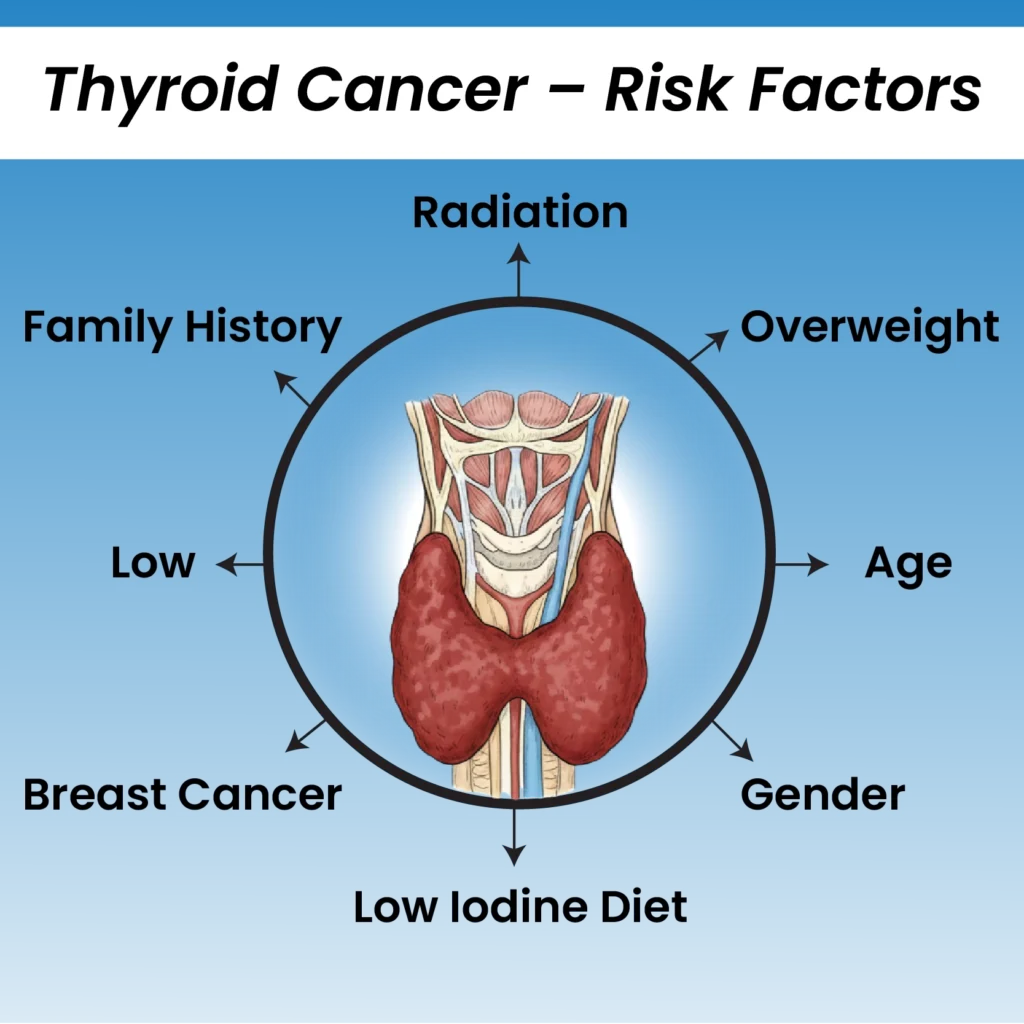
1. Female Gender
Female sex itself is an established risk factor, with women being about three times more likely to get thyroid cancer than men for reasons that are not entirely clear.
2. Hormonal and Reproductive Factors
- Early menarche (first menstrual period)
- Pregnancy and childbirth
- Use of oral contraceptives or hormone therapy
These factors suggest that hormonal exposure over a woman’s life may influence thyroid cancer risk, although specific mechanisms remain under investigation.
3. Radiation Exposure
Exposure to radiation particularly radiation therapy to the head and neck during childhood significantly increases the risk of thyroid cancer later in life. This risk is compounded in populations exposed to environmental radiation or therapeutic radiation.
4. Family History and Genetics
While most thyroid cancers occur at irregular intervals, a family history of thyroid cancer or certain inherited genetic conditions can increase risk. These include syndromes such as multiple endocrine neoplasia (MEN) and Cowden’s syndrome.
5. Thyroid Conditions and Autoimmune Disease
Women are more likely than men to develop autoimmune thyroid disorders like Hashimoto’s thyroiditis and Graves’ disease, which can lead to chronic inflammation and may slightly elevate cancer risk over time.
6. Iodine Intake
Iodine, essential for proper thyroid hormone production, plays a role in thyroid health. Both iodine deficiency and excess can contribute to thyroid abnormalities, including nodules and cancer risk.
7. Lifestyle and Environmental Influences
Emerging research suggests broader lifestyle factors such as obesity, dietary habits and environmental toxins may also influence thyroid cancer risk, although these links are less established and require further study.
Common Thyroid Cancer Causes in Women
It is important to understand that the term “cause” refers to the biological or cellular events that directly trigger cancer formation, while risk factors are conditions or exposures that increase the chances of cancer developing. In the case of thyroid cancer, the exact cause often remains unclear. However, medical research has identified several underlying contributors that may play a role in the development of thyroid cancer, particularly among women, who are disproportionately affected by thyroid disorders.
Genetic Mutations
Certain genetic changes within thyroid cells such as mutations in the BRAF gene can initiate malignant growth. These mutations are found in many thyroid cancers but do not explain the higher prevalence in women alone.
Environmental Exposures
Ionising radiation and certain environmental chemicals have established links to thyroid cancer development. While rare, exposure to radioactive iodine and fallout can significantly increase risk.
Chronic Thyroid Inflammation
Conditions such as Hashimoto’s thyroiditis can lead to ongoing inflammation, potentially creating an environment more prone to cancerous changes particularly in women who are already more susceptible to autoimmune thyroid disorders.
Early Detection and Diagnosis- The Critical First Steps
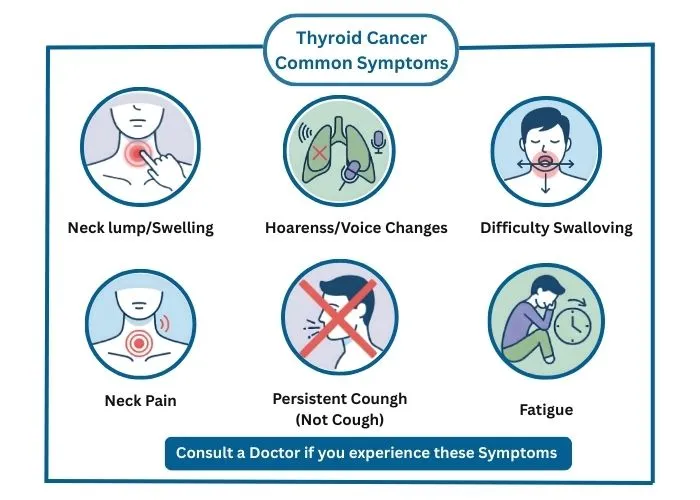
Because thyroid cancer often begins with subtle changes in thyroid nodules, early detection is crucial. Women who experience persistent symptoms such as-
- A lump or swelling in the neck
- Persistent hoarseness
- Difficulty swallowing
- Enlarged lymph nodes
should seek prompt medical evaluation. Modern diagnostic tools including high-resolution ultrasound imaging and fine-needle aspiration biopsies enable clinicians to distinguish benign thyroid nodules from malignant growths with high accuracy.
Early detection significantly improves outcomes, particularly for papillary thyroid cancer, the most common type which typically has an excellent prognosis when caught early.
How MediKaya Healthcare Supports Thyroid Cancer Patients
At MediKaya Healthcare, we understand how overwhelming a thyroid cancer diagnosis can be especially for international patients navigating treatment far from home. Our mission is to provide world-class care with a patient-centric approach that prioritises comfort, accessibility and clinical excellence.
World-Class Diagnostic Services
MediKaya Healthcare offers-
- Advanced Imaging and Testing
Utilising state-of-the-art ultrasound, CT, MRI and radionuclide imaging to accurately detect and stage thyroid cancer. - Precision Biopsy Services
Fine-needle aspiration under ultrasound guidance ensures accurate diagnosis with minimal discomfort. - Multi-Disciplinary Consultations
Our expert endocrinologists, oncologists and surgeons collaborate to deliver personalised treatment plans tailored to each patient’s unique needs.
Comprehensive Treatment Modalities
MediKaya Healthcare supports patients with a full spectrum of thyroid cancer treatments, including-
- Minimally Invasive Surgery
Techniques such as endoscopic thyroidectomy and keyhole surgery for reduced scarring and faster recovery. - Radioactive Iodine Therapy
Targeted postoperative treatment to eliminate residual thyroid tissue and reduce the risk of recurrence. - Hormone Replacement and Follow-Up Care
Lifelong thyroid hormone management to support metabolic balance and prevent complications. - Targeted Therapies and Clinical Trials
Where appropriate, access to novel treatments and research protocols.
Our team emphasises comfort and dignity throughout treatment, ensuring patients understand each stage and are actively involved in decision-making.
Dedicated Support for International Patients
MediKaya Healthcare is particularly well-regarded for its international patient services-
- Streamlined Appointment Scheduling
Assistance with planning visits, securing visas and coordinating travel arrangements. - Dedicated Patient Coordinators
Multilingual support staff assist with communication, logistics and comfort throughout treatment. - Accommodation and Travel Aid
Guidance on local lodging and transport options to ensure a smooth stay. - Telemedicine and Remote Follow-Up
For patients returning home, virtual consultations with specialists help ensure continuity of care.
Whether you’re seeking a second opinion or comprehensive treatment abroad, MediKaya Healthcare delivers expert care in a supportive environment tailored to international patients.
Living with Thyroid Cancer- Long-Term Care and Follow-Up
Thyroid cancer often requires long-term monitoring-
- Regular Blood Tests
Monitoring thyroid-stimulating hormone (TSH) levels and thyroid hormone balance. - Periodic Imaging
Ultrasound and other imaging help detect recurrence early. - Supportive Care
Nutrition, mental health support and rehabilitation services help patients maintain quality of life.
With the right care team such as those at MediKaya Healthcare long-term outcomes are excellent and many patients go on to lead full, active lives post-treatment.
Conclusion
Thyroid cancer in women is a complex condition influenced by a combination of hormonal, biological and environmental factors. Though women are about three times more likely to be diagnosed with thyroid cancer than men, early detection and exemplary treatment can lead to excellent outcomes.
With MediKaya Healthcare, patients receive not just advanced medical treatment but holistic support that addresses every aspect of their journey from diagnosis to recovery and beyond. This includes personalised care plans, world-class technology and dedicated support for international patients seeking expert thyroid cancer treatment abroad.
If you or a loved one are navigating the challenges of thyroid cancer. Then, MediKaya Healthcare stands ready to provide compassionate, leading-edge care every step of the way.
Facilities & Services
Medikaya Healthcare provides comprehensive, end-to-end support for international patients traveling to India for kidney transplant surgery. We understand that crossing borders for a life-saving procedure can be overwhelming, which is why our services are designed to ensure medical safety, logistical ease and complete peace of mind.
- Medical visa invitation letter and documentation support for patients
- Airport pickup, drop and coordinated local transportation
- Hotel or serviced apartment arrangements close to hospitals
- Dedicated international patient coordinator throughout the treatment journey
- Coordination during hospital admission
- Language interpretation and cultural support for non-English-speaking patients
- Assistance with post medications and discharge planning
- Follow-up care coordination and teleconsultation support after returning home
- Support for accompanying family members or caregivers
Through Medikaya Healthcare, international thyroid patients receive personalised care, ethical guidance and seamless coordination, allowing them to focus entirely on recovery while we manage every aspect of their medical journey in India.
Contact Medikaya Healthcare for THYROID CANCER Support in India
If you are seeking verified information, private hospital options, treatment cost guidance or international patient support for Thyroid cancer in India, our medical coordination team is here to assist you with complete confidentiality and professional care.
MedikayaHealthcare provides end-to-end patient support including hospital selection, doctor consultations, medical visa assistance, treatment coordination and post-treatment follow-up.
WhatsApp & Call: +91 9717998697
Email: info@medikayahealthcare.com
Website: www.medikayahealthcare.com
LinkedIn: https://www.linkedin.com/company/medikaya-healthcare/
Instagram: https://www.instagram.com/medikaya_healthcare/
Facebook: https://www.facebook.com/MediKayaHealthcare
Twitter: https://x.com/MedikayaHC