
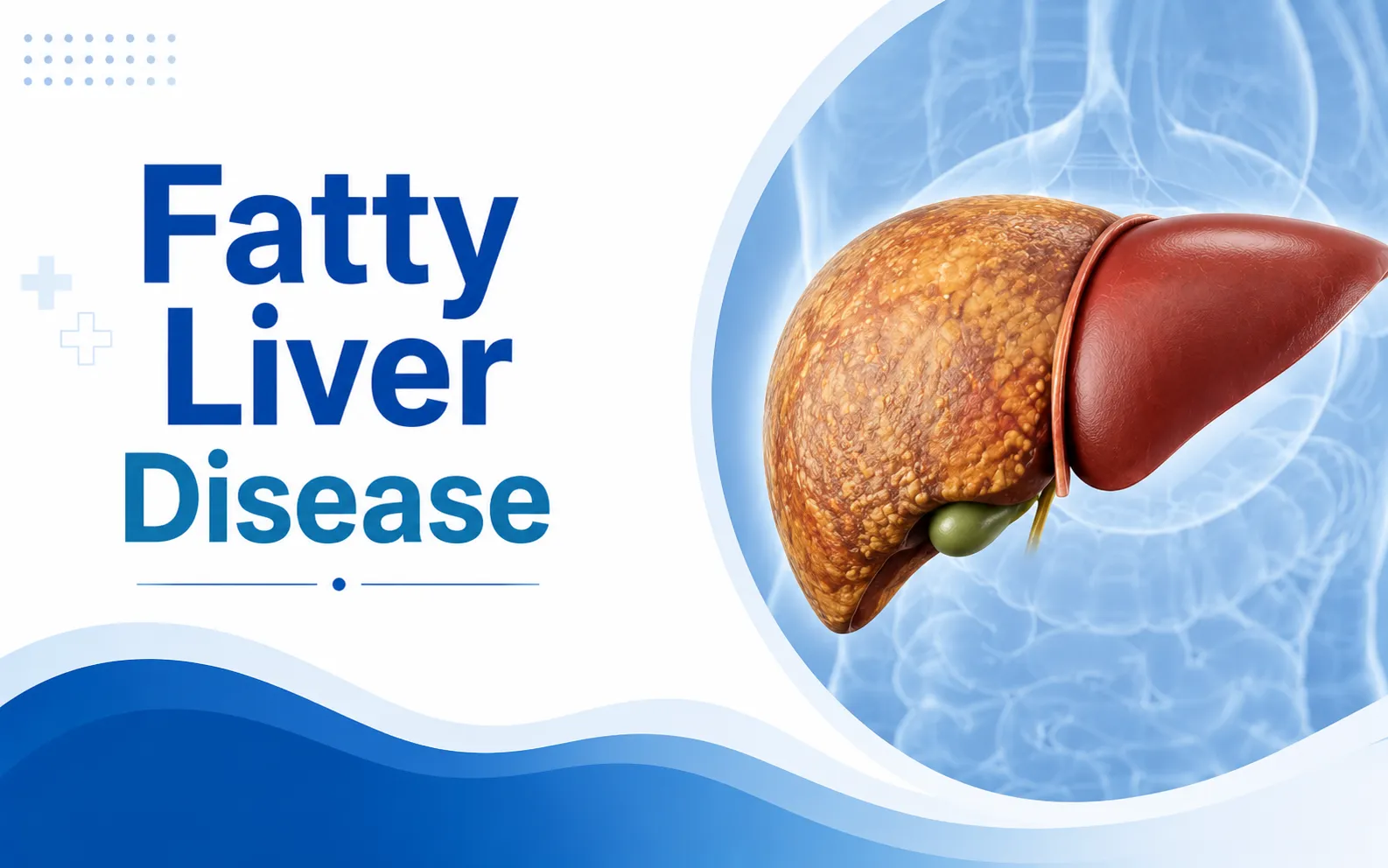
Fatty liver disease used to be a conversation reserved for later in life. Increasingly, it isn’t — clinics worldwide are seeing non-alcoholic fatty liver disease (NAFLD) in patients in their twenties and thirties, a genuine shift in the disease’s demographic pattern over the past two decades. Because fatty liver disease symptoms and treatment considerations differ so much by stage, and because it rarely causes obvious symptoms early on, understanding the risk factors matters more than waiting for warning signs that may never clearly arrive until real damage has occurred.
Why It’s Called a ‘Silent’ Condition
In its early stages, fatty liver disease typically causes no symptoms at all — no pain, no visible signs, nothing that would prompt a doctor’s visit on its own. When symptoms do appear, they are often vague: fatigue, mild discomfort in the upper right abdomen, or general malaise that could easily be attributed to dozens of other causes.
By the time more obvious signs like jaundice (yellowing of skin and eyes), significant abdominal swelling, or easy bruising appear, the disease has often progressed significantly toward more advanced liver damage. This is exactly why risk-factor awareness — not symptom-watching — is the more reliable early warning system available to most people.
Understanding the Disease Spectrum
Fatty liver disease exists on a spectrum: it begins as simple steatosis (fat accumulation in liver cells without significant inflammation), which can progress in some patients to NASH (non-alcoholic steatohepatitis), involving inflammation and early liver cell damage, and further still to fibrosis (scarring) and eventually cirrhosis in a smaller subset of cases over many years if left unmanaged.
Not everyone with simple fatty liver progresses through this entire spectrum — many people remain at the earliest stage indefinitely, particularly with lifestyle management. But because there’s no reliable way to predict in advance who will progress, monitoring and early intervention matter for everyone diagnosed at any stage.
Why Younger Patients Are Increasingly Affected
Rising rates of obesity, sedentary lifestyles, high-sugar diets, and insulin resistance are the primary drivers behind fatty liver disease appearing at younger ages than it did a generation ago. Type 2 diabetes and metabolic syndrome are especially strong risk multipliers, and genetics can also play a meaningful role independent of weight — some patients with fatty liver disease are not overweight at all, a pattern sometimes called ‘lean NAFLD.’
None of this means the condition is untreatable — quite the opposite. Caught at the fatty-liver stage, it is often reversible with sustained lifestyle changes, which is a genuinely encouraging fact worth emphasizing rather than a source of alarm alone.
From Diagnosis to Treatment
Diagnosis typically starts with liver function blood tests and an abdominal ultrasound, sometimes followed by a FibroScan (a specialized ultrasound-based test measuring liver stiffness, which correlates with scarring) or, in more complex cases, a liver biopsy to precisely assess how much scarring has developed. Early-stage treatment centers on weight management, dietary changes, and controlling underlying conditions like diabetes or high cholesterol; more advanced cases may need specialist hepatology management and regular monitoring for progression toward cirrhosis.
There is currently no single medication approved specifically to reverse fatty liver disease across the board, which is exactly why lifestyle intervention remains the primary treatment approach for most patients, alongside management of any underlying metabolic conditions.
Practical Steps That Actually Make a Difference
Weight loss of even 5-10% of body weight has been shown to meaningfully reduce liver fat in overweight patients, with greater weight loss associated with improvement even at the fibrosis stage in some studies. Reducing added sugar and refined carbohydrate intake, increasing physical activity, and limiting or eliminating alcohol (which independently damages the liver) are the most consistently recommended lifestyle changes.
For patients with type 2 diabetes, good glucose control specifically benefits liver health, since insulin resistance is closely linked to fat accumulation in the liver — managing one condition well genuinely helps the other.
When to See a Hepatology Specialist
MediKaya connects international patients with hepatology teams for full liver health evaluations, including FibroScan assessments not always available locally, particularly valuable for patients whose blood tests show abnormal liver enzymes or who have risk factors like diabetes, obesity, or a family history of liver disease.
A specialist evaluation can clarify exactly where on the disease spectrum a patient currently sits, which meaningfully changes the urgency and specifics of the management plan going forward, rather than leaving patients to guess based on a single ultrasound report.
Building a Liver-Friendly Routine That Actually Sticks
Rather than a single restrictive diet, sustainable liver health generally comes from consistent patterns: prioritizing vegetables, whole grains, and lean protein over processed and sugary foods, staying physically active most days of the week, and maintaining regular sleep patterns, since poor sleep has also been linked to worse metabolic and liver health outcomes.
Coffee consumption, somewhat surprisingly, has been associated with some protective effect on liver health in several studies, though it isn’t a substitute for the more established lifestyle changes around weight, diet, and activity — worth mentioning mainly because patients are often relieved to learn not everything enjoyable needs to be eliminated.
Monitoring Progress Over Time
Because fatty liver disease often shows no symptoms, tracking progress relies on periodic blood tests and imaging rather than how a patient feels day to day. A hepatologist typically recommends re-checking liver enzymes and, depending on baseline severity, repeating a FibroScan every 1-3 years to monitor whether fibrosis is stable, improving, or progressing.
MediKaya’s hepatology partners can establish this baseline assessment for international patients during a single visit, providing a clear report that can guide ongoing monitoring with a physician back home, alongside recommendations specific to the patient’s stage on the disease spectrum.
Why Early Action Pays Off Disproportionately
The gap between managing fatty liver disease at the simple-steatosis stage versus at advanced fibrosis is substantial — early intervention often requires only sustained lifestyle change, while advanced disease may require specialist medication management, closer monitoring for liver cancer risk, and in the most severe cases, evaluation for liver transplant. This asymmetry is exactly why the ‘silent’ nature of early fatty liver disease deserves more attention than it typically receives.
For patients with known risk factors — obesity, type 2 diabetes, or a family history of liver disease — proactively requesting liver function tests and an ultrasound during a routine check-up, rather than waiting for symptoms, is one of the most practically useful health decisions available, and one that costs relatively little relative to the disease progression it can help prevent.
How MediKaya Supports Liver Health Evaluation Abroad
For international patients, a comprehensive liver evaluation can often be completed within a single visit — blood tests, ultrasound, and FibroScan performed together, with a hepatologist providing an in-person consultation to explain results and next steps clearly, rather than the fragmented, multi-appointment process this sometimes involves in other healthcare systems.
This consolidated approach is particularly valuable for patients who’ve had an abnormal test result at home but limited access to the specific follow-up testing, like FibroScan, needed to properly stage the condition and guide next steps with confidence.
Frequently Asked Questions
Can fatty liver disease be reversed?
In its early stages (simple fatty liver, before significant scarring), it is often reversible through weight loss, dietary changes, and managing conditions like diabetes. Advanced fibrosis is harder to reverse, which is why early diagnosis matters.
Does fatty liver disease only affect people who are overweight?
No — while obesity is a major risk factor, fatty liver disease can also occur in people with normal weight, particularly with insulin resistance, certain genetic factors, or metabolic syndrome, a pattern known as lean NAFLD.
What tests confirm a fatty liver diagnosis?
Typically a combination of liver function blood tests, abdominal ultrasound, and in some cases a FibroScan (transient elastography) or liver biopsy to assess scarring.
How much weight loss is needed to improve fatty liver disease?
Studies generally show that losing 5-10% of body weight meaningfully reduces liver fat in overweight patients, with greater weight loss associated with improvement even at more advanced stages.
Is medication available to treat fatty liver disease directly?
There is currently no single medication universally approved to reverse fatty liver disease; treatment focuses on lifestyle changes and managing underlying conditions like diabetes, though this is an active area of ongoing research.
When should someone see a hepatologist rather than a general physician?
If blood tests show abnormal liver enzymes, an ultrasound flags fatty liver, or there is a family history of liver disease alongside diabetes or obesity, a hepatologist’s evaluation is worth pursuing.