
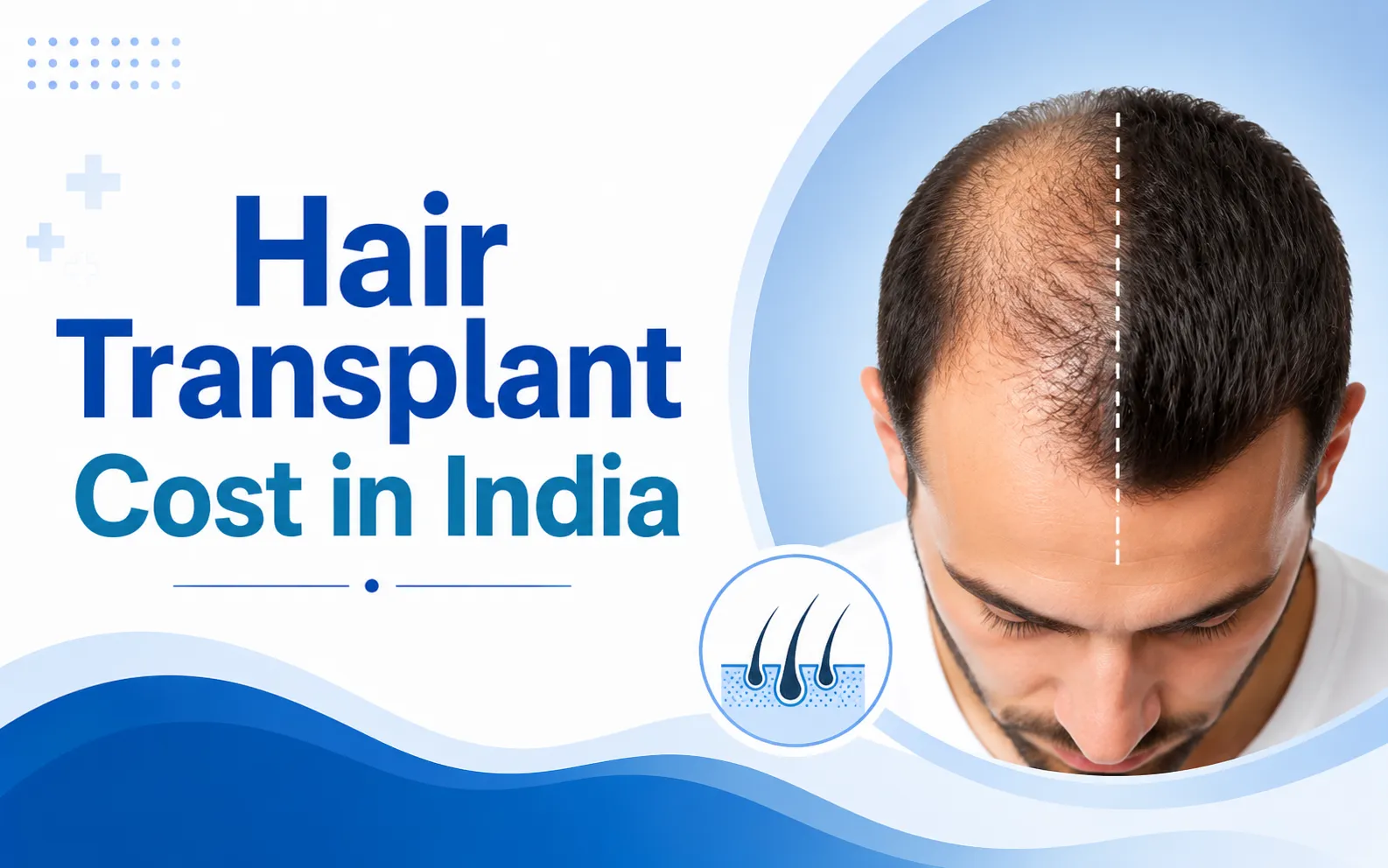
Hair transplant pricing varies enormously between clinics and countries, and headline numbers rarely tell the full story. This guide breaks down exactly what drives hair transplant cost in India — technique, graft count, clinic fees, and aftercare — so you can compare India’s pricing against global options on equal terms, rather than comparing a vague total against another vague total and hoping for the best.
What Actually Drives the Price
Cost is primarily driven by technique (FUE — Follicular Unit Extraction — versus FUT strip harvesting) and graft count, since most clinics price per graft. FUE is generally more expensive per graft due to the labor-intensive, individually-extracted follicle process, but produces less visible scarring and a faster recovery, which is why it dominates international patient demand over the older strip-harvesting FUT method.
Clinic reputation, surgeon experience, and whether the procedure is performed by the surgeon directly or largely delegated to technicians also meaningfully affects both price and outcome quality — a factor worth asking about directly rather than assuming from the quoted price alone.
FUE vs. FUT: The Technical Difference That Drives Cost
FUE extracts individual hair follicles one at a time using a small circular tool, leaving tiny, barely visible dot scars scattered across the donor area rather than one linear scar. FUT removes a strip of scalp from the donor area, which is then dissected into individual grafts under microscope — this method can yield more grafts in a single session but leaves a linear scar that limits future short-haircut options.
For most international patients prioritizing discretion and faster recovery, FUE has become the preferred choice despite the higher per-graft cost, though FUT remains a reasonable option for patients needing a very high graft count in a single session and who are less concerned about donor-area scarring.
India’s Pricing vs. Global Benchmarks
Hair transplant procedures in India are typically priced at a fraction of equivalent FUE procedures in the US, UK, or Western Europe, largely due to lower clinical overheads rather than lower quality — India’s leading cosmetic surgery centers use the same graft-extraction technology and follow comparable surgical protocols to their Western counterparts.
Compared with Turkey, which built a reputation on hair transplant volume and aggressive pricing, India’s positioning is similar on cost but often includes more comprehensive hospital-grade aftercare through accredited multi-specialty centers rather than dedicated single-procedure clinics, which can matter if any complication requires broader medical support.
The Line Items That Should Be in Your Quote
A transparent quote should separately itemize: consultation and scalp assessment, the procedure fee (often per-graft or per-session), anesthesia, post-procedure medication, follow-up visits, and any PRP (platelet-rich plasma) add-ons offered to support graft survival and healing. Hidden costs typically hide in vague ‘package’ pricing that doesn’t specify exact graft count or session number.
It’s also worth asking specifically what happens if the initially estimated graft count turns out to be insufficient during the actual procedure — a reputable clinic will have a clear, pre-agreed policy for this rather than surprise billing on the day of surgery.
What Determines Long-Term Success Beyond Price
Graft survival rate — the percentage of transplanted follicles that successfully grow — depends heavily on surgical technique, how the grafts are handled and stored during the procedure, and post-operative care compliance. A cheaper procedure with lower graft survival can ultimately cost more in follow-up sessions than a slightly pricier procedure performed with meticulous technique the first time.
Realistic expectations matter too: hair transplant results take 8-12 months to fully mature, with initial shedding of transplanted hair in the first month being a normal, expected part of the growth cycle rather than a sign of failure.
Getting a Reliable Personalized Estimate
MediKaya provides a full written cost breakdown before travel, sourced directly from partner cosmetic surgery centers, based on photos and a description of your hair loss pattern — so there are no surprises on arrival regarding either the technique recommended or the total cost involved.
This process typically involves a remote consultation to assess hair loss extent using the Norwood scale (a standard classification for male pattern baldness), followed by a specific graft-count estimate and itemized quote before any travel commitment is made.
What Aftercare Actually Involves
The first week after surgery involves gentle scalp care following specific washing instructions to protect newly placed grafts, avoiding direct sun exposure, strenuous exercise, and swimming for a period the surgeon specifies. Most patients can return to non-strenuous work within 3-5 days, though visible redness in the recipient area typically takes 1-2 weeks to fade.
Follow-up photos at 3, 6, and 12 months are standard practice at reputable clinics to track growth progress and confirm the result is developing as expected — MediKaya’s partner centers include this structured follow-up as part of the overall treatment package, even after the patient has returned home.
Is Hair Transplant the Right Choice for Everyone?
Hair transplant surgery works best for patients with stable, predictable pattern baldness and sufficient healthy donor hair at the back and sides of the scalp — it is not typically recommended for very young patients whose hair loss pattern hasn’t yet stabilized, since further loss could create an unnatural-looking result over time as the surrounding native hair continues to recede.
A thorough consultation, ideally including a discussion of medical options like finasteride or minoxidil to slow further loss, gives a more complete picture of whether transplant surgery alone, or a combination approach, best serves a patient’s specific situation and expectations.
Setting Realistic Expectations From the Start
A skilled surgeon will be honest about what’s achievable given a patient’s specific donor hair supply and degree of baldness — sometimes recommending a combination of transplant and medical therapy rather than promising a full restoration that isn’t realistically achievable from limited donor hair alone. Being wary of any consultation that promises dramatic results without first properly assessing donor density is a reasonable and important instinct.
MediKaya’s role includes helping patients evaluate whether a proposed treatment plan matches realistic surgical possibility, not just what a patient hopes to hear, since a good long-term outcome depends on this honesty at the consultation stage as much as on surgical skill during the procedure itself.
Combining Hair Transplant With Other Treatments
Some patients benefit from combining surgical transplant with PRP therapy or medical treatments like minoxidil to support the health of both transplanted and existing native hair, improving overall density and appearance beyond what transplant surgery alone would achieve. This combination approach is increasingly common practice at established cosmetic surgery centers rather than an unusual add-on.
MediKaya’s partner surgeons discuss these complementary options during the initial consultation, tailored to each patient’s degree of hair loss, donor availability, and personal goals for the overall result.
Frequently Asked Questions
Q. Is FUE always better than FUT?
Not universally — FUE leaves minimal scarring and a shorter recovery, making it the preferred choice for most international patients, but FUT can sometimes yield more grafts per session for extensive baldness. Your surgeon’s assessment should guide the choice.
Q. How many grafts does an average hair transplant require?
This varies widely by hairline pattern and degree of hair loss — anywhere from 1,500 to 4,000+ grafts is common, which is why per-graft pricing transparency matters so much.
Q. How does India’s hair transplant quality compare with Turkey’s?
Leading Indian cosmetic surgery centers use comparable FUE technology and techniques; the meaningful differences are usually in aftercare infrastructure and whether the procedure sits within a larger accredited hospital system.
Q. What should be included in a trustworthy cost quote?
Consultation, exact technique and graft-count estimate, procedure fee, anesthesia, medication, and follow-up visits — all itemized rather than bundled into a single vague number.
Q. Is it normal for transplanted hair to fall out initially?
Yes — transplanted hair typically sheds within the first month as part of the normal growth cycle, with new growth beginning around month 3-4 and full results visible by 8-12 months.
Q. What affects graft survival rate the most?
Surgical technique, how carefully grafts are handled and kept viable during the procedure, and post-operative care compliance are the leading factors — which is why surgeon experience matters as much as price.
КРАТКО НА РУССКОМ
Стоимость пересадки волос зависит от техники (FUE или FUT) и количества графтов, а не только от страны проведения операции. FUE обеспечивает менее заметные рубцы и более быстрое восстановление, хотя стоит дороже за графт. Цены в Индии сопоставимы с Турцией, но часто включают более полное послеоперационное сопровождение в аккредитованных многопрофильных клиниках. Результат полностью проявляется через 8–12 месяцев, а временное выпадение пересаженных волос в первый месяц — это нормальный процесс. MediKaya Healthcare предоставляет пациентам из СНГ детальную смету по каждой статье расходов до поездки.
Want a personalized, itemized hair transplant quote based on your hair loss pattern?
Request a free assessment.