

Laser works in many ways. Laser devices can do tasks. Some skin problems respond well to laser therapy; others do not. Results depend a lot on the laser device, the settings chosen, and the skill of the person using the laser. Here is how to set expectations about laser treatments.
Lasers send focused energy to the skin. The wavelength and settings determine what gets targeted pigment, blood vessels, hair, or the surface layers of the skin. That flexibility is why laser treatments are often promoted. It’s also why results can be different from person to person. That’s why it’s important to have expectations.
The main types and what they target
| Type | Typical use | Things to know |
|---|---|---|
| Resurfacing lasers | Some acne scars, fine lines, uneven texture, sun damage | Stronger versions need more recovery time; gentler ones need more sessions |
| Pigment lasers | Certain sun spots and other pigmented marks, and tattoo removal | Not every dark patch is suitable; some need diagnosis first |
| Vascular lasers | Visible small blood vessels, some redness and birthmarks | Response varies by the type of vessel or mark |
| Hair-reduction lasers | Reducing unwanted hair | Works best with a contrast between hair and skin; usually several sessions are needed |
| Skin-tightening devices | Mild laxity | Effects are usually modest compared with surgery |
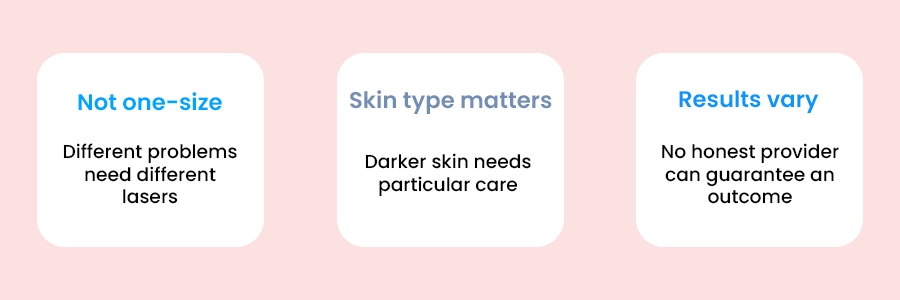
What lasers can’t do
- Guarantee a result. The results depend on your skin. The problem you have. Some marks fade partly.
- Fix every scar. Deep or very large scars may improve. Very rarely are scars erased.
- Treat melasma. Melasma often comes back and can get worse if heat from some devices is used, so a careful doctor-led approach is needed.
- Replace sun protection. Treated skin is fragile, and sun exposure can undo results or change the skin color.
- Substitute for diagnosis. A mark that is new, changing, or bleeding should be examined by a doctor before any laser is used on it, and a proper diagnosis should be made by a doctor.
Risks to know about
Laser treatment is generally safe when done by professionals using the right equipment. There can be side effects. These include redness, swelling, burns, blistering, infection, scarring, and changes in skin color. These changes can lead to patches that are lighter or darker than the surrounding skin. This is called pigment changes. People with skin have a higher risk of pigment changes when some lasers are used, so the choice of device and settings matters a lot. A laser used near the mouth can trigger sores in people who are prone to them, and some medicines make skin more sensitive to light. People tell your doctor about all of these.
What a safe process looks like
- Consultation with a qualified doctor
Your skin, medical history, medicines, and past treatments are reviewed. A diagnosis is made before treatment is chosen.
- Plan and expectations
The suitable laser, the number of sessions and the realistic outcome are explained, including what it may not fix.
- Patch test where appropriate
A small area may be treated first to check how your skin responds.
- Treatment
Eye protection is used, and numbing cream may be applied. You may feel warmth, snapping or stinging.
- Aftercare
Gentle skincare, strict sun protection, and following instructions on what to avoid. Contact your doctor if blistering, increasing pain or signs of infection appear.
Questions to ask before you start
Bring these to your consultation.
- What exactly is my diagnosis, and is a laser the right tool?
- Which laser will you use, and why is it suitable for my skin type?
- Who will perform the treatment, and what are their qualifications?
- What are the risks for me, and what happens if something goes wrong?
- How many sessions, and what realistic improvement should I expect?
Frequently asked questions
Q: Does laser treatment hurt?
The experience varies by the device. I have seen many patients describe a snapping or stinging feeling, and numbing cream is often used. The doctor will explain what to expect.
Q: Is laser safe for dark skin?
It can be done. Only with a suitable device and settings and an experienced provider. Ask specifically about experience with skin type.
Q: How many sessions will I need?
It depends on what you’re treating and how your skin reacts. Watch out for anyone who says they know the number, without looking at you first.
Q: Can lasers remove acne scars completely?
Lasers may soften some types of acne scars. Complete removal of acne scars is not a realistic promise. Ask your doctor what is likely for your acne scar type.
Q: Can I get an opinion first?
Yes. Our partner dermatology specialists can look at your concerns during a no-obligation consultation.
Conclusion
Lasers can be a tool when used by someone who knows what they’re doing for the right kind of problem. Know what you want to fix, ask for a diagnosis and a trained professional, and think twice about any promise of sure results.