

Misplacing your keys is not dementia. But some memory and thinking changes deserve a proper evaluation, and early assessment can mean earlier support. Here is how to tell the difference and what to do next.
Dementia is not a single disease. It is an umbrella term for a decline in memory, thinking, and everyday abilities that is severe enough to interfere with daily life. Alzheimer’s disease is the most common cause, but there are others, including vascular dementia and Lewy body dementia. Some memory problems are caused by treatable conditions, which is one strong reason to have them checked.
Normal aging vs. warning signs
| Area | Typically normal with age | Worth getting checked |
|---|---|---|
| Memory | Forgetting a name or appointment, then remembering later | Forgetting recent conversations or events, asking the same question repeatedly |
| Everyday tasks | Occasionally needing help with a new gadget | Struggling with familiar tasks such as cooking a known meal or managing bills |
| Orientation | Briefly forgetting the day of the week | Getting lost in familiar places, losing track of the season or where you are |
| Language | Sometimes searching for the right word | Frequent difficulty finding words or following a conversation |
| Judgement and mood | Making an occasional poor decision | Marked personality change, poor judgement, withdrawing from things you used to enjoy |
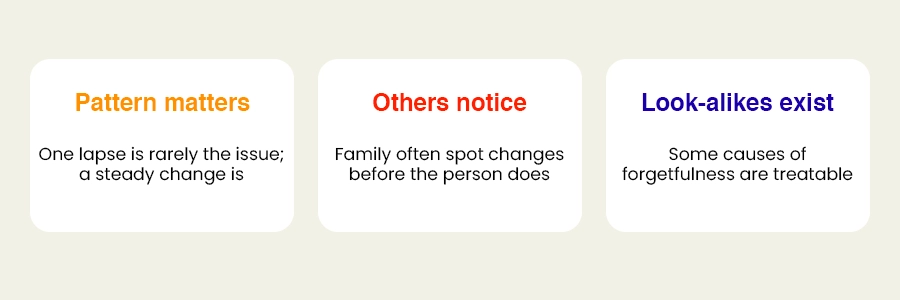
Causes that can mimic dementia
Memory and thinking problems are not always due to dementia. A doctor will look for contributing or treatable factors, which can include:
- Low mood or depression, and anxiety
- Thyroid problems or low vitamin B12
- Side effects of some medicines, or interactions between them
- Poor sleep, including sleep apnoea
- Hearing or vision problems that make it harder to take in information
- Infections, or other medical illness, particularly in older people
How memory problems are evaluated
1. A conversation and history
The doctor asks about the changes, when they began, medicines, health conditions and mood. A family member’s account is very helpful.
2. Cognitive testing
Short tests of memory, attention, language and problem-solving. Some people are referred for more detailed testing.
3. Blood tests
To check for treatable contributors such as thyroid or vitamin problems.
4. Brain imaging
A CT or MRI scan can look for other causes and for patterns of change in the brain.
5. Diagnosis and a care plan
If dementia is diagnosed, the plan covers medicines for symptoms where suitable, safety at home, support for the family and planning ahead.
A note on this topic
Memory worries can be frightening, for the person and for those who love them. Raise the subject gently, choose a calm moment, and focus on specific examples rather than on labels. If you are a carer, your own wellbeing matters too: look for carer support, share the load where you can, and speak with the doctor about what to expect.
Questions for the doctor
Bring these to the appointment
- What changes have we noticed, and when did they start?
- Could any medicine, health condition or sleep problem be contributing?
- Which tests do you recommend, and what will they tell us?
- If it is dementia, what type, and what does that mean for the care plan?
- What support is available for the family?
Frequently asked questions
Q: Is forgetfulness always a sign of dementia?
No. Occasional forgetfulness is common at any age and with stress, poor sleep or distraction. A persistent pattern that affects daily life is what needs evaluation.
Q: Can dementia be cured?
There is no cure for most dementias, though some causes of memory problems are treatable. Treatment can help manage symptoms, and good support makes a real difference to quality of life.
Q: Does dementia run in families?
Having a relative with dementia can raise your own risk in some cases, but it does not mean you will develop it. Discuss your family history with your doctor.
Q: Should I confront a relative about their memory?
Approach it kindly and privately, focusing on specific examples and on support, and offer to go with them to the appointment.
Q: Can I get an opinion on my reports?
Yes. Our partner specialists can review your reports through a free, no-obligation second opinion.
Conclusion
On World Alzheimer’s Day, the most useful message is a simple one: do not dismiss persistent changes as “just getting older”, and do not panic at every lapse. Notice patterns, seek an evaluation, and bring support in early.