

Most heart problems develop slowly over years. A few simple checks can reveal your risk well before any symptoms appear. Here are five numbers that are important to understand. Each number gives you information. Each number also tells you what questions to ask your doctor.
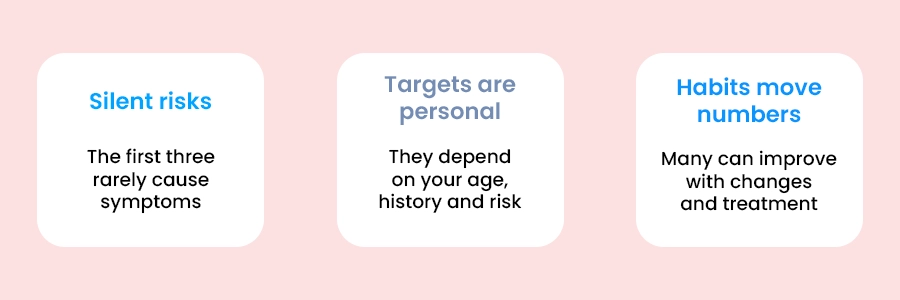
Heart disease often starts without any warning. High blood pressure, high cholesterol, and high blood sugar usually do not show any signs until something is already wrong. That is why measuring numbers matters because it gives you a picture. Knowing your numbers and knowing what your doctor wants those numbers to be turns a vague worry into a concrete plan.
The five numbers
| Number | What it tells you | What to ask your doctor |
|---|---|---|
| 1. Blood pressure | The force of blood against artery walls. Persistently high pressure strains the heart and blood vessels. | What is my target, how often should I check it, and should I measure at home? |
| 2. Cholesterol | Fats in the blood, including LDL (“bad”) and HDL (“good”). High LDL contributes to artery narrowing. | What does my lipid profile show, and what is my target given my overall risk? |
| 3. Blood sugar | High levels, or diabetes, damage blood vessels and raise heart risk. | Should I be tested for diabetes or pre-diabetes, and how often? |
| 4. Weight and waist | Extra weight, especially around the waist, is linked with higher blood pressure, cholesterol and diabetes risk. | Is my weight or waist size a concern for my heart, and what is a realistic goal? |
| 5. Resting heart rate | How fast the heart beats at rest. Fitness and many other things affect it. | Is my resting rate normal for me? Note that it is a less standard marker than the first four. |
Beyond the numbers
Numbers are part of the picture. Smoking affects the heart. Family history of early heart disease affects the heart. Kidney disease affects the heart. Physical inactivity affects the heart. Physical inactivity affects the heart. Poor sleep affects the heart. Stress affects the heart. All of these things also affect heart risk. Your doctor may look at all of these things. Your doctor may combine all of these things into a risk estimate. Your doctor may use that risk estimate to guide treatment.
What helps
- I advise you not to smoke and to avoid tobacco in any form.
- I recommend you move regularly: aim for activity you can keep up with at a level your doctor considers safe for you.
- Eat for your heart: lots of vegetables, fruit, whole grains, and beans, with less salt, less sugar, and fewer processed foods.
- Stay at a weight and drink less alcohol.
- Take your medicines exactly as instructed even if you feel fine.
- Get checked regularly, especially if you are over 40, have a family history of illness, or have diabetes or high blood pressure.
A simple plan for this week
- Book a check
Ask for blood pressure, a cholesterol (lipid) test and a blood sugar test, if you have not had them recently.
- Write down your numbers
Keep them somewhere you can find them, with the date.
- Ask what they mean
Ask your doctor what your target is and what it would take to reach it.
- Pick one habit
Choose one realistic change, such as a daily walk or cutting back on added salt, and stick with it.
- Repeat
Recheck at the interval your doctor advises.
Questions for your doctor
Bring these to your check-up.
- What is my overall heart risk, and how was it worked out?
- Which of my numbers needs attention first?
- What are my targets for blood pressure, cholesterol, and blood sugar?
- How often should I be checked?
- Does my family history change what I should do?
Frequently asked questions
Q: At what age should I start checking my numbers?
It depends on your risk factors and the advice from local health officials. Talk to your doctor about when to begin, especially if heart disease or diabetes is common in your family.
Q: Can I check my blood pressure at home?
Many people do use a validated monitor. Ask your doctor how to measure it and how to share the readings.
Q: Is “bad” cholesterol always bad?
LDL cholesterol when it is high can increase the chance of problems. Your doctor considers the entire situation, including other things that might affect your health before making a decision, about what to do.
Q: If my numbers are normal, am I safe?
Numbers that look normal give comfort. Numbers are not a sure thing. Numbers still matter, because smoking, family history, and other factors also count.
Q: Can I get my heart reports reviewed?
Yes. Our partner cardiology specialists can review your reports through a no-obligation second opinion. You won’t have to pay anything. There’s no obligation to proceed. It’s a way to get a second look at your results.
Conclusion
On this World Heart Day the best thing you can do is also one of the easiest: check your numbers, write them down, and ask what they mean for you. A short talk, with your doctor today can stop a more serious conversation later.