

Melasma affects millions of people. It can be hard to get rid of for good, and melasma recurrence is common, but there are ways to improve it. Being able to figure out the triggers is as equally important to using the right products and getting the right procedures done. Here is a guide to melasma causes and treatment.
What Is Melasma?
Melasma causes patches of skin to become brown or grey-brown. These patches are most often seen on the cheeks, forehead, upper lip and nose. They are seen more often on women and those with medium to dark skin. It is not harmful, but it can be unsightly and hard to treat.
What Triggers It: Why Does Melasma Come Back?
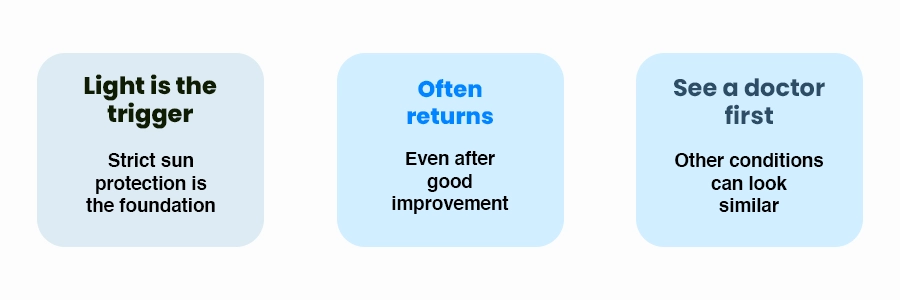
- Sun and visible light: The most important triggers of melasma. Even small amounts of exposure can make the patches darker.
- Hormones: Making melasma worse can include pregnancy and certain birth control and hormone medications.
- Heat: This includes hot kitchens and saunas.
- Family tendency: It can run in families.
- Skin irritation: This includes the use of harsh products and aggressive treatments.
Melasma Treatment Options in 2026
| Approach | What it does | Things to know |
| Sun protection | Prevents new darkening and protects treated skin | Broad-spectrum sunscreen, hats and shade, used daily. Tinted products may help against visible light. |
| Prescription creams | Lighten pigment over weeks to months | Should be doctor-directed; some can irritate skin and need monitoring |
| Chemical peels | Gentle peels may help selected patients | Aggressive peels can backfire in darker skin, so melasma treatment for dark skin needs extra care |
| Oral medicines | Used in selected cases under specialist supervision | Not for everyone; discuss risks with a dermatologist |
| Lasers and light devices | Sometimes used cautiously | Heat can worsen melasma, so choose an experienced doctor and expect no guarantee |
See a dermatologist for any patch that is new, changing or different
skin patches that are dark, raised, bleeding, changing in shape or color should NOT be immediately assumed to be melasma. There are other conditions such as skin cancers that can resemble melasma.
A Realistic Plan: How to Prevent Melasma From Returning
Step 1: Get the Diagnosis
A dermatologist examines the skin, and sometimes uses a special light, to confirm melasma and rule out other causes.
Step 2: Protect the Skin
Daily sun protection, every day, including cloudy days and indoors near windows.
Step 3: Start Gentle Treatment
Usually a prescribed cream, with follow-up to adjust.
Step 4: Be Patient
Improvement is gradual, over months.
Step 5: Maintain
Keep up protection and review triggers such as hormone treatments with your doctor.
Be careful with “miracle” products
Skin-lightening products that promise fast results can contain unregulated ingredients that irritate skin or cause lasting damage. Use only products recommended by your doctor.
Questions for Your Dermatologist
- Is this melasma, or could it be something else?
- Could my medicines or hormones be contributing?
- What treatment do you recommend and for how long?
- What are the potential side effects of the treatment?
- What should I do if it comes back?
Melasma FAQs
Q. Can melasma be reversed? Is melasma reversible?
Usually not permanently, and full melasma reversal is uncommon. It can be improved, and kept under control with sun protection and maintenance treatment.
Q. Why does melasma come back?
Melasma recurrence usually happens when a trigger returns: sun and visible light, heat, hormonal changes or skin irritation. Stopping daily sun protection or maintenance treatment too early is a common reason.
Q. Will melasma go away on its own?
Sometimes. It may fade when a trigger is removed, for example after pregnancy or after stopping a hormone medicine. But many people find it stays or returns, especially with sun exposure, so will melasma ever go away completely is hard to promise. Ask your doctor.
Q. Does pregnancy melasma go away?
It may fade after pregnancy in some women, but not in all. Ask your doctor.
Q. Will melasma go away after menopause?
Not always. Hormone levels change after menopause and it may fade in some women, but sun exposure can keep it going and hormone treatment may make it worse. Ask your dermatologist.
Q. Is laser a good option?
Sometimes, but heat can worsen melasma. It should be offered only by an experienced doctor, as part of a wider plan.
Q. Does it affect my health?
No. It is a cosmetic condition. But it can affect confidence, and treatment is reasonable if it bothers you.
Q. Can I get a second opinion?
Yes. Our partner dermatology specialists can review your concerns through a free, no-obligation consultation or a free second opinion.
Conclusion: Managing Melasma Recurrence
Melasma is a condition that takes patience and discipline. The most important thing is to get an accurate diagnosis. Also, be wary of products or treatments that claim to completely get rid of melasma. It’s unlikely that these quick fixes are worth your time. Protecting your skin from the sun and using sunscreen can be helpful.