
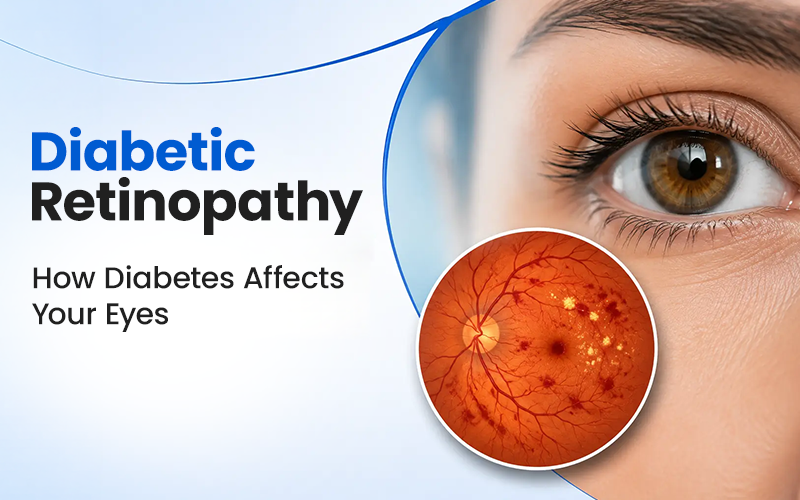
Diabetes can slowly harm the blood vessels in the back of the eye. This often happens a time before any changes in vision are noticed. The positive part is that seeing an eye doctor on a basis can find issues early. Finding problems early is the time to start treatment.
Diabetic retinopathy is damage to the retina, the sensitive layer, at the back of the eye. Diabetic retinopathy is caused by blood sugar that lasts for a long time. It is one of the reasons diabetes affects eyesight, but in the early stages it usually causes no pain and no obvious change in vision. That is why it is often discovered too late.
How diabetes damages the retina
I have noticed that the retina depends on a network of tiny blood vessels. Over time high blood sugar can weaken these blood vessels, causing them to leak fluid or blood or to close off, which hurts the retina. In response, the eye can grow new vessels that bleed easily and can scar the retina. The eye condition is usually described in two stages:
| Stage | What happens | What you may notice |
|---|---|---|
| Early (non-proliferative) | Vessels weaken, leak, or form small bulges. Fluid can collect at the center of the retina (macular edema). | Often nothing. Sometimes blurred or fluctuating vision if the center of the retina is involved. |
| Advanced (proliferative) | Blocked vessels trigger growth of fragile new vessels that can bleed or pull on the retina. | Floaters, dark areas or shadows, and sudden vision loss. Needs urgent assessment. |
Who is at risk
Anyone who has type 1 diabetes or type 2 diabetes can get retinopathy. The chance of developing retinopathy tends to go up the someone has diabetes. The longer someone has diabetes the more likely it is that blood sugar levels and blood pressure and cholesterol will be hard to manage. The harder it is to manage blood sugar levels and blood pressure and cholesterol the higher the risk becomes. Pregnancy, smoking and kidney disease can also add to the risk. Tell your eye doctor about pregnancy, smoking and kidney disease.
How it is found
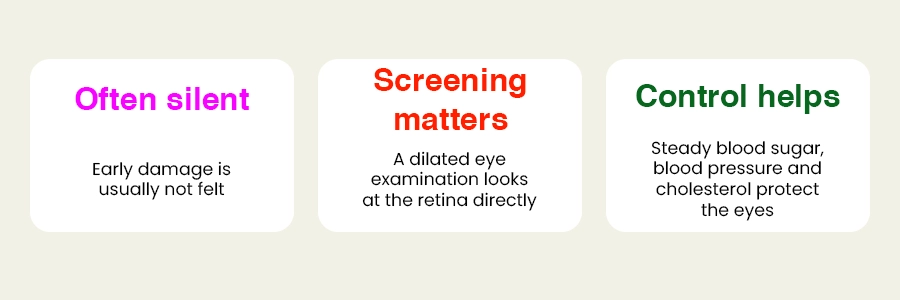
- Dilated eye examination uses drops that widen the pupil so the doctor can see the retina. Dilated eye examination helps doctors view the retina clearly.
- Retinal photographs and OCT scans are images that show vessel changes and any swelling, in the centre of the retina.
- Fluorescein angiography involves using dye to show leaking vessels clearly. It helps doctors see the leaks, in the blood vessels.
Your eye doctor will let you know how often you should have your eyes examined. Don’t wait until you notice any problems.
Treatment options
The goal of treatment is to keep the eyesight you currently have and to make any more harm happen slowly. Which choice works for you depends on how the problem has gone and whether the center part of the retina is affected.
- Better control of the whole body
Keeping blood sugar, blood pressure and cholesterol well controlled, as advised by your diabetes doctor, is the foundation of every treatment plan.
- Monitoring
Mild disease is often simply watched with regular examinations.
- Injections into the eye
Medicines injected into the eye can reduce swelling and abnormal vessel growth in selected patients. A course of visits is usually needed.
- Laser treatment
Laser can seal leaking vessels or treat areas of retina that are starved of blood, to reduce the risk of bleeding.
- Surgery (vitrectomy)
If there is significant bleeding or scarring, surgery to remove blood and scar tissue may be needed.
Questions to ask your eye doctor
Bring these to your appointment
- What stage is my retinopathy, and is the centre of my retina affected?
- How often should my eyes be checked from now on?
- Which treatment, if any, do you recommend now, and why?
- What symptoms mean I should come in the same day?
- Who should I update about my results: my diabetes doctor and my family doctor?
Frequently asked questions
Q: Can diabetic retinopathy be reversed?
Early changes can sometimes stabilise when you keep your blood sugar, blood pressure and cholesterol, at levels but once damage is established it is often not fully reversible. Treatment aims to prevent damage from getting worse.
Q: I see well. Do I still need an eye test?
Yes. Early retinopathy usually causes no symptoms so a normal-feeling vision does not rule out retinopathy.
Q: Does every person with diabetes lose vision?
No. Many people who have diabetes keep vision especially when they have regular eye exams and they manage their risk factors.
Q: Is treatment painful?
Eye drops numb the eye for laser or injections. Eye drops can feel a bit odd. They help you feel less pain. Most people feel pressure of pain. Your doctor will explain what to expect for your procedure.
Q: Can I get an opinion before deciding on treatment?
Yes. Partner specialists can review your reports with a no‑obligation second opinion.
Conclusion
Diabetic retinopathy is a condition, but it is also one of the more predictable problems that can happen with diabetes. Regular checkups for your eyes, keeping the numbers under control, and getting help quickly when things change give your eyes the best possible chance. Diabetic retinopathy is a condition, but it is also one of the more predictable problems that can happen with diabetes. Regular checkups, for your eyes, keep the numbers under control and get help quickly when things change, giving your eyes the best possible chance.