

Fungal skin infection treatment is usually simple, and ringworm and other fungal skin infections may look unsightly but are usually not hard to treat. Still, they may persist or recur for a number of reasons, for instance, if treatment is discontinued too early, if hygiene habits do not change, and if a steroid cream is used in error.
Quick answer
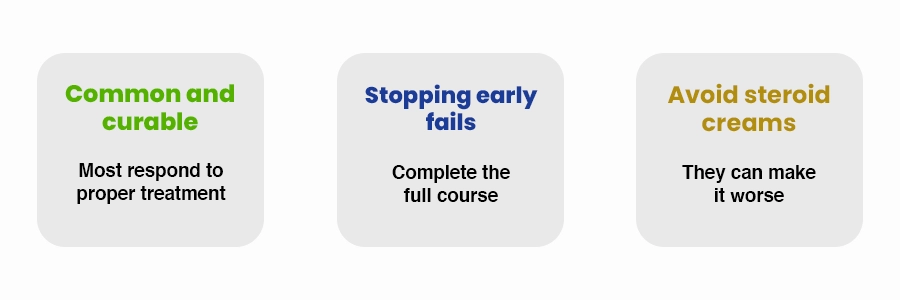
- Most fungal skin infections clear with the right antifungal medicine, used for the full course.
- Creams usually work for small areas. Tablets are needed for widespread infection, the scalp, nails, or infections that do not respond to creams.
- A single infection can be cured, but it can come back if the cause remains: damp skin, shared items, a pet or household contact, or an earlier steroid cream.
- If a rash keeps returning or will not clear, see a dermatologist and ask about a skin test.
What Is Ringworm and Why Does It Spread?
As the name suggests, ringworm has to do with a worm infection. It is in fact a fungal infection of the skin, hair or nails. Like most fungal infections, it needs warm, moist conditions to thrive, which explains why it is common during the hot season. Ringworm is highly contagious and can be spread by skin contact or contact with a shared item, like a towel or a uniform. It can also be spread by contact with an infected surface like the floor of a gym or swimming pool.
Types of Fungal Skin Infection: Where It Appears
Searching for a fungal skin infection treatment picture is common, and photos can help you know what to look for. But a picture cannot confirm the diagnosis, because eczema, psoriasis and other rashes can look similar.
| Area | Common Name | What you may Notice |
|---|---|---|
| Body | Tinea corporis (ringworm) | Red, scaly, itchy rings with clearer centers |
| Groin | Tinea cruris (jock itch) | Red, itchy rash in the groin and inner thighs |
| Feet | Tinea pedis (athlete’s foot) | Itching, peeling, and cracking between toes |
| Scalp | Tinea capitis | Scaly patches, hair loss, and sometimes swelling; more common in children |
| Nails | Onychomycosis | Thickened, discolored, brittle nails |
Fungal Skin Infection Treatment: What Works
What Is the Best Treatment for Fungal Skin Infection? (Best Treatment for Ringworm)
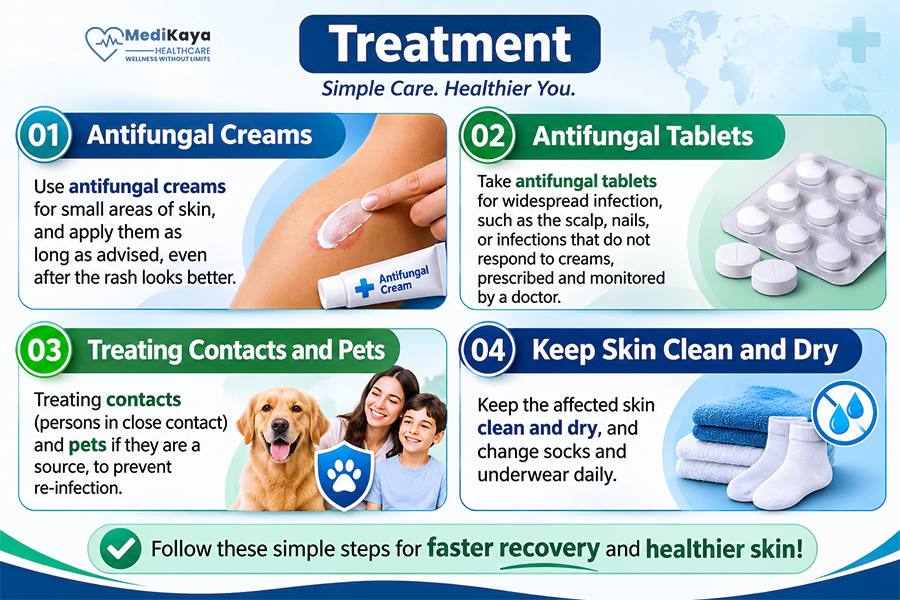
The best treatment is an antifungal medicine matched to the site and spread of the infection. There is no single product for everyone.
- Antifungal creams for small areas of skin, used for as long as advised, even after the rash looks better.
- Antifungal tablets for widespread infection, the scalp, nails, or infections that do not respond to creams, prescribed and monitored by a doctor.
- Treating contacts and pets if they are a source.
- Keeping skin clean and dry, and changing socks and underwear daily.
| Infection | Usual approach | Typical time |
|---|---|---|
| Body, groin, feet (small area) | Antifungal cream such as clotrimazole, miconazole, terbinafine, or luliconazole | Usually a few weeks |
| Widespread or stubborn | Antifungal tablets such as terbinafine or itraconazole | Weeks, sometimes longer |
| Scalp | Tablets, often with a medicated shampoo | Weeks; needs a doctor |
| Nails | Tablets or medicated nail products | Months |
Medicine names are examples only. Your doctor chooses the medicine, dose, and duration.
How Do I Remove Fungus From My Skin?
Confirm that it is a fungus, use an antifungal as prescribed, keep the area clean and dry, and continue for the full course. Many doctors advise carrying on for a short time after the rash looks clear. Avoid steroid creams on an undiagnosed rash and do not rely on home remedies. Wash towels, clothes and bedding in hot water where possible.
Can Fungus Be Cured Permanently? What Kills a Fungal Skin Infection for Good?
Yes, an individual infection can usually be cleared completely with a full course of the right antifungal medicine. But you do not become immune. If damp skin, shared items, an infected pet or a household contact remains, the fungus can return. A permanent result usually means finishing treatment and removing the cause.
Recurrent Fungal Skin Infection: Why It Keeps Coming Back
Common reasons include stopping treatment early, ongoing exposure, damp conditions, or a source such as a household contact or a pet. Diabetes and low immunity can also make infections harder to clear.
Be careful with steroid-containing creams
Creams that contain both steroids and other ingredients may provide temporary relief from itching, but may also allow the fungus to spread, and make diagnosis and treatment more difficult. Such creams should not be used on an undiagnosed rash. You should see a doctor if the rash does not clear.
Treatment for Recurrent Fungal Infections
When ringworm returns again and again, treatment is more than another cream. A dermatologist will usually:
- Confirm the diagnosis with a skin scraping or fungal test.
- Stop steroid-containing creams.
- Check how the earlier treatment was used and for how long.
- Look for sources such as family members or pets.
- Choose a different antifungal or a longer course if needed.
- Check for conditions such as diabetes.
In recent years, doctors have also seen ringworm strains that respond poorly to terbinafine, a common first-line tablet. One of them, Trichophyton indotineae, was first recognized in South Asia and has since been reported in Europe, the Middle East, and North America. Overuse of steroid-antifungal combination creams is thought to be one factor. If you have a widespread rash that keeps returning despite treatment, ask about testing and about other antifungal options.
Preventing Recurrence
- Complete the full course
Finish the treatment your doctor prescribes.
- Dry well
Dry skin folds and between toes after washing.
- Do not share
Towels, combs, clothes, and footwear.
- Wash fabrics
Wash clothes and bedding in hot water where possible.
- Wear breathable clothing
Cotton and loose clothing in hot weather.
When to suspect something else
Many rashes appear like ringworm but are not. Eczema and psoriasis, for example. A skin scraping or test can confirm fungus and is worth asking for if treatment is not working.
Dermatologist for Fungal Infection: When to See One
See a dermatologist if the rash is widespread, on the scalp or nails, keeps returning, has not improved after a couple of weeks of proper treatment, or if you are unsure what it is. Also see one if you have diabetes or low immunity, or if you have used a steroid cream on it.
Fungal Skin Infection Treatment in India for International Patients
Most ringworm can be treated by a local doctor in your own country, and you do not need to travel for a simple infection. Dermatology treatment in India can make sense when an infection is persistent, recurrent, widespread, or has not responded to treatment elsewhere. India has had a large outbreak of hard-to-treat ringworm, so many Indian dermatologists have wide experience with recurrent and resistant cases. If the specialist can advise you after a remote review, you may not need to travel at all.
Ringworm Treatment in India: When It Makes Sense
Ringworm treatment in India may be worth considering if:
- Several courses of cream or tablets have failed
- The infection keeps coming back within weeks or months
- Your scalp, nails or large areas of skin are involved
- You want an expert second opinion before more treatment
Dermatologist Consultation in India for Foreigners
An international patient dermatology consultation in India usually starts online:
- Share your details. Send clear photos of the rash, past reports, and a list of medicines or creams you have used.
- Get a free review. A specialist reviews your case and tells you whether travel is needed. You can also book a free consultation or ask for a free second opinion.
- Plan the visit, if needed. If an in-person visit is advised, we help with medical visa guidance, appointments, and travel planning. Use our medical tourism checklist to prepare.
- Follow up from home. Treatment is reviewed after you return, so you are not left alone.
What to bring: photos of the rash over time, photos of the tubes or boxes of creams you used, test results, a list of your medicines, and any history of diabetes or low immunity.
Dermatology Hospital in India for International Patients
Look for a hospital with an experienced dermatology team, in-house laboratory testing for fungal infection, and international patient support. Ask about accreditation. You can see our partner hospitals, our dermatology specialists and our team of doctors.
Questions for Your Dermatologist
Bring these to your appointment.
- Is this definitely a fungal infection?
- Which treatment do you recommend, and for how long?
- Why did the previous cream not work?
- How do I prevent it returning?
- Should family members be checked?
Fungal Skin Infection FAQs
Q. Is ringworm contagious?
Yes, through direct contact and shared items. Treating it and avoiding sharing prevents spread.
Q. Can I go to school or work?
Usually, once treatment has started, but scalp infections in children need advice. Ask your doctor.
Q. Why does it keep coming back?
Common reasons include stopping treatment early, ongoing exposure, damp conditions, or a source such as a household contact or a pet.
Q. Can I treat it with home remedies?
Home remedies are not reliable. See a doctor if it is not clearing.
Q. Can I get fungal skin infection treatment in India as a foreigner?
Yes. International patients can consult Indian dermatologists, usually starting with an online review of photos and reports. Medical visa rules vary, so check the current requirements or read our medical visa guidelines.
Q. Can I get an opinion?
Yes. Our partner dermatology specialists can review your concerns through a free, no-obligation consultation.
Conclusion: Fungal Skin Infection Treatment Works When It Is Done Right
Fungal skin infections are some of the more treatable skin issues, but only if they are accurately diagnosed and treated correctly. Avoid the guesswork of which creams to use, stop the treatment too soon, and address the reasons that allowed the fungus to come back. If it keeps returning, a dermatologist can find out why.