

A sharp, lightning-like pain on one side of the face that is often brought on by touch, chewing or even a slight breeze, is one of the most unpleasant and severe pains a person can experience. It is often misdiagnosed as a dental problem. It is a nerve condition and can be treated.
Trigeminal neuralgia treatment in India gives international patients access to neurologists and neurosurgeons who offer medicines, microvascular decompression (MVD) surgery and radiosurgery at a fraction of the cost in the US, UK or Europe. This guide explains the symptoms, causes, diagnosis, every treatment option, realistic costs and what to ask your doctor.
Quick answer:
The first-line treatment for trigeminal neuralgia is medicine, usually carbamazepine or oxcarbazepine. If medicines fail or cause problems, the main options are microvascular decompression surgery, Gamma Knife radiosurgery or nerve-lesioning procedures. These are all available in India, and MediKaya can arrange a free second opinion on your reports.
Trigeminal neuralgia symptoms
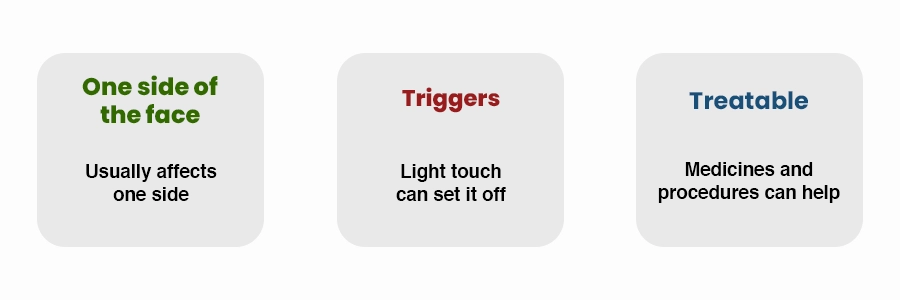
The trigeminal nerve carries sensation from the face to the brain, and trigeminal neuralgia causes electric-shock-like or stabbing pains on one side of the face. The pain lasts for a few seconds to a couple of minutes and can recur multiple times in a day. The nerve can be set off by touching, talking, eating, tooth brushing, or a brief breeze.
Common trigeminal neuralgia symptoms include:
- Sudden, severe, electric-shock, or stabbing pain, usually on one side of the face
- Pain in the cheek, jaw, teeth, gums, lips or sometimes the forehead and eye area
- Attacks triggered by light touch, chewing, speaking, shaving, brushing teeth, makeup, or cold air
- Episodes that come in clusters for weeks or months, followed by pain-free periods
- A dull, burning, or aching pain between attacks in some patients
- Fear of eating, talking, or washing the face, which can lead to weight loss and low mood
Because the pain sits near the teeth and jaw, many people first see a dentist. If dental tests are normal and the pain is sharp and electric, ask a neurologist about trigeminal neuralgia.
Why it happens
- Compression of the nerve by a blood vessel near the brainstem, the most common cause.
- Multiple sclerosis, which can damage the nerve’s covering.
- A tumor or other abnormality pressing on the nerve, less commonly.
- Unknown cause in some patients.
See a doctor promptly if
You are experiencing new facial numbness or weakness, vision/hearing changes, severe facial pain, or experiencing neurological symptoms with pain. A scan may help find a cause.
How is trigeminal neuralgia diagnosed?
- History The character of the pain, triggers, timing, and previous dental or sinus treatment.
- Neurological examination Testing facial sensation and strength.
- MRI Looks for nerve compression, tumours or signs of multiple sclerosis. A special MRI sequence (often with MR angiography) can show whether a blood vessel is touching the nerve, which helps the surgeon plan.
- Excluding other causes Dental problems, sinus disease and other facial pain conditions can look similar.
There is no blood test for trigeminal neuralgia. The diagnosis is mainly clinical, based on the pain pattern, and the scan is used to find the cause and plan treatment.
What is the best treatment for trigeminal neuralgia?
There is no single best treatment for everyone. The best choice depends on your age, general health, MRI findings and how well medicines work for you. In most guidelines the order is
- Medicines first. Anticonvulsant nerve-pain medicines work well for many people.
- Surgery or radiosurgery if medicines stop working, cause intolerable side effects, or are not suitable.
- MVD is generally preferred for fit patients with a blood vessel pressing on the nerve because it treats the cause rather than only blocking the pain signal.
Treatment options at a glance
| Option | Notes |
| Medicines | Certain nerve-pain medicines are the first treatment and often help well. They can cause side effects, such as drowsiness, so need monitoring by your doctor. |
| Microvascular decompression | Surgery to move a blood vessel away from the nerve. Considered when medicines fail or cause problems, in suitable patients. It is a brain operation with real risks. |
| Radiosurgery | Focused radiation to the nerve root is an alternative for some patients. |
| Other nerve procedures | Procedures that deliberately injure parts of the nerve to block pain, which can cause facial numbness. |
More detail on each option
Medicines. Most will start with carbamazepine or oxcarbazepine. Increasing the dose will be done gradually. Blood counts, sodium, and liver tests will be done, and your doctor will tell you what to do if the medicine stops working.
Microvascular decompression (MVD). A surgeon makes a small opening behind the ear, identifies the vessel compressing the nerve, and places a soft cushion between them. MVD provides the longest lasting relief out of all the available treatments and doesn’t intentionally damage the nerve; however, it is still a major surgical procedure. Most patients require a 3- to 5-day hospital stay following the procedure.
Radiosurgery (Gamma Knife or similar). A specific dose of radiation is directed at the nerve root without an incision. Pain relief can take weeks to months. It is reported to have alleviated classical trigeminal neuralgia in 70-90% of the patients. Pain can return in some patients.
Percutaneous procedures. Radiofrequency, glycerol, or balloon procedures reach the nerve through a needle through the cheek. These are quicker and better for older or frailer patients, but left facial numbness is expected, and pain may return.
Surgery choices carry trade-offs.
Surgery carries risks of numbness, complications, and pain returning. The likelihood for pain relief varies for each procedure. It is suggested that you ask your surgeon for details and get a second opinion.
What is the newest treatment for trigeminal neuralgia?
There is no brand-new treatment that has replaced medicines, MVD or radiosurgery. What has improved is the precision of existing options:
- Higher-resolution MRI helps surgeons see the exact vessel and nerve before surgery.
- Neuronavigation and endoscope-assisted techniques help surgeons work through smaller openings.
- Modern radiosurgery systems target the nerve root with sub-millimetre accuracy.
- New nerve-pain drugs are being studied in clinical trials, but none is yet a standard replacement.
Ask your specialist whether any trial or newer technique is relevant to your case, and be cautious about any clinic that promises a “new cure”.
Can trigeminal neuralgia be cured? Has anyone cured their trigeminal neuralgia?
Yes, some do experience long-term pain relief, often after successful MVD. While many doctors achieve long-term pain control with these procedures, it’s important to note that long-term control is not a cure, as the pain may return, and many doctors are quick to state that patients may require repeated interventions.
When you read stories such as “How I Cured My Trigeminal Neuralgia,” keep in mind:
- Many conditions have natural pain-free periods, so a quiet spell is not always a cure.
- One person’s result does not predict yours. The cause, your scan, and the procedure used all matter.
- Be careful with anyone who promises a guaranteed cure from a supplement, device, or diet.
The honest way to judge a result is long-term pain control at 1, 3, and 5 years after treatment. Ask your surgeon for their own figures.
How to heal nerve damage in the face naturally?
There is no proven natural remedy to repair the trigeminal nerve or alleviate the compression that causes Classical Trigeminal Neuralgia. Herbs, supplements, and home remedies should not be used to replace medical treatment. However, there are things that can be used in addition to medical treatment to manage symptoms:
- Know and avoid your triggers. Many patients use a soft cloth, lukewarm water, and a soft toothbrush.
- Protect the face from wind and cold with a scarf in winter and away from direct fan or AC drafts.
- Eat soft, lukewarm foods and take small bites on the side that does not hurt.
- Keep up oral hygiene with gentle brushing, since skipping it can cause real dental problems.
- Protect sleep and mood. Chronic facial pain affects both, and counselling or pain clinic support can help.
- Ask your doctor first before trying acupuncture, vitamin B12, or other supportive therapies, so they do not interfere with your medicines.
If your pain is severe, new numbness appears or medicines stop working, do not wait for natural methods to work.
Trigeminal neuralgia treatment cost in India
Cost is determined by the procedure, hospital, surgeon, room category, and how long you stay. Indicative ranges published by medical travel facilitators are:
| Treatment | Indicative cost in India (USD) | What drives the price? |
| Diagnosis and medicine-based care | Roughly $7,500 for an all-in diagnosis and conservative treatment package | Tests, consultations, length of stay |
| Microvascular decompression (MVD) | About $11,000 to $17,000, with some facilitators quoting averages up to about $23,600 | Hospital, surgeon, ICU need, stay length |
| Gamma Knife/radiosurgery | Quote on request | Centre, machine type, planning scans |
These are published estimates from third-party medical travel platforms, not MediKaya quotes. Final cost depends on your reports.
Typical inclusions are surgeon fees, MRI, hospital stay, and initial follow-up. Medical visas, travel, accommodation, and extended ICU care may be extra.
Why treatment in India costs less: hospital, surgeon, and operating costs are lower than in the US and UK and in much of Europe, while many hospitals are internationally accredited (JCI or NABH) and have the same technology.
To get a figure for your case, request a free cost estimate.
Why choose India for trigeminal neuralgia treatment?
- Experienced neurosurgeons and neurologists who treat cranial nerve disorders regularly
- Full range of options in one place: medicines, MVD, radiosurgery, and percutaneous procedures
- Shorter waiting times than in many countries
- Lower overall cost without compromising on technology
- Support for international patients, including medical visa letters, interpreters, and airport pickup
Browse neurosurgeons in India and top neurology hospitals in India.
How MediKaya Healthcare helps international patients
- Send your reports. MRI films, medicine history and previous treatment details.
- Free specialist review. Our partner neurology and neurosurgery specialists review your case.
- Treatment plan and cost estimate. Options, expected stay and a written cost estimate.
- Travel support. Medical visa invitation, hospital admission and local coordination.
- Follow-up. Guidance on remote follow-up once you return home.
A note on this topic
Pain that happens suddenly, and is triggered by mundane activities like eating or brushing your teeth is frustrating and terrifying. This kind of pain deserves your doctor’s attention especially if it is affecting your eating, sleeping or mood.
Questions for your doctor
Bring these to your appointment
- Is this trigeminal neuralgia, and has other facial pain been excluded?
- What does my MRI show?
- Which medicine do you recommend, and what are the side effects?
- If medicines do not work, what are my procedural options and their risks?
- What should I do during a flare?
Frequently asked questions
Q: What is the best treatment for trigeminal neuralgia?
Medicine is the first treatment. If it fails, MVD surgery, radiosurgery or nerve procedures are considered, depending on your MRI and health.
Q: What are the main trigeminal neuralgia symptoms?
Sudden electric-shock or stabbing pain on one side of the face, triggered by touch, chewing, talking or cold air.
Q: How much does trigeminal neuralgia treatment cost in India?
Published estimates for MVD are roughly $11,000 to $17,000, with some higher. Final cost depends on your hospital, surgeon and stay. Request a free estimate from MediKaya Healthcare.
Q: Is trigeminal neuralgia caused by dental problems?
No, though it is often mistaken for dental pain. Unnecessary dental treatment is a common story.
Q: Can it go away on its own?
It can come and go, with pain-free periods, but it often returns.
Q: Is it dangerous?
The condition itself is not life-threatening, but the pain can seriously affect quality of life.
Q: Is surgery a cure?
Surgery can give long relief for many but not all, and pain can return. Discuss this with your surgeon.
Q: Can trigeminal neuralgia be cured naturally?
There is no proven natural cure. Lifestyle steps can help with comfort but should not replace medical treatment.
Q: Can I get a second opinion?
Yes. Our partner neurology and neurosurgery specialists can review your reports through a free, no-obligation second opinion.
Conclusion
The trick with treating Trigeminal Neuralgia is getting the diagnosis right. After the diagnosis is confirmed, it is important to use the correct medicine, find the right dose and be willing to discuss surgical options if the medicine isn’t doing the trick. If you are considering trigeminal neuralgia treatment in India, send your reports to MediKaya Healthcare for a free second opinion and cost estimate.
Medical disclaimer: This article is for general information and is not a substitute for advice from a qualified doctor.