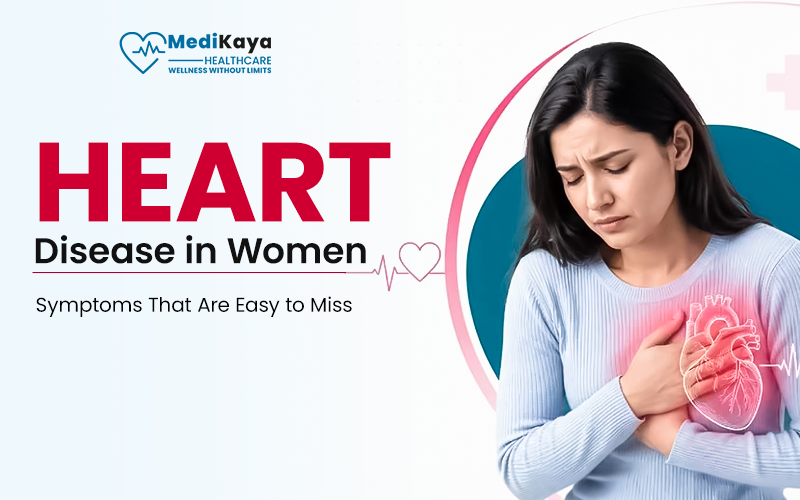
Heart disease is often referred to as a man’s issue, and so heart disease symptoms in women are often misattributed as stress or indigestion. People need to be aware of the symptoms of heart disease and their risk factors in order to take action before it’s too late.
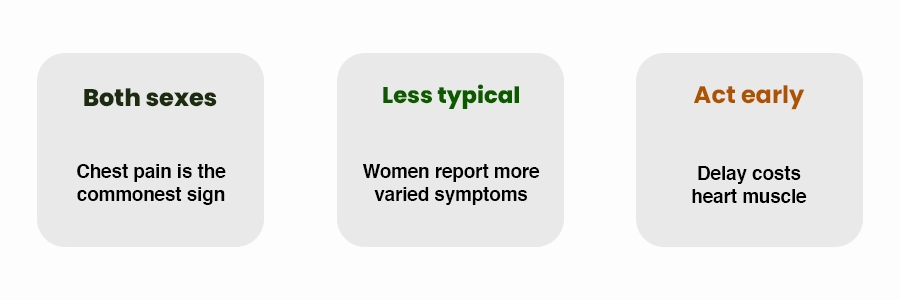
Heart disease affects both men and women, but women experience some symptoms differently than men. The most common symptom of a heart attack for both is chest pain. However, heart attack symptoms in women often include other signs such as shortness of breath, nausea, back or jaw pain, and unusual fatigue. These symptoms are more often attributed to other causes and result in a delay in seeking medical attention.
What Are the Early Warning Signs of Heart Disease in Women?
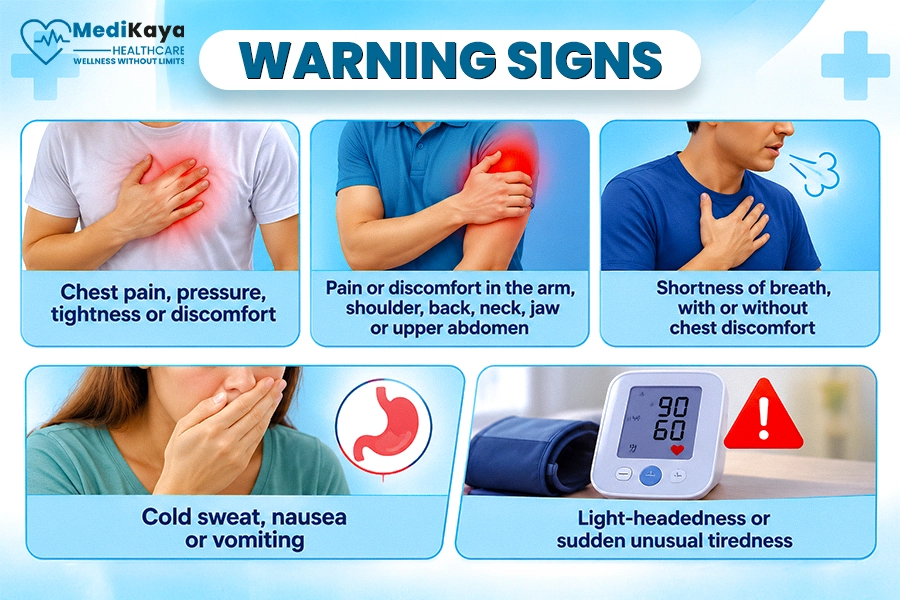
The early signs of heart disease in women can be subtle and easy to explain away. If you are wondering what the 5 signs of heart disease are, these are the ones to watch for:
- Chest pain, pressure, tightness, or discomfort
- Pain or discomfort in the arm, shoulder, back, neck, jaw, or upper abdomen
- Shortness of breath, with or without chest discomfort
- Cold sweat, nausea, or vomiting
- Light-headedness or sudden unusual tiredness
What Are 3 Warning Signs of a Heart Attack in Females?
Three warning signs of a heart attack in females that should never be ignored are chest pressure or discomfort, shortness of breath, and a cold sweat with nausea or sudden unusual tiredness. Pain in the jaw, back, or arm may also appear. Here is what each sign can feel like:
Chest pressure or discomfort
Many women do not feel a sharp, sudden pain. Instead, it can feel like pressure, squeezing, fullness, or tightness in the center of the chest. It may last for more than a few minutes, or it may go away and come back. Some women feel only mild discomfort, which is why this sign is so easy to dismiss.
Shortness of breath
You may feel breathless even at rest or while doing simple things such as climbing a few stairs or walking to the kitchen. It can happen with or without chest discomfort, and it can come on suddenly. Breathlessness that is new or unusual for you should never be brushed off as just being out of shape.
Cold sweat with nausea or unusual tiredness
Breaking out in a cold sweat for no clear reason, feeling sick, vomiting, or feeling light-headed can all be signs of a heart attack. These symptoms are often mistaken for acidity, a stomach bug, or anxiety. Sudden, heavy tiredness that is very different from your normal tiredness is also a warning sign.
Call emergency services if you suspect a heart attack.
Do not try to ride yourself to the hospital to see if your symptoms subside. The above-mentioned signs, especially if they are coupled with faintness, fainting, or sweating, are all reasons for you to seek immediate medical attention. It is also important that you and your doctor are aware of the following risk factors, as they can also raise your chance of suffering from heart disease.
Can Women Have a Heart Attack Without Chest Pain?
Yes. Women can have a heart attack without chest pain or with only mild chest discomfort. Instead, they may feel breathless, unusually tired, nauseated, or light-headed, or notice pain in the jaw, neck, back, or upper abdomen. Because these heart attack symptoms in women do not feel connected to the heart, they are easy to dismiss. Any sudden, unexplained symptom like this needs urgent medical attention.
Why Are Heart Attack Symptoms Sometimes Missed in Women?
There are a few common reasons:
- Heart disease is still seen as a man’s problem, so neither women nor those around them think of the heart first.
- Symptoms such as nausea, back pain, or tiredness look like indigestion, stress, or a busy routine.
- Some women put family responsibilities first and wait before seeking care.
This is why knowing the signs of heart disease in women matters. A delay of even a few hours can make a difference.
Other Heart Conditions: Heart Blockage and Heart Failure Symptoms in Women
Symptoms of Heart Blockage in Females
Symptoms of heart blockage in females can be mild and may come and go. They include chest pressure or heaviness (often during activity or stress), breathlessness during routine tasks, unusual tiredness, pain in the neck, jaw, shoulder, or back, dizziness, and cold sweat. A blockage reduces blood flow to the heart, so symptoms that are repeated or getting worse should be checked by a cardiologist.
Heart Failure Symptoms in Women
Heart failure symptoms in women include breathlessness (especially when lying flat or during activity), constant tiredness, swelling in the feet, ankles, or legs, a fast or irregular heartbeat, a lingering cough, and sudden weight gain from fluid buildup. These are often put down to aging or weight gain, so they are easy to miss.
Risk Factors Worth Knowing
Women’s heart health is shaped by common risk factors as well as some that are specific to women, such as pregnancy complications and menopause.
| Risk factor | Notes |
|---|---|
| High blood pressure, cholesterol, and diabetes | Major risks in everyone |
| Smoking | Strongly raises risk |
| Pregnancy complications | High blood pressure or diabetes in pregnancy can signal higher future risk. Tell your doctor about them. |
| Menopause | Heart risk rises after menopause, so check-ups matter. |
| Family history | Early heart disease in close relatives raises risk. |
| Some inflammatory and autoimmune conditions | Can add to risk |
What Helps: How Can Women Reduce Their Risk of Heart Disease?
Small, steady habits protect women’s heart health over the long run.
- Know your numbers Blood pressure, cholesterol, and blood sugar are checked as your doctor advises.
- Do not smoke And avoid second-hand smoke.
- Stay active: Regular activity that suits your health.
- Eat well A balanced diet, with less salt, sugar, and processed food.
- Speak up Tell your doctor about your pregnancy history, family history, and any new symptoms.
Be your own advocate
Don’t be afraid to ask questions and advocate for your health if you are concerned. You should understand why you are feeling the way you are and what test are needed to assess your symptom.
When Should a Woman Visit a Cardiologist?
See a cardiologist if you notice any warning signs above, especially if they keep coming back, happen during activity, or are getting worse. You should also book a check-up, even without symptoms, if you have high blood pressure, diabetes, high cholesterol, a family history of early heart disease, a history of pregnancy complications, or if you have reached menopause. If you are travelling or living abroad and want specialist advice, you can also consult a cardiologist in India. If symptoms are sudden or severe, do not wait for an appointment. Call emergency services.
Which Tests Can Help Detect Heart Disease in Women?
Your cardiologist will choose tests based on your symptoms and risk. Common ones include:
- Blood pressure check, blood sugar, and cholesterol (lipid profile) tests
- ECG (electrocardiogram) to record the heart’s electrical activity
- Echocardiogram to check the heart’s structure and pumping
- Stress test to see how the heart responds to exertion
- CT coronary angiography or coronary angiography when a blockage is suspected
Questions for Your Doctor
Bring these to your appointment
- What is my overall heart risk, and how was it assessed?
- Do my pregnancy history or menopause change my risk?
- Which tests do I need?
- Could my symptoms be heart-related?
- What should I do if symptoms return?
Treatment for Heart Disease in Women
Heart disease symptoms in women: treatment depends on the cause and how advanced the condition is. After diagnosis, a cardiologist may suggest:
- Lifestyle changes such as diet, activity, and quitting smoking
- Medicines to control blood pressure, cholesterol, blood sugar, or heart rhythm
- Angioplasty and stenting to open blocked arteries
- Bypass surgery (CABG) or valve repair or replacement in advanced cases
- Pacemaker or other device implants, long-term care for heart failure and, in very advanced cases, a heart transplant
The right plan is always decided by your treating cardiologist after proper evaluation.
Heart Treatment in India for International Patients
Many patients from other countries choose heart treatment in India because they can access experienced cardiologists, advanced diagnostics and NABH or JCI accredited hospitals at a more affordable cost. You can read about the best heart hospitals in India before you decide. From angioplasty to bypass surgery and heart failure care, complete cardiac care is available under one roof. If you are looking for women-focused cardiac evaluation, you can start with a report review and a teleconsultation before planning travel.
Cardiologist in India for International Patients
Finding the right cardiologist in India for international patients is easier with a coordinator who understands the process. You can also read about India’s most trusted heart surgeons and cardiac specialists to understand what to look for.
How MediKaya Healthcare Helps
- Review of your existing heart reports by partner cardiology specialists
- Consultation with a suitable cardiologist and hospital
- Help with medical visa, appointments, and travel coordination
- Support during treatment and follow-up
Frequently Asked Questions
Q: What are the most common heart attack symptoms in women?
The most common symptoms are chest pain or pressure, shortness of breath, nausea, unusual tiredness, cold sweat, and pain in the back, jaw, neck or arm. Chest pain may be mild or absent.
Q: Are women’s heart attacks different?
The most common symptom is the same as in men, chest pain, but women are more likely to have other symptoms too.
Q: Can stress cause heart problems?
Stress can affect heart health, and some conditions are triggered by stress. Symptoms should still be evaluated rather than assumed to be stress.
Q: Does menopause increase the risk of heart disease?
Yes. Risk rises with age and after menopause. Healthy habits and regular checks matter.
Q: Can pregnancy complications increase future heart disease risk?
Yes. High blood pressure or diabetes during pregnancy can signal a higher risk of heart disease later in life. Tell your doctor about any pregnancy complications so your risk can be checked regularly.
Q: Should I take aspirin?
Do not start aspirin on your own. Ask your doctor whether it is right for you.
Q: Can a cardiologist provide a second opinion on heart reports?
Yes. Our partner cardiology specialists can review your reports, at no cost to you and with no further obligation. You can book a free second opinion by sharing your reports.
Conclusion
Although there are unique risks of heart disease for women, the overall risks for heart disease are higher for men. It is important to identify the symptoms of heart disease to protect your overall health. Health care professionals sometimes err on the side of caution, but it is better to be on the safe side and get checked out for peace of mind.
If you or someone you love has any of the heart disease symptoms in women described here, do not wait. Request a call back from MediKaya Healthcare to get your reports reviewed and explore heart treatment in India with the right cardiologist.