
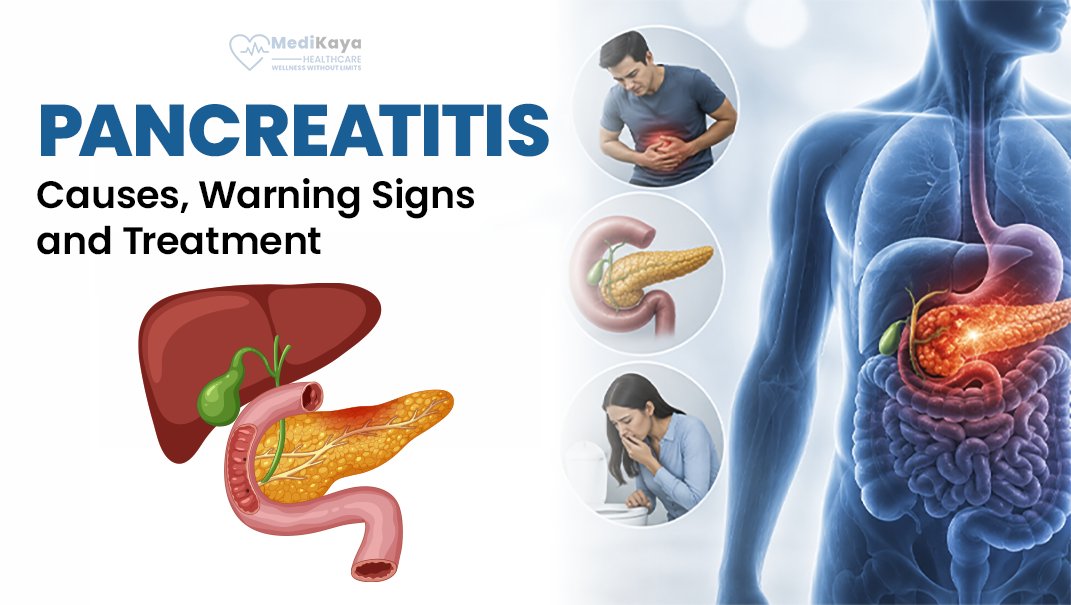
Pancreatitis refers to the inflammation of the pancreas, which can either be mild or severe. It is important to understand the causes and symptoms of this condition for timely pancreatitis treatment. The pancreas is an organ located behind the stomach and produces digestive juices and various hormones, including insulin. Pancreatitis refers to a condition where enzymes from the pancreas affect the pancreas itself, causing irritation and inflammation. Acute pancreatitis develops suddenly, while chronic pancreatitis involves prolonged inflammation and a history of pancreatitis symptoms.
Read More: Colonoscopy and Endoscopy in India for CIS Patients: Cost, Process & Best Hospitals 2026
Acute vs. chronic pancreatitis
| Acute pancreatitis | Chronic pancreatitis | |
|---|---|---|
| Onset | Sudden | Gradual with repeated symptoms |
| Main symptoms | Severe pain in the upper abdomen radiating to the back, with vomiting and nausea | Constant or recurring pain, loss of weight, greasy stools, diabetes |
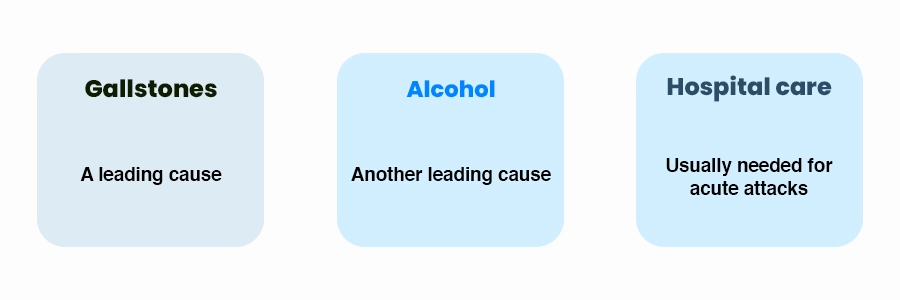
| Common causes | Gallstones and alcohol consumption are the two commonest types; others include high blood fat and certain medications. | Alcohol consumption is a common cause, among other causes like genetic factors and obstructed ducts. |
| Course | Resolves within days, but may be serious | Chronic, with gradual deterioration |
How it is diagnosed
1. Examination and history
History of pain patterns, alcohol consumption, medications, and previous gallstones.
2. Blood tests
Pancreatitis blood tests include pancreatic enzymes and testing for infections and kidney and liver function.
3. Imaging
Ultrasound to detect gallstones and CT or MRI to investigate the pancreas and complications.
4. Further investigation
In order to diagnose the reason for gallstones and pancreatitis, especially after the first attack.
Pancreatitis Treatment
- Acute attack: Hospital treatment involving fluid administration via a vein, pain management, and nutrition. Treatment of the underlying cause, like removal of the gallstones, comes next.
- Complications: If infection occurs, then drainage and surgical intervention may be required to address fluid accumulation and necrosis.
- Chronic pancreatitis: Pain relief, alcohol abstinence, enzyme replacement therapy, diabetes control, nutritional support, and occasionally endoscopy or surgery.
A note on this topic
If there has been any involvement of alcohol, it is quite normal to feel guilty and scared. Assistance for stopping alcohol abuse is available, and your physician can guide you towards it.
Questions for your doctor
Bring these to your appointment.
- What caused my pancreatitis?
- How bad is it, and are there any complications?
- Should I have my gallbladder removed?
- How can I prevent another attack?
- What symptoms should compel me to go back to the hospital?
What Are the Very First Signs of Pancreatic Cancer?
There may be no noticeable symptoms of pancreatic cancer in its early stage due to its hidden nature, but some of the possible symptoms may be constant pain in the abdomen that may radiate to the back; unexpected weight loss; loss of appetite; nausea; bloating; digestive problems; yellowing of the skin and eyes (jaundice); dark-colored urine; light-colored stools; gallstones and pancreatitis; and unusual tiredness. Sudden development of diabetes, especially along with unexplained weight loss, is another possible early symptom of pancreatic cancer. These symptoms may also be related to other medical issues, but ignoring any persistent and unusual pancreatitis symptoms is highly inadvisable. It is better to visit a healthcare specialist and undergo the necessary examinations to find out what is wrong and how to treat it properly.
Frequently asked questions
Q: Is pancreatitis serious?
Acute pancreatitis can vary in severity from mild to life-threatening. All cases are serious enough to warrant medical attention.
Q: Can I eat after pancreatitis?
Most patients regain their usual appetite as they recuperate. Your healthcare team will counsel you regarding your diet, including fat and alcohol consumption.
Q: Does pancreatitis cause diabetes?
Long-term complications can result in the impairment of insulin production, explaining why chronic pancreatitis is associated with diabetes.
Q: Can pancreatitis come back?
Yes, but only if the underlying cause is not addressed and early pancreatitis symptoms are ignored.
Q: Can I get my reports reviewed?
Yes, if the underlying cause remains untreated. Identifying and addressing the underlying cause, like gallstones and pancreatitis, is critical.
Conclusion
Pancreatitis is an illness that needs to be taken seriously right from the first episode. Get early Pancreatitis treatment for your illness to determine what causes it, because this is how you can prevent the next one.