

Hip replacement surgery removes a damaged hip joint and replaces it with an artificial implant made of metal, ceramic, or plastic components. It’s typically recommended for people with severe arthritis or joint damage causing chronic pain and limited mobility. Most patients walk within a day of surgery and return to normal activities within three to six months.
Hip pain has a way of creeping into every part of daily life. Climbing stairs becomes a negotiation. Sitting for too long turns into a struggle. Even a short walk can leave you wincing by the end of it. For many people living with advanced arthritis or joint damage, hip replacement surgery offers a path back to the activities they’ve had to give up.
This procedure is one of the most commonly performed and well-studied surgeries in orthopedic medicine. Still, deciding whether to move forward with it can feel overwhelming. This guide walks through what hip replacement surgery involves, who it’s typically recommended for, and what recovery actually looks like.
What Is Hip Replacement Surgery?
Hip replacement surgery, also called total hip arthroplasty, involves removing the damaged ball-and-socket components of the hip joint and replacing them with artificial parts. The new joint typically includes a metal stem placed into the thighbone, a ball component that replaces the femoral head, and a socket that replaces the damaged hip socket in the pelvis.
Surgeons may use metal, ceramic, or durable plastic materials for these components, depending on the patient’s age, activity level, and bone quality. The goal is straightforward: eliminate pain caused by bone-on-bone friction and restore smooth, functional movement to the joint.
Who Needs a Hip Replacement?
Hip replacement surgery is generally recommended for people whose hip pain significantly limits daily activities and hasn’t responded to more conservative treatments. Common candidates include those with:
- Osteoarthritis, the most frequent reason for hip replacement, is caused by the gradual breakdown of cartilage.
- Rheumatoid arthritis, an autoimmune condition that damages joint cartilage over time
- Avascular necrosis, which occurs when blood supply to the hip bone is disrupted
- Hip fractures or injuries that cause lasting joint damage
- Childhood hip disorders that lead to premature joint deterioration in adulthood
Choose surgery if pain, stiffness, or mobility loss consistently interferes with sleep, work, or basic movement, and if physical therapy, medication, or injections haven’t provided lasting relief. Orthopedic surgeons typically reserve replacement surgery for cases where conservative treatment has been exhausted, since it’s a significant procedure with a real recovery period.
Anterior vs. posterior: the two common surgical approaches
| Approach | How it Works | General consideration |
|---|---|---|
| Posterior approach | Accesses the hip joint from the back, through or around the muscles at the rear of the hip. | One of the most widely used approaches, with an extensive long-term track record |
| Anterior approach | Accesses the hip joint from the front, working between muscles rather than through them | Often associated with a somewhat faster initial recovery for suitable candidates, though not every patient’s anatomy is well suited to it |
Neither approach is universally “”better”—the right choice depends on your specific anatomy, the surgeon’s experience and preference, and sometimes prior surgeries in the area. This is worth a direct conversation during consultation rather than a decision made from general reading alone. Orthopedic teams offering both approaches can help determine which is appropriate for your case.
Hip replacement surgery usually takes one to two hours. Patients receive either general anesthesia or a spinal block, depending on their health history and surgeon preference.
During the procedure, the surgeon removes the damaged femoral head and prepares the socket to receive the new implant. The artificial components are secured either with bone cement or through a press-fit method that allows bone to grow directly onto the implant surface over time. Many procedures today use minimally invasive techniques, which involve smaller incisions and can shorten recovery time compared to traditional approaches.
Surgeon experience with the approach matters more than the approach itself
Outcomes are influenced heavily by how experienced a surgeon is with their chosen technique. A highly experienced surgeon using the posterior approach will often outperform a less experienced surgeon using a newer technique. Ask about your surgeon’s specific volume and experience, not just which approach a hospital advertises – surgeons with decades of dedicated hip and knee replacement experience, including revision cases, are generally a stronger indicator of outcome than the approach alone.
What recovery actually looks like
Recovery timelines vary by patient, but hip replacement follows a fairly predictable path for most people.
The First Few Days
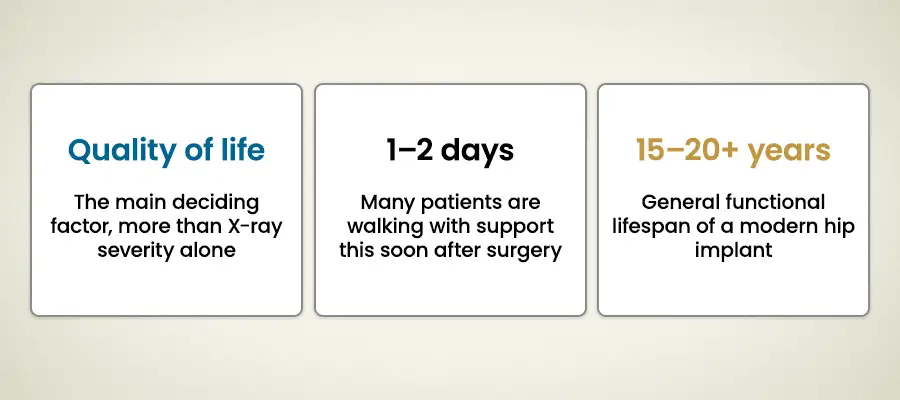
Many patients are encouraged to stand and take a few steps with assistance within 24 hours of surgery. Hospital stays have shortened considerably in recent years, with many patients discharged within one to two days. Pain management, blood clot prevention, and early mobility are the main priorities during this window.
The First Six Weeks
This is the most intensive phase of recovery. Patients typically use a walker or crutches initially, transitioning to a cane as strength improves. Physical therapy begins early, often within days of surgery, and focuses on restoring range of motion and rebuilding muscle strength around the new joint. For a week-by-week look at a comparable joint replacement recovery, our knee replacement recovery timeline guide outlines similar milestones.
Three to Six Months
Most patients can resume driving, return to desk jobs, and walk without assistive devices somewhere between six and twelve weeks, depending on their progress and the nature of their work. Higher-impact activities, like swimming, cycling, or golf, are often reintroduced around the three-month mark with a surgeon’s approval.
Choose a Gradual Return Over Rushing Back
Patients who prioritize steady, guided rehabilitation over a rapid return to activity tend to see better long-term joint function. Skipping physical therapy or resuming high-impact activity too soon raises the risk of implant complications. If your goal is long-term durability of the joint, patience during the first few months matters more than how quickly you feel “back to normal.”
What Are the Risks of Hip Replacement Surgery?
Hip replacement is considered one of the more predictable and successful procedures in orthopedic surgery, but like any major operation, it carries risks. These can include blood clots, infection, implant dislocation, differences in leg length, and, in rarer cases, implant loosening over time that may eventually require revision surgery. Surgeons typically discuss individual risk factors, including age, weight, and overall health, during pre-surgical consultations.
How Long Does a Hip Replacement Last?
Modern hip implants are built to last for decades. Advances in implant materials and surgical techniques have steadily improved durability, and many patients never need a second surgery on the same joint. Younger, more active patients may eventually require a revision procedure simply because they put more cumulative wear on the joint over a longer lifespan.
Making the Decision
Hip replacement surgery isn’t the first option for hip pain, but for many people, it becomes the most effective one. The decision ultimately comes down to how much your current quality of life has been affected and whether other treatments have run their course.
If you’re dealing with persistent hip pain, start by talking with an orthopedic specialist about your specific joint damage, activity goals, and treatment history. A thorough evaluation, often including X-rays or imaging, will help determine whether hip replacement is the right next step or whether other interventions make sense first.
Frequently Asked Questions
Q. How much does hip replacement surgery cost?
Hip replacement surgery cost in India typically runs $5,000 to $10,000 all-inclusive around 60-80% less than the $25,000 to $40,000 typically billed in the US or UK. International patients can request a transparent, itemized cost estimate in USD before committing to treatment, with no obligation to proceed.
Q. How painful is recovery after hip replacement?
Pain is generally well-managed with medication in the first few days and tends to decrease steadily over the following weeks. Most patients report that post-surgical pain is noticeably less than the chronic joint pain they experienced before surgery.
Q. Are there alternatives to hip replacement surgery?
Yes. Physical therapy, anti-inflammatory medications, corticosteroid injections, and lifestyle changes like weight management are often tried first. Hip replacement is typically considered when these options no longer provide adequate relief.
Q. Who is not a good candidate for hip replacement?
Patients with active infections, certain uncontrolled chronic illnesses, or insufficient bone density may need to address those issues before surgery is considered safe. A surgeon will evaluate overall health during the consultation process.
Q. Can both hips be replaced at the same time?
In some cases, yes. This is known as bilateral hip replacement. It’s generally reserved for healthier, younger patients, since it involves a longer single recovery period but avoids undergoing two separate surgeries.
Conclusion
Hip replacement has one of the strongest track records in orthopedic surgery, but “is it right for me” is still a personal question about how much your daily life has actually changed, not just what a scan shows. A clear conversation with an experienced surgeon, grounded in your specific situation rather than general timelines, is the best way to answer it honestly. If you’d like an independent read on your case before deciding, MediKaya Healthcare’s free second opinion service can help confirm whether hip replacement is the right next step.